
Catalogue Search | MBRL


Are you sure you want to remove the book from the shelf?

{{itemTitle}}
19
result(s) for
"Polydore Vergil"
Sort by:

Polydore Vergil as Arthurian Witness
Cyriakus Spangenberg (d. 1604), a prominent Protestant theologian, seeks to trace and celebrate the history of the comital House of Mansfeld in his dynastic chronicle, Mansfeldische chronica (Eisleben, 1572). There, he includes a brief biographical entry on King Arthur that links the Round Table to Hoyer the Red, imagined progenitor of the Counts of Mansfeld and Arthurian paladin (fl. ca. 550 AD). Spangenberg’s intertwined material on King Arthur and Count Hoyer, we have found, draws on the works of Geoffrey of Monmouth, Johannes Agricola, Wirnt von Grafenberg, and Polydore Vergil. Polydore is a surprising choice as an Arthurian arbiter and sympathetic voice, given his reputation for skepticism about Galfridian lore and the place of King Arthur in British history. Spangenberg’s willingness to promote Polydore’s witness reveals that, in this important early modern case of reception, contemporary and modern critical assessments fail to align.
Journal Article

Vergil and the Batavians (Aeneid 8.727)
It is very likely that Vergil in Aeneid 8.727 refers to the Batavians, either on their own or as the leading tribe in the region. This conclusion may be drawn from the poet's use of the word bicornis in line 727 and the manner in which he places the words Rhenus bicornis within the context of lines 722-728.
Journal Article

Epigram in the English Renaissance
Favorite Renaissance condiment at \"the great feast of language,\" the epigram is here presented full-flavored and various in a brilliant study by the late Hoyt Hopewell Hudson. He considers its origins, its nature, how skillfully it was shaped to eulogy and satire alike by the lively minds of its great exponents, Sir Thomas More and his contemporaries, and made the source for rigorous mental exercise in the schools.
Originally published in 1947.
The Princeton Legacy Library uses the latest print-on-demand technology to again make available previously out-of-print books from the distinguished backlist of Princeton University Press. These editions preserve the original texts of these important books while presenting them in durable paperback and hardcover editions. The goal of the Princeton Legacy Library is to vastly increase access to the rich scholarly heritage found in the thousands of books published by Princeton University Press since its founding in 1905.
eBook

John Colet and Polydore Vergil: Catholic Humanism and Ecclesiology
This paper examines the relationship between two early modern Catholic humanists who both wrote extensively on the need for ecclesiastical and clerical reform. Colet, Dean of St. Paul's (1505-19), and Vergil, Archdeacon of Wells (1508-46), were well acquainted and both members of Doctors Commons. Their written works demonstrate a considerably critical stance on clerical behaviour, notably Colet's sermons and lectures as well as Vergil's De Inventoribus Rerum and Adagia. Drawing upon original manuscript and primary sources, I argue that these texts demonstrate a shared desire for a highly clerical, perfected Church that could be immune from lay criticism and that they both entertained conciliarism as a possible solution to the Church's problems, for which both men received vehement opposition. Although both were ultimately disappointed in their ambitions, I suggest that they held true to their belief that the Church could be morally and spiritually renewed without the need for a Reformation.
Journal Article
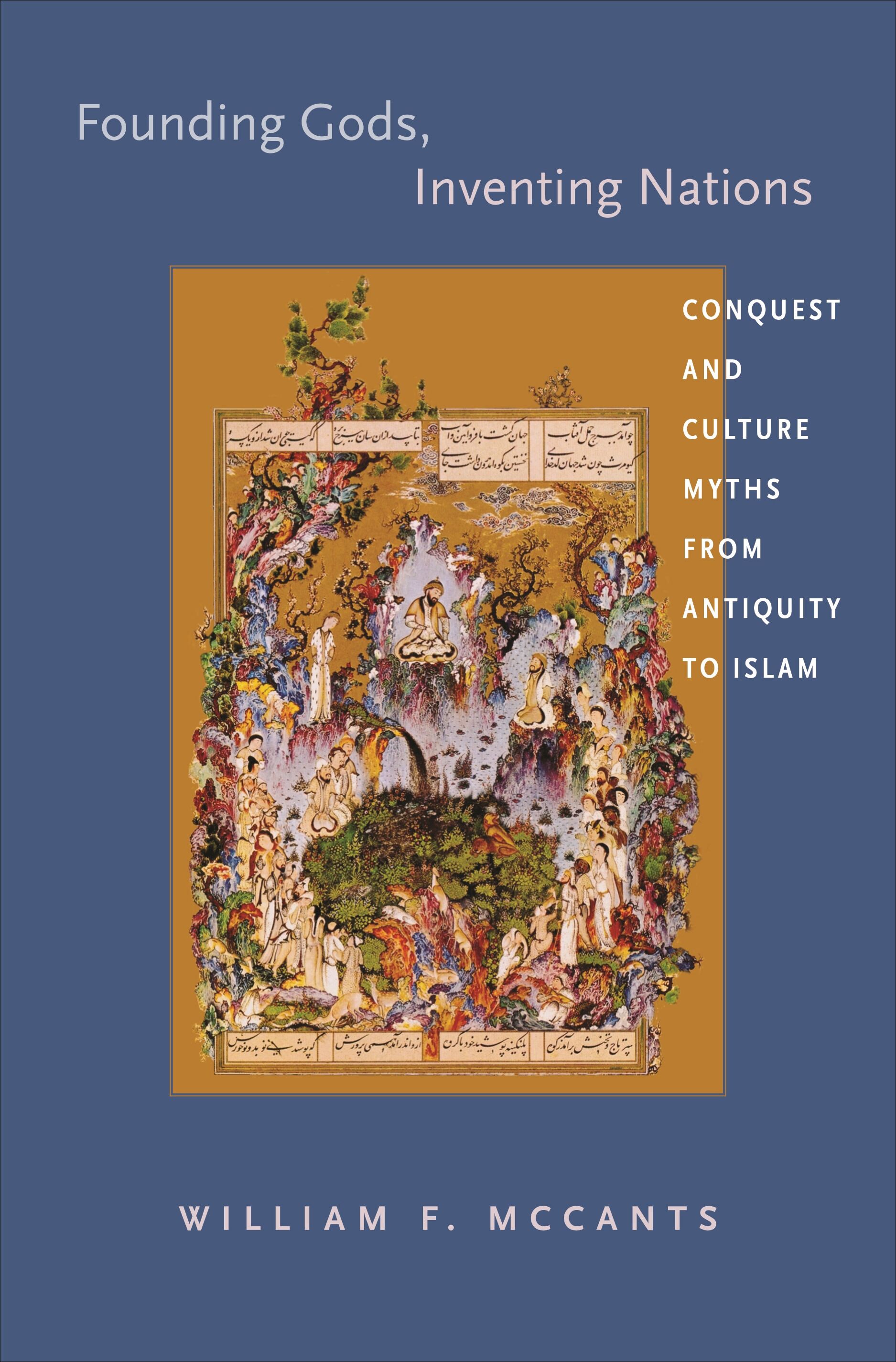
Founding gods, inventing nations
From the dawn of writing in Sumer to the sunset of the Islamic empire, Founding Gods, Inventing Nations traces four thousand years of speculation on the origins of civilization. Investigating a vast range of primary sources, some of which are translated here for the first time, and focusing on the dynamic influence of the Greek, Roman, and Arab conquests of the Near East, William McCants looks at the ways the conquerors and those they conquered reshaped their myths of civilization's origins in response to the social and political consequences of empire.
eBook

Vergil, Polydore (?1470–?1555)
(?1470–?1555),
a native of Urbino, who came to England in 1502; he was archdeacon of Wells 1508–54
Reference
Polydore Vergil and the first English parliament
In his Anglica historia (1534), the Italian humanist émigré Polydore Vergil dated England’s first parliament to the year 1116; as a consequence, so too did popular vernacular histories of the late sixteenth and early seventeenth centuries. Vergil’s dating has long been the starting point for studies of the emerging interest in the antiquity of parliament found in Elizabethan and Jacobean historical thought.¹ Condensing modern scholarship into a brief narrative depreciates its considerable subtlety, but helps to clarify the purpose of this essay. From the 1570s, as the character of the English constitution became more contentious, the widespread currency of Vergil’s
Book Chapter

Reconstructing the Past: History, Historicism, Histories
This chapter contains sections titled:
References and Further Reading
Book Chapter

Intratextuality, Intertextuality and Virtual Reality: Books in the Graeco-Roman World and the Aldine Tradition
Successful authors and texts require the reader's active engagement in the reading and interpretive process. Two Latin books from the first century BCE illustrate.
Journal Article