
Catalogue Search | MBRL


Are you sure you want to remove the book from the shelf?

{{itemTitle}}
36,013
result(s) for
"Popular Science"
Sort by:

The one thing you need to know : the simple way to understand the most important ideas in science
\"From gravity to black holes, special relativity to global warming, this authoritative and entertaining book from bestselling author Marcus Chown breaks down complex science into manageable chunks, explaining the one thing you really need to know to get to grips with the subject. Rather than trying to bend your mind around all the vast and confounding details of things such as gravitational waves, electricity and black holes, wouldn't it be easier to understand just one central concept from which everything else follows? If you've ever found yourself fascinated by the idea of quantum computing but feel a little overwhelmed by the mindblowing subject of quantum mechanics or concerned by climate change but haven't been able to get to grips with the details of global warming, this book is for you. Let's take atoms, for example - what on earth are they? Well, if you start to think of them less like things you can't see with complex little nuclei and more like the alphabet of nature, which in different configurations can make a rose, a galaxy or a newborn baby, they might start to feel a little more understandable. Or gravitational waves - they sound poetic, but why are they creating so much excitement? Think of them as the voice of space, vibrations on the drumskin of space-time - before delving into all their complexities. In twenty-one short and engaging chapters, Chown explains the one thing you need to know to understand some of the most important scientific ideas of our time. Packed full of astounding facts, scientific history and the entertaining personalities at the heart of the most pivotal discoveries about the workings of our universe, this is an accessible guide to all the tricky stuff you've always wanted to understand more about\"-- Publisher's description.
Book

A tiny spot on the earth
In this survey of the Dutch political culture of the nineteenth and twentieth centuries, Piet de Rooij reveals that the \"polder model\" often used to describe economic and social policymaking based on consensus is a myth. Instead, modern political culture in the Dutch Low Countries began with a revolution and is rife with rivalries among political and ideological factions. He argues that because of its extremely open economy, the country is vulnerable to external political, cultural, and economic pressures, and Dutch politics is a balancing act between profiting from international developments and maintaining sovereignty. The sudden rise of populism and Euroscepticism at the turn of the millennium, then, indicated a loss of this balance. Shining new light on the political culture of the Netherlands, this book provides insights into the polder model and the principles of pillarization in Dutch society.
eBook
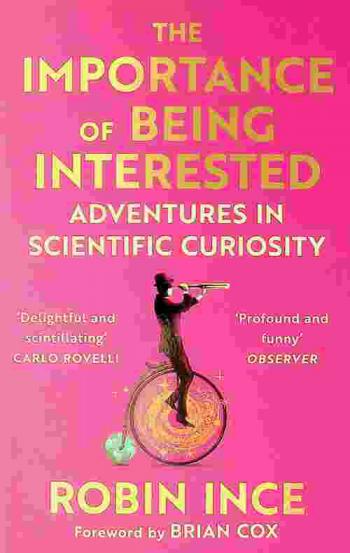
The importance of being interested : adventures in scientific curiosity
Comedian Robin Ince quickly abandoned science at school, bored by a fog of dull lessons and intimidated by the barrage of equations. But, twenty years later, he fell in love and he now presents one of the world's most popular science podcasts. Every year he meets hundreds of the world's greatest thinkers.In this erudite and witty book, Robin reveals why scientific wonder isn't just for the professionals. Filled with interviews featuring astronauts, comedians, teachers, quantum physicists, neuro-scientists and more - as well as charting Robin's own journey with science -The Importance of Being Interested explores why many wrongly think of the discipline as distant and difficult. From the glorious appeal of the stars above to why scientific curiosity can encourage much needed intellectual humility, this optimistic and profound book will leave you filled with a thirst for intellectual adventure.

Whose Cosmopolitanism?
The termcosmopolitanis increasingly used within different social, cultural and political settings, including academia, popular media and national politics. However those who invoke the cosmopolitan project rarely ask whose experience, understanding, or vision of cosmopolitanism is being described and for whose purposes? In response, this volume assembles contributors from different disciplines and theoretical backgrounds to examine cosmopolitanism's possibilities, aspirations and applications-as well as its tensions, contradictions, and discontents-so as to offer a critical commentary on the vital but often neglected question:whose cosmopolitanism?The book investigates when, where, and how cosmopolitanism emerges as a contemporary social process, global aspiration or emancipatory political project and asks whether it can serve as a political or methodological framework for action in a world of conflict and difference.
eBook
Ten tantalising truths : why the sky is blue, and other big answers to simple questions
John Gribbin is known for giving us simple explanations of big concepts in science. But there is another way to probe the mysteries of the Universe and our place in it. Faced with persistent enquiries from his grandchildren, Gribbin realised that simple questions, such as 'Why is the sky blue?', sometimes require big answers, understandable in straightforward language. In answering those simple questions, he discovered that he was telling the story of our place in the Universe, from the Big Bang to the evolutionary reasons why men are, on average, bigger than women. In this book, Gribbin invites the reader to join him on this voyage of discovery, where you may think you already know the answers but should be prepared to be surprised - or at least, tantalised by the truth.
Book

Street Sex Work and Canadian Cities
“Our voices scrubbed out and forgotten. There are those who research and write about sex workers who often forget we are human.” —Amy Lebovitch Shawna Ferris gives a voice to sex workers who are often pushed to the background, even by those who fight for them. In the name of urban safety and orderliness, street sex workers face stigma, racism, and ignorance. Their human rights are ignored, and some even lose their lives. Ferris aims to reveal the cultural dimensions of this discrimination through literary and art-critical theory, legal and sociological research, and activist intervention. Canadian cities are striving for high safety ratings by eliminating crime, which includes “cleaning” urban areas of the street sex industry. Ironically, sex workers also want to live and work in a safe environment. Ferris questions these sanitizing political agendas, reviews exclusionary legislative and police initiatives, and examines media representations of sex workers. This book has much to offer to educators and activists, sex workers and anti-violence organizations, and academics studying women, cultural, gender, or indigenous issues. Foreword by Amy Lebovitch.
eBook

A little history of everything : from the Big Bang down to you
Have you ever wondered why you exist? What had to happen for you - and all life on Earth - to come into being? What is the true answer to the ultimate question of life, the universe and everything? In 'A Little History of Everything', Tim Coulson - Professor of Zoology at Oxford - takes us back to the beginning of everything: the Big Bang 13.8 billion years ago. From there, he leads us step by step along the path to the most astonishing thing we have yet encountered - the staggering complexity of the modern human mind. Covering physics, astronomy, chemistry, geology, the emergence of life, evolution, consciousness and the rise of humankind, yet written to be understood by anyone with a child's curiosity, this book takes the biggest story of all and tells it simply, grippingly and, above all, entertainingly.
BOOK

Final Passages
This work explores a neglected aspect of the forced migration of
African laborers to the Americas. Hundreds of thousands of captive
Africans continued their journeys after the Middle Passage across
the Atlantic. Colonial merchants purchased and then transshipped
many of these captives to other colonies for resale. Not only did
this trade increase death rates and the social and cultural
isolation of Africans; it also fed the expansion of British slavery
and trafficking of captives to foreign empires, contributing to
Britain's preeminence in the transatlantic slave trade by the
mid-eighteenth century. The pursuit of profits from exploiting
enslaved people as commodities facilitated exchanges across
borders, loosening mercantile restrictions and expanding capitalist
networks.
Drawing on a database of over seven thousand intercolonial slave
trading voyages compiled from port records, newspapers, and
merchant accounts, O'Malley identifies and quantifies the major
routes of this intercolonial slave trade. He argues that such
voyages were a crucial component in the development of slavery in
the Caribbean and North America and that trade in the unfree led to
experimentation with free trade between empires.
eBook

To boldly go where no book has gone before : a joyous journey through all of science
In our muddled era of conspiracy theories, fake news and groupthink, science's only goal is truth. Like all human pursuits it can go wrong, but it has the great strength of being self-correcting. At its best, what lasts - after much deliberation, rigour and sweat - is the truth. The story of science is how we get there. Standing on the shoulders of giants, world-renowned immunologist Luke O'Neill (aka the People's Immunologist) tells the zigzag story of how we got to this moment in human history, and what the future might hold: from figuring out how the mind really works, space travel (for the sheer fun of it), and the discovery of extra-terrestrial life. With incredible wit and a talent for cutting through the noise, Luke O'Neill tackles some of the great questions of our age, from Artificial Intelligence to the climate catastrophe, with a keen eye on what science might discover next.
BOOK

The Hadza
InThe Hadza, Frank Marlowe provides a quantitative ethnography of one of the last remaining societies of hunter-gatherers in the world. The Hadza, who inhabit an area of East Africa near the Serengeti and Olduvai Gorge, have long drawn the attention of anthropologists and archaeologists for maintaining a foraging lifestyle in a region that is key to understanding human origins. Marlowe ably applies his years of research with the Hadza to cover the traditional topics in ethnography-subsistence, material culture, religion, and social structure. But the book's unique contribution is to introduce readers to the more contemporary field of behavioral ecology, which attempts to understand human behavior from an evolutionary perspective. To that end,The Hadzaalso articulates the necessary background for readers whose exposure to human evolutionary theory is minimal.
eBook