
Catalogue Search | MBRL


Are you sure you want to remove the book from the shelf?

{{itemTitle}}
35
result(s) for
"Popular education -- Japan"
Sort by:

Reading Japan Cool
Japanese animation, video games, and manga have attracted fans around the world. The characters, the stories, and the sensibilities that come out of these cultural products are together called Japan Cool. This is not a sudden fad, but is rooted in manga—Japanese comics—which since the mid-1940s have developed in an exponential way. In spite of a gradual decline in readership, manga still commands over a third of the publishing output. The volume of manga works that is being produced and has been through history is enormous. There are manga publications that attract readers of all ages and genders. The diversity in content attracts readers well into adulthood. Surveys on reading practices have found that almost all Japanese people read manga or have done so at some point in their lives. The skills of reading manga are learned by readers themselves, but learned in the context of other readers and in tandem with school learning. Manga reading practices are sustained by the practices of other readers, and manga content therefore serves as a topic of conversation for both families and friends. Moreover, manga is one of the largest sources of content for media production in film, television, and video games. Manga literacy, the practices of the readers, the diversity of titles, and the sheer number of works provide the basis for the movement recognized as Japan Cool. Reading Japan Cool is directed at an audience of students of Japanese studies, discourse analysts, educators, parents, and manga readers.
eBook

Making Japanese citizens
Making Japanese Citizens is an expansive history of the activists, intellectuals, and movements that played a crucial role in shaping civil society and civic thought throughout the broad sweep of Japan's postwar period. Weaving his analysis around the concept of shimin (citizen), Simon Avenell traces the development of a new vision of citizenship based on political participation, self-reliance, popular nationalism, and commitment to daily life. He traces civic activism through six phases: the cultural associations of the 1940s and 1950s, the massive U.S.-Japan Security Treaty protests of 1960, the anti-Vietnam War movement, the antipollution and antidevelopment protests of the 1960s and 1970s, movements for local government reform and the rise of new civic groups from the mid-1970s. This rich portrayal of activists and their ideas illuminates questions of democracy, citizenship, and political participation both in contemporary Japan and in other industrialized nations more generally.
eBook
The goddess and the dragon : a study on identity strength and psychosocial resilience in Japan
Neoliberal globalization affects the livelihoods and socio-economic conditions of people all over the world. This is also true for Japan where increased foreign trade and foreign investments have dramatically changed the internal landscape of the country during recent decades. There are many social groups for whom globalization has brought positive changes. International Japanese companies and their employees, for example, have benefited from the commercial expansion and rise in trade exchang.
eBook
The global impact of south korean popular culture
This volume fills a gap in the existing literature and proposes an interdisciplinary and multicultural comparative approach to the impact of Hallyu worldwide.The contributors analyze the spread of South Korean popular products from different perspectives (popular culture, sociology, anthropology, linguistics) and from different geographical.
eBook
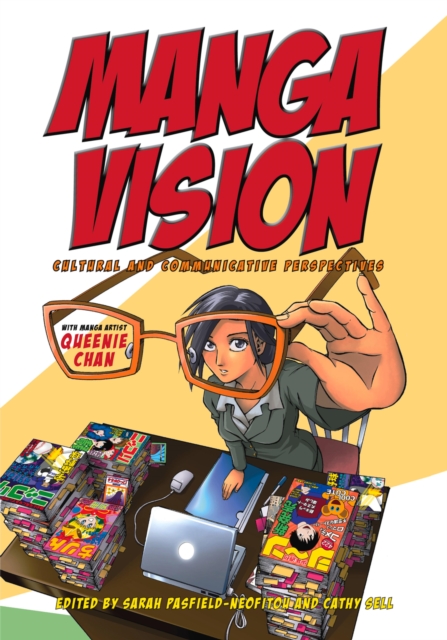
Manga vision : cultural and communicative perspectives
Manga Vision examines cultural and communicative aspects of Japanese comics, drawing together scholars from Japan, Australia and Europe working in areas as diverse as cultural studies, linguistics, education, music, art, anthropology, and translation, to explore the influence of manga in Japan and worldwide via translation, OEL manga and fan engagement. This volume includes a mix of theoretical, methodological, empirical and professional practice-based chapters, examining manga from both academic and artistic perspectives. Manga Vision also provides the reader with a multimedia experience, featuring original artwork by Australian manga artist Queenie Chan, cosplay photographs, and an online supplement offering musical compositions inspired by manga, and downloadable manga-related teaching resources.
eBook
Politics of the Visible and the Invisible
Abstract In this article, we analyze and compare photographic images from some of the most widely circulated Japanese and American high school history textbooks regarding their treatment of the Pacific War. We focus on the visual component of war technology, the atomic bombings of Hiroshima and Nagasaki, and the visibility or invisibility of women, especially regarding the comfort women issue. We argue that images in the textbooks are articulated by a dialectic relationship between the visible and the invisible as a political question, thinking about the “off-screen space” as the structural principle of what we see. The textbooks’ visual memories about the Pacific War are not only influenced by what is shown but also by what is omitted and virtually depicted in the surrounding media.
Journal Article
The child in the world/the world in the child : education and the configuration of a universal, modern, and globalized childhood
The contributors look at universalizing discourses concerning young children across the globe, which purport to describe everyone in a scientific and neutral way, but actually create mechanisms through which children are divided and excluded. The contributors to this book employ post-structuralist, postcolonial, and feminist theoretical frameworks.
eBook
Higher education, research, and knowledge in the Asia Pacific region
One of the first books to focus on different national perspectives of knowledge production and research in higher education in the Asia-Pacific region, it compares, contrasts, and critically analyzes how policy in Asia-Pacific countries is furthering a supportive (or non-supportive) environment for the promotion of research within higher education.
eBook

Preparing for the Possibility of a North Korean Collapse
A North Korean government collapse would have serious consequences, including a humanitarian disaster and civil war. The Republic of Korea and the United States can help mitigate the consequences, seeking unification by being prepared to deliver humanitarian aid in the North, stop conflict, demilitarize the North Korean military over time, secure and eliminate North Korean weapons of mass destruction, and manage Chinese intervention.
eBook

Preschool Girls and the Media: How Magazines Describe and Depict Gender Norms
This research investigated the presentation and content of magazines targeted at preschool-aged girls in Japan to analyse what gender patterns or gendered behaviours were encouraged and how the readers reacted to the media discourse. There were 13 magazines published in 2013 in Japan. Seven of them catered to girls, three to boys and three to both genders. The analyses focussed on the magazines for girls and their contents, layout and colours used. The analyses tell what is considered as appropriate in this national context for girls. Magazines for girls included information and illustrations of food, clothes and hairstyles and media celebrities such as popular musicians or fashion models and, therefore, focused more on entertainment and personal appearance. By analysing the readers’ pages, it was evident that the gendered patterns that the magazines conveyed were not always in line with the interests of the girls who wrote to the magazine. The writers and publishers of the magazines set up stereotypic expectations that describe and depict gendered norms for female children. However, as evident from the readers’ pages children did not necessarily accept all the stereotypic ideas related to gender.
Journal Article