
Catalogue Search | MBRL


Are you sure you want to remove the book from the shelf?

{{itemTitle}}
10,130
result(s) for
"Popular education."
Sort by:

Pedagogy of the heart
This book represents some of the last writings by Paulo Freire, who has been acclaimed one of the most important educators of the 20th century. Pedagogy of the Heart is filled with Freire's reminiscences of his early life and meditations \"under my mango tree.\" Many of these will be familiar themes to those who have walked with Freire before. For those coming to his work for the first time, Pedagogy of the Heart will open new doors to the interrelations of education and political struggle. Further enhancing the text are substantive notes by Ana Maria Araujo Freire.
Book

Tendencias de la investigación acerca del Fútbol popular en Colombia
Introducción: Si bien existen estudios previos sobre el fútbol y su impacto social en Colombia, este trabajo se destaca por ser un análisis sistemático de la producción académica reciente sobre el fútbol popular en el país. Objetivo: Se ofrece una visión holística de cómo el concepto de fútbol popular ha evolucionado y se ha manifestado en la literatura académica colombiana en los últimos años; esta perspectiva permite no solo mapear el estado actual de la investigación, sino también identificar tendencias emergentes y vacíos en el conocimiento que pueden dirigir futuras líneas de investigación. Metodología: Se realizó un estudio documental tipo revisión de antecedentes, sustentado en los criterios del protocolo PRISMA para revisiones sistemáticas. Se analizaron 66 textos que pasaron por un proceso de codificación abierta y análisis final. Resultados: Se realizó un análisis multidimensional con Iramuteq, identificando cuatro clases de términos: educación popular, cultura futbolera, subjetividades, y socialidad. Discusión: La codificación por tendencias investigativas identificó cinco grupos: Experiencias y subjetividades en la práctica del fútbol popular; Relaciones sobre Fútbol Popular; Barrismo Social y Barras futboleras; Territorios e impacto y educación comunitaria del fútbol popular; Fútbol Popular y Políticas públicas; y Fútbol e Identidad. Conclusiones: Estas clases y tendencias dan cuenta de cómo en Colombia el fútbol popular ha venido consolidándose como estrategia de generar transformaciones sociales en escenarios locales y construcción de subjetividades.
Journal Article

Pedagogy of the oppressed
\"First published in Portuguese in 1968, [this book] was translated and published in English in 1970. Paulo Freire's work has helped to empower countless people throughout the world and continues to possess a special urgency as the creation of a permanent underclass among the underprivileged and minorities in urban centers around the world continues. The 50th anniversary edition includes a new introduction by Donaldo Macedo, an afterword by Ira Shor, and interviews with Marina Aparicio Barberán, Noam Chomsky, Gustavo E. Fischman, Ramón Flecha, Ronald David Glass, Valerie Kinloch, peter Mayo, Peter McLaren, and Margo Okazawa-Rey to inspire a new generation of educators, students, and general readers for years to come.\"--Page [4] of cover.
Book

The National Policy of Popular Education in Health in debate: knowing knowledge and struggles for the production of Collective Health
Reflections on Popular Education and Health (EPS) as a field of knowledge, subject action and public policy in the Brazilian National Health System (SUS) in Brazil. Based on the process of institutionalization of EPS in the Ministry of Health, viability conditions of the National Policy for Popular Education in Health (PNEP-SUS) are pointed out, formulated in dialogue with popular movements, based on two questions: What are the consequences of this process in the construction of health policies? What is the viability of PNEP-SUS in the current context? The debate emerges in the dialogue of this process with social participation, pedagogical conception of EPS, dialogues of knowledge and production of knowledge that permeate the relationship between social movements, SUS management and PNEPS-SUS.
Journal Article

Educating through popular culture : you're not cool just because you teach with comics
Educating through Popular Culture is a tool for educators at all levels to improve their practice via popular culture in ways that both embrace and resist contemporary thinking. Its chapters provide a range of theoretical and practical suggestions to elicit discussion and spark creativity in all students.
Book
Popular Education and Health in educational processes: challenges and perspectives
Amidst the growth of a conservative neoliberal model in the current Brazilian public agenda, Popular Education and Health (EPS) presents itself as a possibility for the production of experiences directed to the constitution of health as a right; moreover, it is also committed to the development of people's role in the search for good living and for the critical confrontation with social determinations of health. The present article addresses EPS in formative processes, their challenges and perspectives. Centrally, it problematizes aspects such as: criticality in the movements and practices of EPS; the critical and mobilizing processes of protagonism; network action and the articulation of the struggle of movements and EPS practices. It is expected that these reflections will contribute to the debate on EPS and its role as a theoretical and methodological referential for training in the health area.
Journal Article

Pedagogy of hope : reliving pedagogy of the oppressed
With Pedagogy of Hope, Freire explores his best-known analytical themes - with even deeper understanding and a greater wisdom. Certainly, all of these themes have to be analyzed as elements of a body of critical, liberationist pedagogy. In the present book, we come to understand the author's pedagogical thinking even better, through the critical seriousness, humanistic objectivity, and engaged subjectivity which, in all of Freire's books, are always wedded to a unique creative innovativeness.
Book

The elaboration of the municipal education plan: experience of popular education?
This text aims to contribute to the reflection on the elaboration of the Municipal Education Plan (PME), guided by the concept, values, principles and methodologies of Popular Education. Starting from the elucidation of the concepts of Popular Education, democratic participation, knowledge from experience, deeds and popular propositional resistance, elements are presented for the understanding of education planning linked to an education proposal for emancipation and humanization. The next part of the text is dedicated to the systematization and analysis of an experience related to the preparation of the PME in the city of Uberlândia/MG-2015-2025, taking into account interpretative categories in the field of Popular Education and the intentionality of the elaboration of the referred plan as part the construction of a public, democratic, popular, secular, free and networked school.
Journal Article

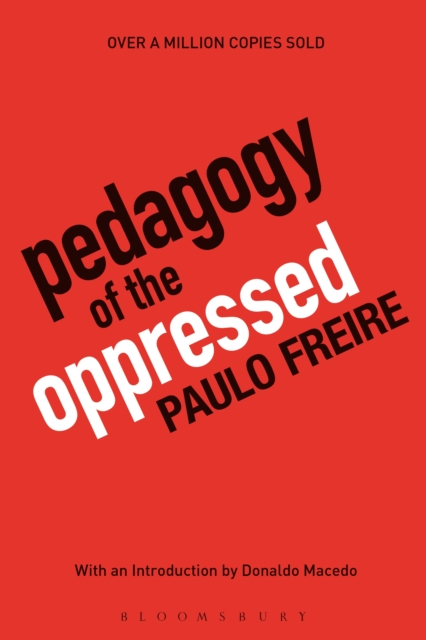
Pedagogy of the oppressed
First published in Portuguese in 1968, Pedagogy of the Oppressed was translated and published in English in 1970. The methodology of the late Paulo Freire has helped to empower countless impoverished and illiterate people throughout the world. Freire's work has taken on especial urgency in the United States and Western Europe, where the creation of a permanent underclass among the underprivileged and minorities in cities and urban centers is increasingly accepted as the norm.With a substantive new introduction on Freire's life and the remarkable impact of this book by writer and Freire confidant and authority Donaldo Macedo, this anniversary edition of Pedagogy of the Oppressed will inspire a new generation of educators, students, and general readers for years to come.
eBook