
Catalogue Search | MBRL


Are you sure you want to remove the book from the shelf?

{{itemTitle}}
42
result(s) for
"Poröser Stoff"
Sort by:
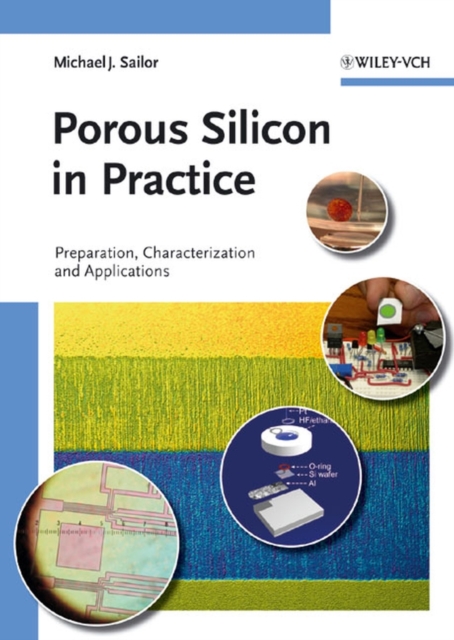
Porous silicon in practice : preparation, characterization and applications
By means of electrochemical treatment, crystalline silicon can be permeated with tiny, nanostructured pores that entirely change the characteristics and properties of the material. One prominent example of this can be seen in the interaction of porous silicon with living cells,
which can be totally unwilling to settle on smooth silicon surfaces but readily adhere to porous silicon, giving rise to great hopes for such
future applications as programmable drug delivery or advanced, braincontrolled prosthetics. Porous silicon research is active in the fields
of sensors, tissue engineering, medical therapeutics and diagnostics, photovoltaics, rechargeable batteries, energetic materials, photonics,
and MEMS (Micro Electro Mechanical Systems). Written by an outstanding, well-recognized expert in the field, this book provides detailed, step-by-step instructions to prepare and characterize the major types of porous silicon. It is intended for those new to the fi eld. Sampling of topics covered: * Principles of Etching Porous Silicon
* Etch Cell Construction and Considerations
* Photonic Crystals, Microcavities, and Bragg Stacks Etched in Silicon
* Preparation of Free-standing Films and Particles of Porous Silicon
* Preparation of Photoluminescent Nanoparticles from Porous Silicon
* Preparation of Silicon Nanowires by Electrochemical Etch of Silicon
* Surface Modifi cation Chemistry and Biochemistry
* Measurement of Optical Properties
* Measurement of Pore Size, Porosity, Thickness, Surface Area The whole is backed by a generous use of color photographs to illustrate the described procedures in detail, plus a bibliography of further
literature pertinent to a wide range of application fi elds. For materials scientists, chemists, physicists, optical physicists, biomaterials
scientists, neurobiologists, bioengineers, and graduate students in those fields, as well as those working in the semiconductor industry.
eBook
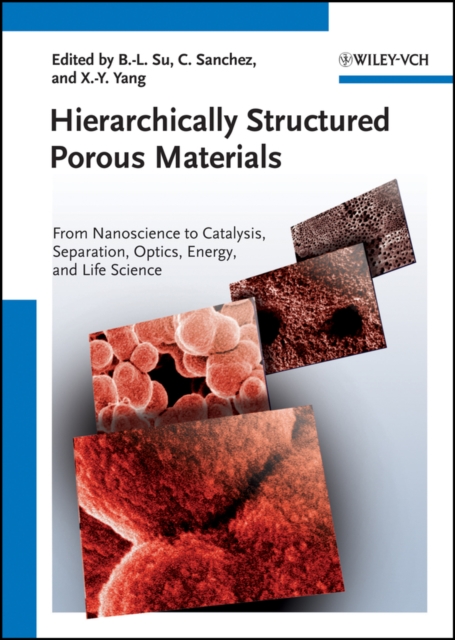
Hierarchically structured porous materials : from nanoscience to catalysis, separation, optics, energy, and life science
This first book devoted to this hot field of science covers materials with bimodal, trimodal and multimodal pore size, with an emphasis on the successful design, synthesis and characterization of all kinds of hierarchically porous materials using different synthesis strategies.
eBook
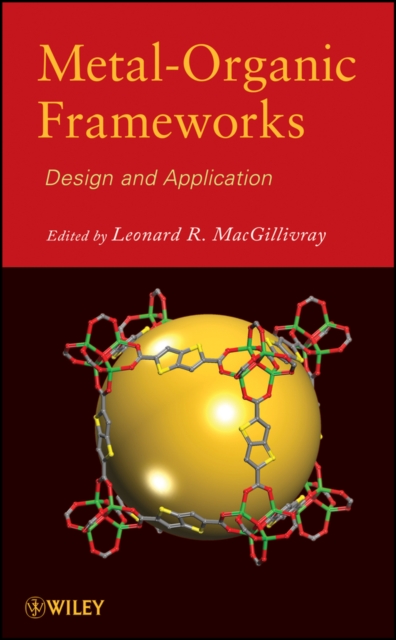
Metal-organic frameworks
Metal-organic frameworks represent a new class of materials that may solve the hydrogen storage problem associated with hydrogen-fueled vehicles. In this first definitive guide to metal-organic framework chemistry, author L. MacGillivray addresses state-of-art developments in this promising technology for alternative fuels. Providing professors, graduate and undergraduate students, structural chemists, physical chemists, and chemical engineers with a historical perspective, as well as the most up-to-date developments by leading experts, Metal-Organic Frameworks examines structure, symmetry, supramolecular chemistry, surface engineering, metal-organometallic frameworks, properties, and reactions.
eBook

High-performance lithium-ion anodes using a hierarchical bottom-up approach
Si-based Li-ion battery anodes have recently received great attention, as they offer specific capacity an order of magnitude beyond that of conventional graphite. The applications of this transformative technology require synthesis routes capable of producing safe and easy-to-handle anode particles with low volume changes and stable performance during battery operation. Herein, we report a large-scale hierarchical bottom-up assembly route for the formation of Si on the nanoscale—containing rigid and robust spheres with irregular channels for rapid access of Li ions into the particle bulk. Large Si volume changes on Li insertion and extraction are accommodated by the particle’s internal porosity. Reversible capacities over five times higher than that of the state-of-the-art anodes (1,950 mA h g
−1
) and stable performance are attained. The synthesis process is simple, low-cost, safe and broadly applicable, providing new avenues for the rational engineering of electrode materials with enhanced conductivity and power.
Silicon-based lithium-ion batteries are attractive because in principle they offer higher specific capacities than conventional graphite. A hierarchical bottom-up approach is now used to prepare lithium-ion anodes with improved reversible capacities and stable electrochemical performance.
Journal Article

Adsorption by powders and porous solids : principles, methodology and applications
The declared objective of this book is to provide an introductory review of the various theoretical and practical aspects of adsorption by powders and porous solids with particular reference to materials of technological importance.
eBook
Random Fields and Stochastic Lagrangian Models
The book presents advanced stochastic models and simulation methods for random flows and transport of particles by turbulent velocity fields and flows in porous media. Two main classes of models are constructed: (1) turbulent flows are modeled as synthetic random fields which have certain statistics and features mimicing those of turbulent fluid in the regime of interest, and (2) the models are constructed in the form of stochastic differential equations for stochastic Lagrangian trajectories of particles carried by turbulent flows.
The book is written for mathematicians, physicists, and engineers studying processes associated with probabilistic interpretation, researchers in applied and computational mathematics, in environmental and engineering sciences dealing with turbulent transport and flows in porous media, as well as nucleation, coagulation, and chemical reaction analysis under fluctuation conditions. It can be of interest for students and post-graduates studying numerical methods for solving stochastic boundary value problems of mathematical physics and dispersion of particles by turbulent flows and flows in porous media.
eBook

Essentials of multiphase flow and transport in porous media
Learn the fundamental concepts that underlie the physics of multiphase flow and transport in porous media with the information in Essentials of Multiphase Flow in Porous Media, which demonstrates the mathematical-physical ways to express and address multiphase flow problems. Find a logical, step-by-step introduction to everything from the simple concepts to the advanced equations useful for addressing real-world problems like infiltration, groundwater contamination, and movement of non-aqueous phase liquids. Discover and apply the governing equations for application to these and other problems in light of the physics that influence system behavior.
eBook

In vivo study of porous strontium-doped calcium polyphosphate scaffolds for bone substitute applications
The purpose of this study was to investigate in vivo biocompatibility and osteogenesis as well as degradability of the porous strontium-doped calcium polyphosphate (SCPP) scaffolds as a biomaterial for bone substitute applications. The evaluation was performed on a rabbit model over a period of 16 weeks by histology combined with image analysis, X-ray microradiography and immunohistochemistry methods. The histological and X-ray microradiographic results showed that the SCPP scaffold exhibited good biocompatibility and extensive osteoconductivity with host bone. Moreover, a significant more bone formation was observed in the SCPP group compared with that in the CPP group, especially at the initial stage after implantation. New bone volumes (NBVs) of the SCPP group determined at week 4, 8 and 16 were 14, 27 and 45%, respectively. Accordingly, NBVs of the CPP group were 10, 19 and 40%. Immunohistochemical results revealed that both the expression of collagen type I and bone morphogenetic proteins in the SCPP group were higher than that in the CPP group, which might be associated with the release of strontium ions during the implantation. In addition, during 16 weeks implantation the SCPP scaffold exhibited similar degradability with the CPP scaffold in vivo. Both scaffolds showed the greatest degradation rate for the first 4 weeks, and then the degradation rate gradually decreased. The results presented in this study demonstrated that SCPP scaffold can be considered as a biocompatible material, making it attractive for bone substitute application purposes.
Journal Article

A portable pressure pump for microfluidic lab-on-a-chip systems using a porous polydimethylsiloxane (PDMS) sponge
In this paper, we propose a novel portable and disposable pressure pump using a porous polydimethylsiloxane (PDMS) sponge and demonstrate its application to a microfluidic lab-on-a-chip. The porous PDMS sponge was simply fabricated by a sugar leaching technique based on capillary suction of pre-cured PDMS into lumps of sugar, thereby enabling us to achieve the porous PDMS sponge composed of interconnected micropores. To indicate the characteristics of the porous PDMS sponge and pump, we measured the average porosities of them whose values were 0.64 and 0.34, respectively. A stress–strain relationship of the fabricated portable pressure pump represented a linear behavior in the compressive strain range of 0 to 20%. Within this range, a pumping volume of the pressure pump could be linearly controlled by the compressed strain. Finally, the fabricated porous PDMS pump was successfully demonstrated as a portable pressure pump for a disposable microfluidic lab-on-a-chip for efficient detection of agglutination. The proposed portable pressure pump can be potentially applicable to various disposable microfluidic lab-on-a-chip systems.
Journal Article
Porous media transport phenomena
\"This book covers the mass, momentum, and energy conservation equations, and their applications in engineered and natural porous media for general applications. This book is an important text for graduate courses in various disciplines involving fluids in porous materials and a useful reference book. It provides a multi-disciplinary approach to transport in porous media. This book covers general porous media applications including chapters on the effect of temperature and particle migration and provides emphasis in energy resources development. The material is presented in a uniform format with consistent SI units\"--
eBook