
Catalogue Search | MBRL


Are you sure you want to remove the book from the shelf?

{{itemTitle}}
2,712
result(s) for
"Porous materials -- Fluid dynamics"
Sort by:
Porous Media
Presenting state-of-the-art research advancements, this volume explores innovative approaches to effectively apply existing porous media technologies to biomedical applications. In each peer-reviewed chapter, world-class scientists and engineers address significant problems and discuss exciting research in biological systems. They cover various transport processes, mechanical behavior, and material properties of biological tissues from a porous media point of view. The book also presents pertinent aspects of experimental work and numerical techniques and discusses the modeling of several phenomena, including flow changes in cerebral aneurysms, biomass growth, marine systems, and tissue homeostasis and repair.
eBook
Nonlinear Elasticity and Hysteresis
The book provides the reader with the knowledge, tools, and methods to understand the phenomenon of hysteresis in porous materials. As many challenges have been met only recently, the book summarizes the research results usually found only scattered in the literature, connecting knowledge from traditionally separated research fields to provide a better understanding of the physical phenomena of coupled elastic-fluid systems. The result is an invaluable self-contained reference book for materials scientists, civil, mechanical and construction engineers concerned with development and maintenance of structures made of porous materials.
eBook

Essentials of multiphase flow and transport in porous media
Learn the fundamental concepts that underlie the physics of multiphase flow and transport in porous media with the information in Essentials of Multiphase Flow in Porous Media, which demonstrates the mathematical-physical ways to express and address multiphase flow problems. Find a logical, step-by-step introduction to everything from the simple concepts to the advanced equations useful for addressing real-world problems like infiltration, groundwater contamination, and movement of non-aqueous phase liquids. Discover and apply the governing equations for application to these and other problems in light of the physics that influence system behavior.
eBook
Equilibrium and Transfer in Porous Media 2
A porous medium is composed of a solid matrix and its geometrical complement: the pore space.This pore space can be occupied by one or more fluids.The understanding of transport phenomena in porous media is a challenging intellectual task. This book provides a detailed analysis of the aspects required for the understanding of many experimental.
eBook
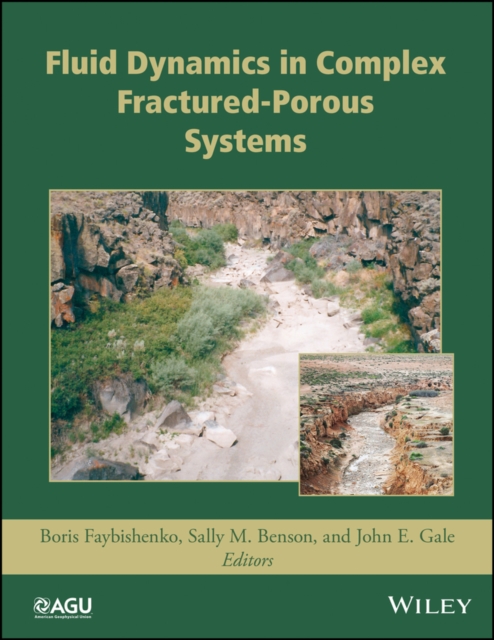
Fluid Dynamics in Complex Fractured-Porous Systems
Despite of many years of studies, predicting fluid flow, heat, and chemical transport in fractured-porous media remains a challenge for scientists and engineers worldwide. This monograph is the third in a series on the dynamics of fluids and transport in fractured rock published by the American Geophysical Union (Geophysical Monograph Series, Vol. 162, 2005; and Geophysical Monograph, No. 122, 2000). This monograph is dedicated to the late Dr. Paul Witherspoon for his seminal influence on the development of ideas and methodologies and the birth of contemporary fractured rock hydrogeology, including such fundamental and applied problems as environmental remediation; exploitation of oil, gas, and geothermal resources; disposal of spent nuclear fuel; and geotechnical engineering. This monograph addresses fundamental and applied scientific questions and is intended to assist scientists and practitioners bridge gaps in the current scientific knowledge in the areas of theoretical fluids dynamics, field measurements, and experiments for different practical applications. Readers of this book will include researchers, engineers, and professionals within academia, Federal agencies, and industry, as well as graduate/undergraduate students involved in theoretical, experimental, and numerical modeling studies of fluid dynamics and reactive chemical transport in the unsaturated and saturated zones, including studies pertaining to petroleum and geothermal reservoirs, environmental management and remediation, mining, gas storage, and radioactive waste isolation in underground repositories. Volume highlights include discussions of the following: Fundamentals of using a complex systems approach to describe flow and transport in fractured-porous media. Methods of Field Measurements and Experiments Collective behavior and emergent properties of complex
fractured rock systems Connection to the surrounding environment Multi-disciplinary research for different applications.
eBook
Dynamics of Infiltration of a Nanoporous Media with a Nonwetting Liquid
After compression of a system formed by a nanoporous media and a non-wetting liquid to the threshold pressure value, the liquid fills the pores of a porous media. In accordance with prevailing concepts, passage of the liquid from the bulk to the dispersed state can be described as a percolation-type transition. This process is typical of infiltration of macroscopic porous bodies with wetting liquids. The threshold type of infiltration was observed for non-wetting liquids and is scientifically detailed in this book.
eBook
Dynamics of fluids and transport in complex fractured-porous systems
Despite of many years of studies, predicting fluid flow, heat, and chemical transport in fractured-porous media remains a challenge for scientists and engineers worldwide. This monograph is the third in a series on the dynamics of fluids and transport in fractured rock published by the American Geophysical Union (Geophysical Monograph Series, Vol. 162, 2005; and Geophysical Monograph, No. 122, 2000). This monograph is dedicated to the late Dr. Paul Witherspoon for his seminal influence on the development of ideas and methodologies and the birth of contemporary fractured rock hydrogeology, including such fundamental and applied problems as environmental remediation; exploitation of oil, gas, and geothermal resources; disposal of spent nuclear fuel; and geotechnical engineering. This monograph addresses fundamental and applied scientific questions and is intended to assist scientists and practitioners bridge gaps in the current scientific knowledge in the areas of theoretical fluids dynamics, field measurements, and experiments for different practical applications. Readers of this book will include researchers, engineers, and professionals within academia, Federal agencies, and industry, as well as graduate/undergraduate students involved in theoretical, experimental, and numerical modeling studies of fluid dynamics and reactive chemical transport in the unsaturated and saturated zones, including studies pertaining to petroleum and geothermal reservoirs, environmental management and remediation, mining, gas storage, and radioactive waste isolation in underground repositories. Volume highlights include discussions of the following: Fundamentals of using a complex systems approach to describe flow and transport in fractured-porous media. Methods of Field Measurements and Experiments Collective behavior and emergent properties of complex fractured rock systems Connection to the surrounding environment Multi-disciplinary research for different applications
eBook
Modelling Heat and Mass Transfer in Freezing Porous Media
Exposure to toxic metals remains a public health hazard around the globe. Though the prevalence and intensity of exposure may vary from place to place, metal toxicity has been, and will continue to be, a challenge to recognise, treat and control. This book is made for the busy clinician and is focused on neurotoxicity. The authors review five metals that are neurotoxic (arsenic, lead, manganese, mercury, and thallium), and discuss the clinical approach to patients potentially exposed to these toxicants. It is simply written, current and evidence-based. This book makes an excellent companion to the clinician's shelf.
eBook

Suppressing viscous fingering in structured porous media
Finger-like protrusions that form along fluid–fluid displacement fronts in porous media are often excited by hydrodynamic instability when low-viscosity fluids displace high-viscosity resident fluids. Such interfacial instabilities are undesirable in many natural and engineered displacement processes. We report a phenomenon whereby gradual and monotonic variation of pore sizes along the front path suppresses viscous fingering during immiscible displacement, that seemingly contradicts conventional expectation of enhanced instability with pore size variability. Experiments and porescale numerical simulations were combined with an analytical model for the characteristics of displacement front morphology as a function of the pore size gradient. Our results suggest that the gradual reduction of pore sizes act to restrain viscous fingering for a predictable range of flow conditions (as anticipated by gradient percolation theory). The study provides insights into ways for suppressing unwanted interfacial instabilities in porous media, and provides design principles for new engineered porous media such as exchange columns, fabric, paper, and membranes with respect to their desired immiscible displacement behavior.
Journal Article

Sliding flows of yield-stress fluids
A theoretical and numerical study of complex sliding flows of yield-stress fluids is presented. Yield-stress fluids are known to slide over solid surfaces if the tangential stress exceeds the sliding yield stress . The sliding may occur due to various microscopic phenomena such as the formation of an infinitesimal lubrication layer of the solvent and/or elastic deformation of the suspended soft particles in the vicinity of the solid surfaces. This leads to a ‘stick–slip’ law which complicates the modelling and analysis of the hydrodynamic characteristics of the yield-stress fluid flow. In the present study, we formulate the problem of sliding flow beyond one-dimensional rheometric flows. Then, a numerical scheme based on the augmented Lagrangian method is presented to attack these kind of problems. Theoretical tools are developed for analysing the flow/no-flow limit. The whole framework is benchmarked in planar Poiseuille flow and validated against analytical solutions. Then two more complex physical problems are investigated: slippery particle sedimentation and pressure-driven sliding flow in porous media. The yield limit is addressed in detail for both flow cases. In the particle sedimentation problem, method of characteristics – slipline method – in the presence of slip is revisited from the perfectly plastic mechanics and used as a helpful tool in addressing the yield limit. Finally, flows through model and randomized porous media are studied. The randomized configuration is chosen to capture more sophisticated aspects of the yield-stress fluid flows in porous media at the yield limit – channelization.
Journal Article