
Catalogue Search | MBRL


Are you sure you want to remove the book from the shelf?

{{itemTitle}}
9
result(s) for
"Porto Alegre (Rio Grande do Sul, Brazil)) -- Politics and government"
Sort by:

Deepening Local Democracy in Latin America
The resurgence of the Left in Latin America over the past decade has been so notable that it has been called “the Pink Tide.” In recent years, regimes with leftist leaders have risen to power in Argentina, Bolivia, Brazil, Chile, Ecuador, El Salvador, Nicaragua, Uruguay, and Venezuela. What does this trend portend for the deepening of democracy in the region? Benjamin Goldfrank has been studying the development of participatory democracy in Latin America for many years, and this book represents the culmination of his empirical investigations in Brazil, Uruguay, and Venezuela. In order to understand why participatory democracy has succeeded better in some countries than in others, he examines the efforts in urban areas that have been undertaken in the cities of Porto Alegre, Montevideo, and Caracas. His findings suggest that success is related, most crucially, to how nationally centralized political authority is and how strongly institutionalized the opposition parties are in the local arenas.
eBook

The Practice of Politics in Postcolonial Brazil
The Practice of Politics in Postcolonial Brazil traces the history of high and low politics in nineteenth-century Brazil from the vantage point of the provincial capital of Porto Alegre. In the immediate postcolonial period, new ideas about citizenship and freedom were developing, and elites struggled for control of the state as the lower classes sought inclusion in political life. In a shift from the Liberal Party to Positivist or Conservative rule during the bloody Federalist Revolt of 1893-1895, new leaders sought to bring about a more balanced structure of government where the capitalist was sympathetic to the worker, and the worker more passive toward the elite. This represented a complete change of opinions—a new regime of ideas. Termed a \"scientific\" approach by its proponents, the movement was based on historical process and would be brought about through civic education. Against the backdrop of the abolition of slavery and subsequent assimilation, the rise of European immigration, and industrialization, Kittleson investigates how \"the people\" shaped changing political ideologies and practices, and how through local struggles and changes in elite ideology, the lower classes in Porto Alegre won limited political inclusion that was denied elsewhere.
eBook

The Porto Alegre Alternative
Porto Alegre in Brazil is famous as the city that pioneered a revolutionary kind of local democracy. Started over a decade ago by the municipal administration of the Brazilian Workers' Party (PT), this process - called the 'participatory budget' - has steadily attracted attention from around the world, including the UN and even the financial press.
This is the first book in English that allows the creators of the participatory budget to explain the process for themselves - what it is, how it is achieved, what benefits it brings. Written by key figures from Porto Alegre - including the former mayor and the head of the City Planning Office - it provides a unique insight into the revolutionary democratic changes that have proved such a success. It is also a practical how-to-do-it guide that will help local communities and policy-makers put these ideas into action.
The Porto Alegre experience shows that a truly different kind of political democracy is possible - it presents a real alternative to the current model of liberal representative democracy that has been eroded by unelected transnational institutions and multinational corporations.
eBook
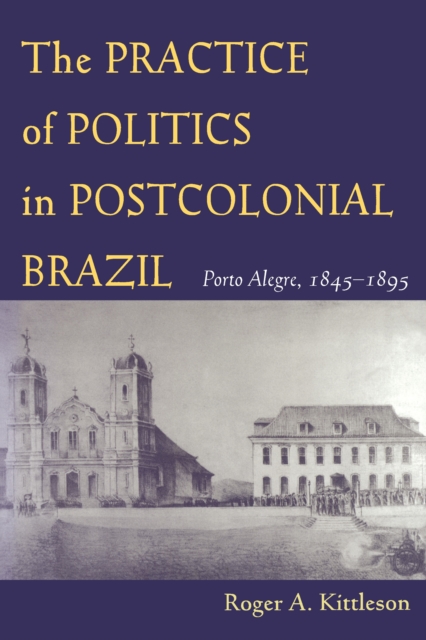
The Practice of Politics in Postcolonial Brazil
The Practice of Politics in Postcolonial Brazil traces the history of high and low politics in nineteenth-century Brazil from the vantage point of the provincial capital of Porto Alegre. In the immediate postcolonial period, new ideas about citizenship and freedom were developing, and elites struggled for control of the state as the lower classes sought inclusion in political life. In a shift from the Liberal Party to Positivist or Conservative rule during the bloody Federalist Revolt of 1893-1895, new leaders sought to bring about a more balanced structure of government where the capitalist was sympathetic to the worker, and the worker more passive toward the elite. This represented a complete change of opinions-a new regime of ideas. Termed a \"scientific\" approach by its proponents, the movement was based on historical process and would be brought about through civic education.
Against the backdrop of the abolition of slavery and subsequent assimilation, the rise of European immigration, and industrialization, Kittleson investigates how \"the people\" shaped changing political ideologies and practices, and how through local struggles and changes in elite ideology, the lower classes in Porto Alegre won limited political inclusion that was denied elsewhere.
eBook

Deepening Local Democracy in Latin America
The resurgence of the Left in Latin America over the past decade
has been so notable that it has been called \"the Pink Tide.\" In
recent years, regimes with leftist leaders have risen to power in
Argentina, Bolivia, Brazil, Chile, Ecuador, El Salvador, Nicaragua,
Uruguay, and Venezuela. What does this trend portend for the
deepening of democracy in the region? Benjamin Goldfrank has been
studying the development of participatory democracy in Latin
America for many years, and this book represents the culmination of
his empirical investigations in Brazil, Uruguay, and Venezuela. In
order to understand why participatory democracy has succeeded
better in some countries than in others, he examines the efforts in
urban areas that have been undertaken in the cities of Porto
Alegre, Montevideo, and Caracas. His findings suggest that success
is related, most crucially, to how nationally centralized political
authority is and how strongly institutionalized the opposition
parties are in the local arenas.
eBook

Participatory Budgeting in Porto Alegre: Social Innovation and the Dialectical Relationship of State and Civil Society
This article focuses on the identification and role of social innovation in urban development. The aim is to further the understanding of the contradictory relationship between state and civil society, using a thorough analysis of the process of participatory budgeting in Porto Alegre, the capital city of Rio Grande do Sul—the most southern state of Brazil. The first section spells out four different concepts of the relationship between state and civil society and their implications for social innovation. In the second section, these popular movements are shown to be embedded in the historically rooted structure of patrimonialism and capitalism in Brazil. The third section provides an historical analysis of Brazilian popular movements which represent new key actors in civil society. The fourth section offers a detailed description of the process of the participatory budget. In the final section, conclusions are drawn about social innovation in local politics, focusing on the empowering experiments with new public and democratic forms of the local state accessible to civil society and its interests.
Journal Article

A \Red\ Government in the South of Brazil
The Brazilian Workers Party (PT) has no corruption or nepotism, & it prioritizes the needs of the poor & is experimenting with direct democracy in the form of a participatory budget. This party has run city hall in Porto Alegre for ten years. It has provided an experience in direct democracy, since the people decide how the budget's funds are to be spent. A PT candidate won the gubernatorial election, so for the first time, an important state is headed by a socialist. The new government has initiated environmental programs, addressed the debt to the federal government, & plans to launch the participatory budget on a statewide level. The current situation provides hope for all socialists everywhere. R. Larsen
Journal Article

Strengthening Citizenship in Brazil's Democracy: Local Participatory Governance in Porto Alegre
In Latin America, and particularly Brazil, inequality and social exclusion continue to plague the quality of democracy despite two decades of transition and consolidation. Still, in Brazil, the Workers' Party has been remarkably successful over the past decade, explicitly addressing the problem of social exclusion and 'incomplete citizenship'. This paper provides an analysis of the case of Porto Alegre covering the four Workers' Party municipal administrations from 1989 to the present in order to assess the significance of social incorporation and citizenship for the quality of democracy in Brazil. The paper discusses some conceptual notions that are relevant for the question of democracy in Brazil, particularly the role of citizenship and civil society in 'deepening' democracy. Then the paper goes into the evolution and dynamics of Porto Alegre's system of 'participatory budgeting'. The paper's assessment of this experience with respect to its performance, depth and robustness shows that 'participatory budgeting' has had positive effects with respect to the provision of public goods services, the quality of governance, and citizens' participation in what is seen as a new 'public space' shared by the local state and grass roots organisations. The paper concludes by relating the case experience to the question of citizenship, civil society and democracy and by reflecting upon its wider implications for the current and future quality of democracy in Brazil.
Journal Article

Inequality Near and Far: Adoption as Seen from the Brazilian Favelas
Focusing on child circulation among the urban poor in Southern Brazil, this article considers the parallels and divergences between local practice, national legislation, and global policy involved in legal adoption. Following a brief ethnographic account of child circulation among working-class families in Porto Alegre, Brazil, the analysis focuses on adoção à brasileira (clandestine adoption) as one of the ways in which the Brazilian poor bypass legal bureaucratic procedures in order to adjust the State apparatus to their needs. Finally, the comparative analysis of Brazil and North America centers on the evolution of adoption law and policies. Our approach highlights the variant experiences of family and legal consciousness according to class and national identity, while at the same time considering the political inequality implied in the hierarchization of different cultural repertoires.
Journal Article