
Catalogue Search | MBRL


Are you sure you want to remove the book from the shelf?

{{itemTitle}}
9
result(s) for
"Portugal -- Colonies -- America -- Historiography"
Sort by:

Writing Captivity in the Early Modern Atlantic
Drawing on texts written by and about European and Euro-American captives in a variety of languages and genres, Lisa Voigt explores the role of captivity in the production of knowledge, identity, and authority in the early modern imperial world.The practice of captivity attests to the violence that infused relations between peoples of different faiths and cultures in an age of extraordinary religious divisiveness and imperial ambitions. But as Voigt demonstrates, tales of Christian captives among Muslims, Amerindians, and hostile European nations were not only exploited in order to emphasize cultural oppositions and geopolitical hostilities. Voigt's examination of Spanish, Portuguese, and English texts reveals another early modern discourse about captivity--one that valorized the knowledge and mediating abilities acquired by captives through cross-cultural experience.Voigt demonstrates how the flexible identities of captives complicate clear-cut national, colonial, and religious distinctions. Using fictional and nonfictional, canonical and little-known works about captivity in Europe, North Africa, and the Americas, Voigt exposes the circulation of texts, discourses, and peoples across cultural borders and in both directions across the Atlantic.
eBook
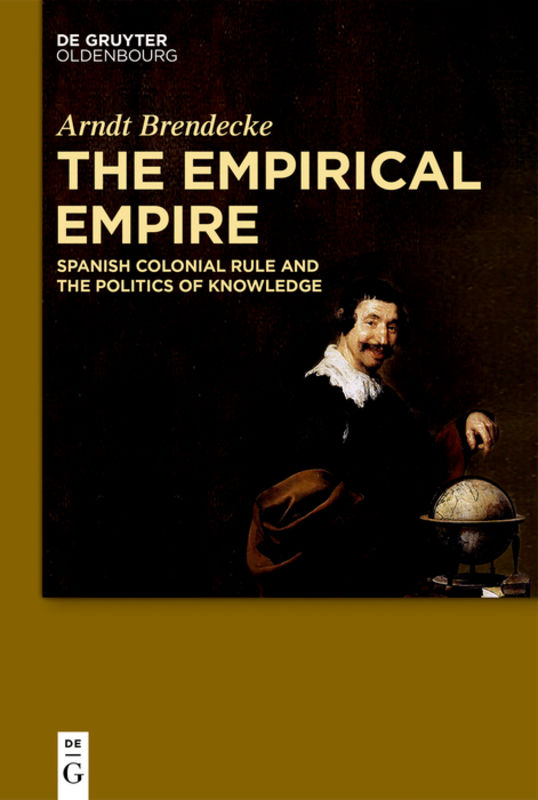
The empirical empire : Spanish colonial rule and the politics of knowledge
How was Spain able to govern its enormous colonial territories?In 1573 the king decreed that his councilors should acquire \"complete knowledge\" about the empire they were running from out of Madrid, and he initiated an impressive program for the systematic collection of empirical knowledge.
eBook

Engaging colonial knowledge : reading European archives in world history
Presenting a set of rich case-studies which demonstrate novel and productive approaches to the study of colonial knowledge, this volume covers British, Danish, Dutch, French, German, Portuguese, and Spanish colonial encounters in Africa, Asia, America and the Pacific, from the sixteenth to the twentieth century.
eBook

Science in the Spanish and Portuguese Empires, 1500–1800
This collection of essays is the first book published in English to provide a thorough survey of the practices of science in the Spanish and Portuguese empires from 1500 to 1800. Authored by an interdisciplinary team of specialists from the United States, Latin America, and Europe, the book consists of fifteen original essays, as well as an introduction and an afterword by renowned scholars in the field. The topics discussed include navigation, exploration, cartography, natural sciences, technology, and medicine. This volume is aimed at both specialists and non-specialists, and is designed to be useful for teaching. It will be a major resource for anyone interested in colonial Latin America.
eBook

Return to Empire: The New U.S. Imperialism in Comparative Historical Perspective
The widespread embrace of imperial terminology across the political spectrum during the past three years has not led to an increased level of conceptual or theoretical clarity around the word \"empire.\" There is also disagreement about whether the United States is itself an empire, and if so, what sort of empire it is; the determinants of its geopolitical stance; and the effects of \"empire as a way of life\" on the \"metropole.\" Using the United States and Germany in the past 200 years as empirical cases, this article proposes a set of historically embedded categories for distinguishing among different types of imperial practice. The central distinction contrasts territorial and nonterritorial types of modern empire, that is, colonialism versus imperialism. Against world-system theory, territorial and nonterritorial approaches have not typically appeared in pure form but have been mixed together both in time and in the repertoire of individual metropolitan states. After developing these categories the second part of the article explores empire's determinants and its effects, again focusing on the German and U.S. cases but with forays into Portuguese and British imperialism. Supporters of overseas empire often couch their arguments in economic or strategic terms, and social theorists have followed suit in accepting these expressed motives as the \"taproot of imperialism\" (J. A. Hobson). But other factors have played an equally important role in shaping imperial practices, even pushing in directions that are economically and geopolitically counterproductive for the imperial power. Postcolonial theorists have rightly emphasized the cultural and psychic processes at work in empire but have tended to ignore empire's effects on practices of economy and its regulation. Current U.S. imperialism abroad may not be a danger to capitalism per se or to America's overall political power, but it is threatening and remaking the domestic post-Fordist mode of social regulation.
Journal Article

Peripheral eyes: Brazilians and India, 1947–61
The post-Second World War era witnessed the need for new political forms to accommodate the aspirations for national identity of newly decolonized nations within the hegemonic structure of the Cold War. Although both Cold War historiography and postcolonial studies have analysed these phenomena, the place of Latin America in general and Brazil in particular remains fraught with conceptual difficulties, largely due to the very different (post)colonial experience of this region from the rest of the ‘Third World’. This article examines how three Brazilian intellectuals and diplomats observed India from its independence until the annexation of Portuguese India by the Indian Union in 1961. In exploring their peripheral gaze, it shows how Brazilian self-identification with the West, and particularly its complex relationship with the heritage of European colonialism, prevented a truly commensurable experience, despite a sense of commonality with India based on their peripheral position in the global political structure.
Journal Article

Labour Ideologies and Labour Relations in Colonial Portuguese America, 1500–1700
During the two first centuries of Portuguese colonization in America there was an intense debate about the legitimacy of enslaving Africans and Indians. In Portuguese America, the mission to spread the Christian faith was connected with the subjection of populations on both sides of the Atlantic Ocean to an ideology that considered labour as God's punishment for Adam's sin. In that sense, the justification of the unfree labour inflicted upon Indians and Africans in Portuguese America was a product of the same ideology, one that condemned manual work as rendering a man dishonourable. The purpose of this article is to review the debate from its medieval origins in Portugal, and to examine what effect the arrival of the Jesuits in America had on that debate, until the final prohibition of Indian enslavement in the mid-eighteenth century, documented by letters, reports, and sermons.
Journal Article

Women in the Portuguese colonial empire: the theatre of shadows
Women in the Portuguese Colonial Empire: The Theatre of Shadows compiles an extensive collection of essays on the status of women throughout the vast Portuguese colonial space, from Brazil to the Far East, crossing Europe, Africa and India, between the 16th and the 20th century. Absent or mystified, silenced or victimized, women in the History of Portugal and its colonial venture are the living example of the part historiographical discourse, ideology and popular memory have played in the con.
eBook