
Catalogue Search | MBRL


Are you sure you want to remove the book from the shelf?

{{itemTitle}}
6,405
result(s) for
"Post-Colonial Studies"
Sort by:

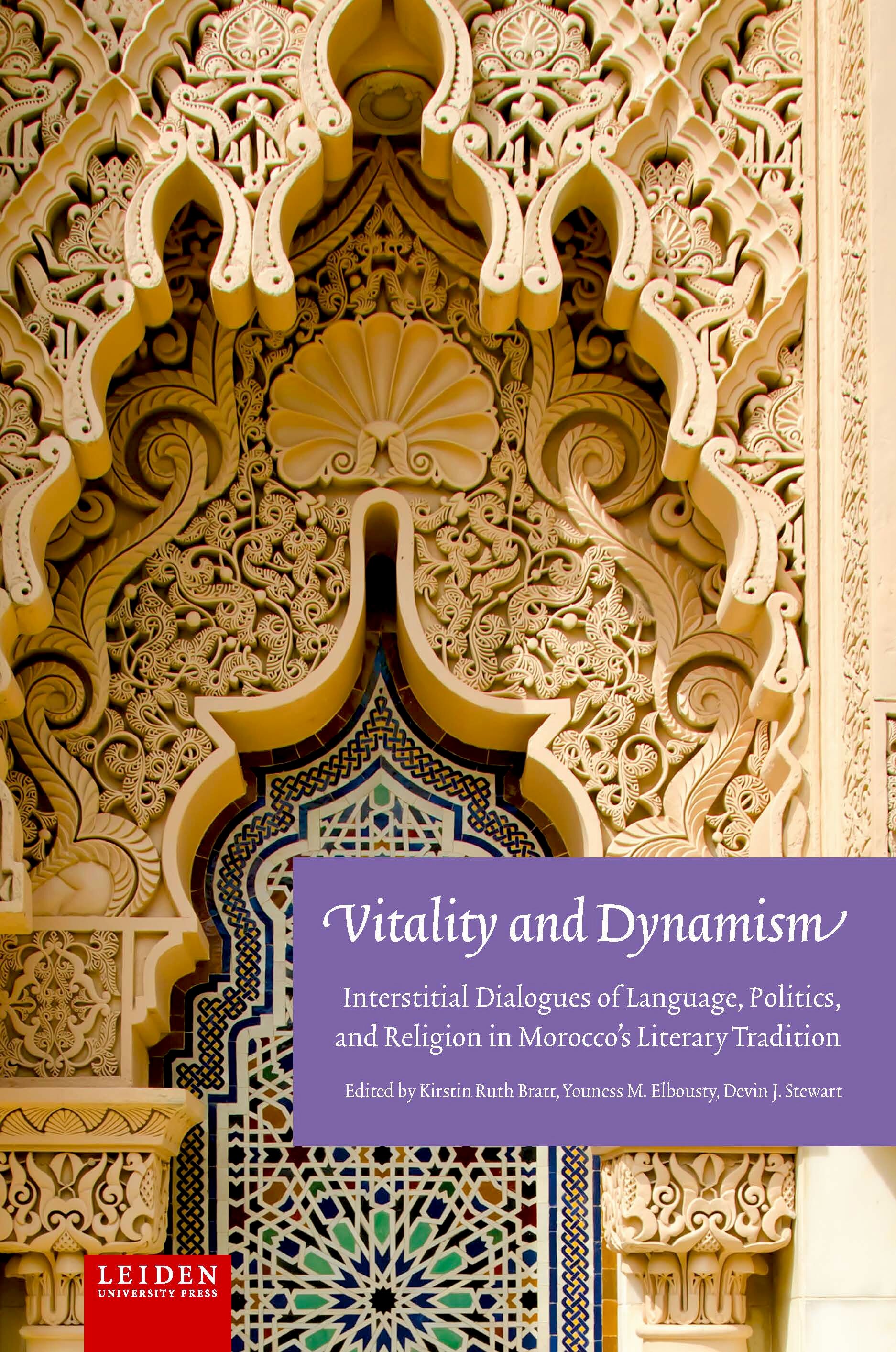
Vitality And Dynamism
Post-colonial theory recognizes that European and American scholars have traditionally defined the themes that are of interest in literary criticism; in Moroccan studies, these themes have tended toward questions of migration, identity, secularism, and religious fanaticism typically questions regarding Morocco in its relationships with colonizing nations. This book intends to re-define the themes of interest in Moroccan studies, looking toward more local themes and movements and relationships of sub-cultures and languages within Morocco. Questions in this volume regard concepts of the self, conflicting discourses, intersections of self-identity and community, and Moroccan reclamation of identity in the post-colonial sphere.
eBook

Vitality And Dynamism : Interstitial Dialogues of Language, Politics, and Religion in Morocco's Literary Tradition
\"Anti-colonial literature is not necessarily ‘combat literature’ as Fanon and Déjeux have both suggested in their own writings. While it is often combative, there is also anti-colonial literature that emphasizes the human and the humane rather than the oppositional and contentious; it cannot be fair to label all anti-colonial literature as combative, even if one were to expand the definition of “combat” to include peaceful struggles against oppression or dehumanization. This book suggests that the relationship between the West and the rest of the world has been imagined as a relationship of Self (the West) to Other (the rest of the world), ordered and bordered geographically by the whims of Europeans and creating a Center-Periphery paradigm. These invented boundaries of humanity serve to separate geographical sites, but more, they serve to enclose the Empire and exoticize other cultures. Boundaries are often spatial, but more often, they are related to relationships and colonialization.\"
eBook

The Routledge Concise History of World Literature
This remarkably broad and informative book offers an introduction to and overview of World Literature. Tracing the term from its earliest roots and situating it within a number of relevant contexts from postcolonialism to postmodernism, Theo D’haen examines:
the return of the term \"world literature\" and its changing meaning
Goethe’s concept of Weltliteratur and how this relates to current debates
theories and theorists who have had an impact on world literature
non-canonical and less-known literatures from around the globe
the possibility and implications of a definition of world literature.
This book is the ideal guide to an increasingly popular and important term in literary studies. It is accessible and engaging and will be invaluable to students of world literature, comparative literature, translation and postcolonial studies and anyone with an interest in these or related topics.
1. Introduction: the (Re)Turn of \"World Literature\" 2. Goethe’s \"Weltliteratur\" and the \"Humanist\" Ideal 3. World Literature and Comparative Literature 4. World Literature as an American Pedagogical Construct 5. World Literature and the Literatures of the World 6. World Literature in the Literary Marketplace 7. World Literature and Translation 8. World Literature, (Post)Modernism and (Post)Colonialism 9. Conclusion: The Struggle for World Literature?
Theo D’haen is Professor of English and Comparative Literature at K.U. Leuven University, Belgium and has also worked in Holland, France, and America. He is Editor-in-Chief of the European Review , and President of FILLM (Fédération Internationale de Langues et Littératures Modernes) 2008-2012.
eBook
Vitality And Dynamism : Interstitial Dialogues of Language, Politics, and Religion in Morocco's Literary Tradition
\"Anti-colonial literature is not necessarily ‘combat literature’ as Fanon and Déjeux have both suggested in their own writings. While it is often combative, there is also anti-colonial literature that emphasizes the human and the humane rather than the oppositional and contentious; it cannot be fair to label all anti-colonial literature as combative, even if one were to expand the definition of “combat” to include peaceful struggles against oppression or dehumanization. This book suggests that the relationship between the West and the rest of the world has been imagined as a relationship of Self (the West) to Other (the rest of the world), ordered and bordered geographically by the whims of Europeans and creating a Center-Periphery paradigm. These invented boundaries of humanity serve to separate geographical sites, but more, they serve to enclose the Empire and exoticize other cultures. Boundaries are often spatial, but more often, they are related to relationships and colonialization.\"
eBook

Postcolonial Theory and International Relations
What can postcolonialism tell us about international relations? What can international relations tell us about postcolonialism?
In recent years, postcolonial perspectives and insights have challenged our conventional understanding of international politics. Postcolonial Theory and International Relations is the first book to provide a comprehensive and accessible survey of how postcolonialism radically alters our understanding of international relations.
Each chapter is written by a leading international scholar and looks at the core components of international relations - theories, the nation, geopolitics, international law, war, international political economy, sovereignty, religion, nationalism, Empire etc. - through a postcolonial lens. In so doing it provides students with a valuable insight into the challenges that postcolonialism poses to our understanding of global politics.
eBook

World Literature After Empire
This book makes the case that the idea of a \"world\" in the cultural and philosophical sense is not an exclusively Western phenomenon. During the Cold War and in the wake of decolonization a plethora of historical attempts were made to reinvent the notions of world literature, world art, and philosophical universality from an anticolonial perspective. Contributing to recent debates on world literature, the postcolonial, and translatability, the book presents a series of interdisciplinary and multilingual case studies spanning Europe, the United States, and China. The case studies illustrate how individual anti-imperialist writers and artists set out to remake the conception of the world in their own image by offering a different perspective centered on questions of race, gender, sexuality, global inequality, and class. The book also discusses how international cultural organizations like the Afro-Asian Writers' Bureau, UNESCO, and PEN International attempted to shape this debate across Cold War divides.
eBook

Between the Bocas
Situated opposite the mouth of the Orinoco River, western Trinidad has long been considered an entrepôt to mainland South America. Trinidad’s geographic position—seen as strategic by various imperial governments—led to many heterogeneous peoples from across the region and globe settling or being relocated there. The calm waters around the Gulf of Paria on the western fringes of Trinidad induced settlers to construct a harbour, Port of Spain, around which the modern capital has been formed. From its colonial roots into the postcolonial era, western Trinidad therefore has played an especial part in the shaping of the island’s literature. Viewed from one perspective, western Trinidad might be deemed as narrating the heart of the modern state’s national literature. Alternatively, the political threats posed around San Fernando in Trinidad’s southwest in the 1930s and from within the capital in the 1970s present a different picture of western Trinidad—one in which the fractures of Trinidad and Tobago’s projected nationalism are prevalent.While sugar remains a dominant narrative in Caribbean literary studies, this book offers a unique literary perspective on matters too often perceived as the sole preserve of sociological, anthropological or geographical studies. The legacy of the oil industry and the development of the suburban commuter belt of East-West Corridor, therefore, form considerable discursive nodes, alongside other key Trinidadian sites, such as Woodford Square, colonial houses and the urban yards of Port of Spain. This study places works by well-known authors such as V. S. Naipaul and Samuel Selvon, alongside writing by Michel Maxwell Philip, Marcella Fanny Wilkins, E. L. Joseph, Earl Lovelace, Ismith Khan, Monique Roffey, Arthur Calder-Marshall, Zenga Longmore and the largely neglected novelist, Yseult Bridges, who is almost entirely forgotten today. Using fiction, calypso, history, memoir, legal accounts, poetry, essays and journalism, this study opens with an analysis of Trinidad’s nineteenth century literature and offers twentieth century and more contemporary readings of the island in successive chapters. Chapters are roughly arranged in chronological order around particular sites and topoi, while literature from a variety of authors of British, Caribbean, Irish and Jewish descent is represented.
eBook

Post-Colonial Studies: The Key Concepts
This hugely popular A-Z guide provides a comprehensive overview of the issues which characterize post-colonialism: explaining what it is, where it is encountered and the crucial part it plays in debates about race, gender, politics, language and identity.
For this third edition over thirty new entries have been added including:
Cosmopolitanism
Development
Fundamentalism
Nostalgia
Post-colonial cinema
Sustainability
Trafficking
World Englishes.
Post-Colonial Studies: The Key Concepts remains an essential guide for anyone studying this vibrant field.
Bill Ashcroft teaches at the University of NSW, Gareth Griffiths at the University of Western Australia and Helen Tiffin at the University of New England. They are the editors of The Post Colonial Studies Reader and the authors of The Empire Writes Back , both published by Routledge.
Introduction List of Key Concepts KEY CONCEPTS Bibliography Name Index Subject Index
eBook

Imperial Imagined Geographies and Greek Worldviews: Center and Periphery in Herodotus
It is well documented that the Teispid-Achaemenid Empire drew on spatial concepts that resonated with those of subject societies in their imperial narratives. In doing so, the empire provided its subjects with a shared geographic sense of belonging, enabling them to envision their place within the imperial space. This article examines the themes of center and periphery in Achaemenid imperial imagined geography and Herodotus’ Histories, exploring whether and how these themes are related. It will be argued that the empire’s conception of space, as outlined in royal inscriptions, impacted the principles by which Herodotus describes the world’s design. The depiction of the peripheries of the inhabited world in the Histories aligns with the empire’s spatial notions, while its concept of centrality also reflects an imperial framework, though it was adapted for a Greek audience to suit their perspectives. By situating Herodotus’ descriptions within the context of imperial communication with subjects, it becomes apparent that imperial imagined geography serves as one conceptual framework underlying his description of the inhabited world.
Journal Article