
Catalogue Search | MBRL


Are you sure you want to remove the book from the shelf?

{{itemTitle}}
49
result(s) for
"Post-Kommunismus"
Sort by:

Post-Communist Mafia State
Having won a two-third majority in Parliament at the 2010 elections, the Hungarian political party Fidesz removed many of the institutional obstacles of exerting power. Just like the party, the state itself was placed under the control of a single individual, who since then has applied the techniques used within his party to enforce submission and obedience onto society as a whole. In a new approach the author characterizes the system as the ‘organized over-world’, the ‘state employing mafia methods’ and the ’adopted political family', applying these categories not as metaphors but elements of a coherent conceptual framework.The actions of the post-communist mafia state model are closely aligned with the interests of power and wealth concentrated in the hands of a small group of insiders. While the traditional mafia channeled wealth and economic players into its spheres of influence by means of direct coercion, the mafia state does the same by means of parliamentary legislation, legal prosecution, tax authority, police forces and secret service. The innovative conceptual framework of the book is important and timely not only for Hungary, but also for other post-communist countries subjected to autocratic rules.
eBook

Civil Society in Central and Eastern Europe
Utilizing a wide range of empirical cases, the contributions in this volume highlight the different aspects of the role, development, and societal background of civil society in Central and Eastern Europe. The first part of the book deals with dissent under socialism. The second part of the book looks at the role of civil society in the Western Balkans in the context of the breakup of the former Yugoslavia and the related ethnic conflicts. The third part examines the role of civil society in the post-Soviet region, which is marked by authoritarian tendencies. The fourth part returns to Central Eastern Europe with an analysis of the impact of EU accession on the role of civil society and considers the underlying aspects of a 'common European memory'. The final section of the book looks at two cases -- one from Central Eastern Europe, one from the CIS region -- of political participation and lobbying by civil society organizations.
eBook

Transforming Post-Communist Political Economies
This ground-breaking new volume focuses on the interaction between political, social, and economic change in Central and Eastern Europe and the New Independent States. It includes a wide selection of analytic papers, thought-provoking essays by leading scholars in diverse fields, and an agenda for future research. It integrates work on the micro and macro levels of the economy and provides a broad overview of the transition process.
This volume broadens the current intellectual and policy debate concerning the historic transition now taking place from a narrow concern with purely economic factors to the dynamics of political and social change. It questions the assumption that the post-communist economies are all following the same path and that they will inevitably develop into replicas of economies in the advanced industrial West. It challenges accepted thinking and promotes the utilization of new methods and perspectives.
eBook
The Transformation of Rural China
During the past quarter century Jonathan Unger has interviewed farmers and rural officials from various parts of China in order to track the extraordinary changes that have swept the countryside from the Maoist era through the Deng era to the present day. A leading specialist on rural China, Professor Unger presents a vivid picture of life in rural areas during the Maoist revolution, and then after the post-Mao disbandment of the collectives. This is a story of unexpected continuities amidst enormous change. Unger describes how rural administrations retain Mao-era characteristics - despite the major shifts that have occurred in the economic and social hierarchies of villages as collectivization and \"class struggle\" gave way to the slogan \"to get rich is glorious.\" A chapter explores the private entrepreneurship that has blossomed in the prosperous parts of the countryside. Another focuses on the tensions and exploitation that have arisen as vast numbers of migrant laborers from poor districts have poured into richer ones. Another, based on five months of travel by jeep into impoverished villages in the interior, describes the dilemmas of under-development still faced by many tens of millions of farmers, and the ways in which government policies have inadvertently hurt their livelihoods.
eBook
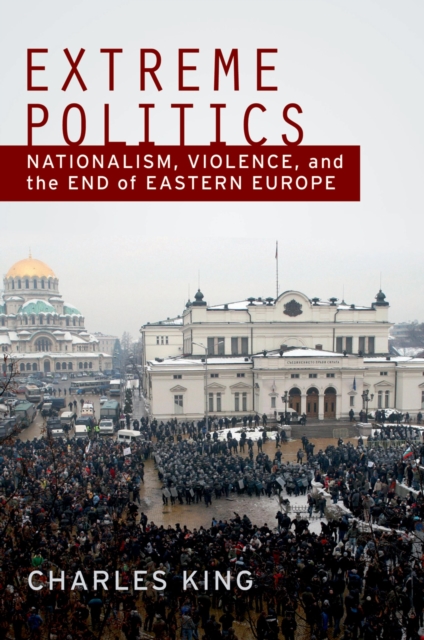
Extreme politics : nationalism, violence, and the end of Eastern Europe
In this wide-ranging set of essays, Charles King examines the conceptual intersection of nationalist ideology, social violence, and the political transformation of Europe and Eurasia over the last two decades. Extreme Politics charts the end of \"Eastern Europe\" as a place and chronicles the ongoing revolution in the scholarly study of Russia, the Balkans, and the wider postcommunist world.
eBook
Privatizing the land: rural political economy in post-communist societies
Privatizing the Land provides an overview of reforms in the state socialist agrarian systems, especially during the 1970s and 1980s in Eastern Europe and the Soviet Union. Using empirical evidence, the contributors provide a balanced assessment of how agrarian economies performed in different communist countries.The Soviet and Eastern European experience is contrasted with reforms in China, Vietnam and Cuba to provide the first comprehensive account of agricultural restructuring after the collapse of communism in Europe and Asia.
eBook
Rural property and economy in post-communist Albania
For nearly half a century, Albania had been one of the most isolated and enigmatic countries in the world, where the confiscation of private property was more thoroughly accomplished than anywhere else in Europe. In an abrupt and radical turnaround beginning in 1991, the bulk of the country's land and assets were distributed to its citizens. This book explores issues and challenges emerging in this new context, focusing specifically on rural areas, and examines the question of how secure current landholders seem to be about their property and what this implies for future investment and land market prospects. What does emerge quite clearly from the author's findings is the important role of historical and regional factors in the economic activities of the rural population. The volume is particularly concerned with some key challenges resulting from the new farm property structure, including land fragmentation, formal credit access, and intra-family property rights issues. This in-depth study at the micro level leads to the conclusion that, in Albania's case, privatization of property does certainly not have the far-reaching salutary effects that western reformers had expected.
eBook

Samizdat, Tamizdat, and Beyond
In many ways what is identified today as \"cultural globalization\" in Eastern Europe has its roots in the Cold War phenomena ofsamizdat(\"do-it-yourself\" underground publishing) andtamizdat(publishing abroad). This volume offers a new understanding of how information flowed between East and West during the Cold War, as well as the much broader circulation of cultural products instigated and sustained by these practices. By expanding the definitions ofsamizdatandtamizdatfrom explicitly political, print publications to include other forms and genres, this volume investigates the wider cultural sphere of alternative and semi-official texts, broadcast media, reproductions of visual art and music, and, in the post-1989 period, new media. The underground circulation of uncensored texts in the Cold War era serves as a useful foundation for comparison when looking at current examples of censorship, independent media and the use of new media in countries like China, Iran, and the former Yugoslavia.
eBook

Europe Undivided
The quality of political competition at the moment of transition explains the divergence in the domestic trajectories of East European states, steering Poland, Hungary, and the Czech Republic towards liberal democracy, and Romania, Bulgaria and Slovakia towards illiberal democracy after 1989. From 1989 to 1994, the European Union (EU) exerted only passive leverage on its democratizing neighbours, reinforcing liberal strategies of reform but failing to avert illiberal ones. After 1995, the EU exerted active leverage on the domestic politics of credible future members through the enlargement process. The benefits and requirements of EU membership, combined with the structure of the EU’s pre-accession process, interacted with domestic factors to improve the quality of political competition and to accelerate political and economic reforms in candidate states. The enlargement of the EU has thus promoted a convergence towards liberal democracy across the region. I unpack the consequences of the pre-accession process for the quality of democracy in the new members, the dynamics of the negotiations between the old members and the candidates, and the impact of the 2004 enlargement on the future of European integration. I conclude by exploring the usefulness of the EU’s active leverage in promoting liberal democracy in other prospective members such as Turkey and the states of the Western Balkans, and the trade-offs of further enlargements for the EU itself. The most successful tool of EU foreign policy has turned out to be EU enlargement—and this book helps us understand why and how it works.
eBook

The Sino-Soviet Split
A decade after the Soviet Union and the People's Republic of China established their formidable alliance in 1950, escalating public disagreements between them broke the international communist movement apart. InThe Sino-Soviet Split, Lorenz Lüthi tells the story of this rupture, which became one of the defining events of the Cold War. Identifying the primary role of disputes over Marxist-Leninist ideology, Lüthi traces their devastating impact in sowing conflict between the two nations in the areas of economic development, party relations, and foreign policy. The source of this estrangement was Mao Zedong's ideological radicalization at a time when Soviet leaders, mainly Nikita Khrushchev, became committed to more pragmatic domestic and foreign policies.
Using a wide array of archival and documentary sources from three continents, Lüthi presents a richly detailed account of Sino-Soviet political relations in the 1950s and 1960s. He explores how Sino-Soviet relations were linked to Chinese domestic politics and to Mao's struggles with internal political rivals. Furthermore, Lüthi argues, the Sino-Soviet split had far-reaching consequences for the socialist camp and its connections to the nonaligned movement, the global Cold War, and the Vietnam War.
The Sino-Soviet Splitprovides a meticulous and cogent analysis of a major political fallout between two global powers, opening new areas of research for anyone interested in the history of international relations in the socialist world.
eBook