
Catalogue Search | MBRL


Are you sure you want to remove the book from the shelf?

{{itemTitle}}
213
result(s) for
"Postwar reconstruction Case studies."
Sort by:


Political Economy of Statebuilding
This volume examines and evaluates the impact of international statebuilding interventions on the political economy of conflict-affected countries over the past 20 years. It focuses on countries that are emerging, or have recently emerged, from periods of war and protracted conflict. The interventions covered fall into three broad categories:
international administrations and transformative occupations (East Timor, Iraq, and Kosovo);
complex peace operations (Afghanistan, Burundi, Haiti, and Sudan);
governance and statebuilding programmes conducted in the context of economic assistance (Georgia and Macedonia).
This book will be of interest to students of statebuilding, humanitarian intervention, post-conflict reconstruction, political economy, international organisations and IR/Security Studies in general.
eBook


The Day After
Since 9/11, why have we won smashing battlefield victories only
to botch nearly everything that comes next? In the opening phases
of war in Afghanistan, Iraq, and Libya, we mopped the floor with
our enemies. But in short order, things went horribly wrong.
We soon discovered we had no coherent plan to manage the \"day
after.\" The ensuing debacles had truly staggering consequences-many
thousands of lives lost, trillions of dollars squandered, and the
apparent discrediting of our foreign policy establishment. This
helped set the stage for an extraordinary historical moment in
which America's role in the world, along with our commitment to
democracy at home and abroad, have become subject to growing doubt.
With the benefit of hindsight, can we discern what went wrong? Why
have we had such great difficulty planning for the aftermath of
war?
In The Day After , Brendan Gallagher-an Army lieutenant
colonel with multiple combat tours to Iraq and Afghanistan, and a
Princeton Ph.D.-seeks to tackle this vital question. Gallagher
argues there is a tension between our desire to create a new
democracy and our competing desire to pull out as soon as possible.
Our leaders often strive to accomplish both to keep everyone happy.
But by avoiding the tough underlying decisions, it fosters an
incoherent strategy. This makes chaos more likely.
The Day After draws on new interviews with dozens of
civilian and military officials, ranging from US cabinet
secretaries to four-star generals. It also sheds light on how, in
Kosovo, we lowered our postwar aims to quietly achieve a surprising
partial success. Striking at the heart of what went wrong in our
recent wars, and what we should do about it, Gallagher asks whether
we will learn from our mistakes, or provoke even more disasters?
Human lives, money, elections, and America's place in the world may
hinge on the answer.
eBook

War veterans in postwar situations : Chechnya, Serbia, Turkey, Peru, and Cote d'Ivoire
\"This edited volume deals with the reintegration and trajectories of intrastate or interstate war veterans. It raises the question of the effects of the war experience on ex-combatants with regards, in particular, to the perpetuation of a certain level of violence as well as the maintaining of structures, networks, and war methods after the war. The book considers various modalities of reintegration and analyzes how they are linked to resources, statuses, and sociabilities that were all built during the war. The various chapters of the book also analyze the role of policies that were made for war veterans, the way society welcomed them back, and the social and economic context. \"-- Provided by publisher.
Book

Stabilization Operations, Security and Development
This edited volume provides a critical overview of the new stabilization agenda in international relations.
The primary focus of so-called stability operations since 9/11 has been Afghanistan, Pakistan and Iraq. Covering the wider picture, this volume provides a comprehensive assessment of the new agenda, including the expansion of efforts in Latin America, the Caribbean, Sub-Saharan Africa and South and Southeast Asia. By harnessing the findings of studies undertaken in Brazil, Colombia, Haiti, Jamaica, Kenya, Democratic Republic of the Congo (DRC), Sudan and Sri Lanka, the volume demonstrates the impacts - intended and otherwise - of stabilization in practice.
The book clarifies the debate on stabilization, focusing primarily on the policy, practice and outcomes of such operations. Rather than relying exclusively on existing military doctrine or academic writings, the volume focuses on stabilization as it is actually occurring. Drawing on the reflections of scholars and practitioners, the volume identifies the origins and historical antecedents of contemporary operations, and also examines how the practice is linked to other policy spheres - ranging from peacebuilding to statebuilding. Finally, the volume reviews eight practical cases of stabilization in disparate regions around the globe.
This book will be of much interest to students of war and conflict studies, peacekeeping and peacebuilding, statebuilding, development studies and international relations in general.
eBook


Violence in Post-Conflict Societies
This book compares post-civil war societies to look at the presence or absence of organized violence, analysing why some ex-combatants return to organised violence and others do not.
Even though former fighters have been identified as a major source of insecurity, there have been few efforts to systematically examine why some ex-combatants re-engage in organized violence, while others do not. This book compares the presence or absence of organized violence in different ex-combatant communities - former fighters that used to belong to the same armed faction and who share a common, horizontal identity based on shared war-and peacetime experiences - in the Republic of Congo (ex-Cobras, Cocoyes and Ninjas) and Sierra Leone (ex-Armed Forces Revolutionary Council, Civil Defense Force and Revolutionary United Front). The main determinants of ex-combatant violence are whether former fighters have access to elites and to second-tier individuals - such as former mid-level commanders - who can act as intermediaries between the two. By utilizing relationships based on selective incentives and social networks, these two kinds of remobilizers are able to generate the needed enticements and feelings of affinity, trust or fear to convince ex-combatants to resort to arms. These findings demonstrate that the outbreak of ex-combatant violence can only be understood by more clearly incorporating an actor perspective, focusing on three levels of analysis: the elite, midlevel and grass-root.
This book will be of much interest to students of peacebuilding, civil wars, post-conflict reconstruction, war and conflict studies, security studies and IR.
eBook

After Civil War
Civil war inevitably causes shifts in state boundaries, demographics, systems of rule, and the bases of legitimate authoritymany of the markers of national identity. Yet a shared sense of nationhood is as important to political reconciliation as the reconstruction of state institutions and economic security.After Civil Warcompares reconstruction projects in Bosnia, Cyprus, Finland, Greece, Kosovo, Northern Ireland, the Republic of Ireland, Spain, and Turkey in order to explore how former combatants and their supporters learn to coexist as one nation in the aftermath of ethnopolitical or ideological violence.
After Civil Warsynthesizes research on civil wars, reconstruction, and nationalism to show how national identity is reconstructed over time in different cultural and socioeconomic contexts, in strong nation-states as well as those with a high level of international intervention. Chapters written by anthropologists, historians, political scientists, and sociologists examine the relationships between reconstruction and reconciliation, the development of new party systems after war, and how globalization affects the processes of peacebuilding.After Civil Warthus provides a comprehensive, comparative perspective to a wide span of recent political history, showing postconflict articulations of national identity can emerge in the long run within conducive institutional contexts.
Contributors: Risto Alapuro, Vesna Bojicic-Dzelilovic, Chares Demetriou, James Hughes, Joost Jongerden, Bill Kissane, Denisa Kostovicova, Michael Richards, Ruth Seifert, Riki van Boeschoten.
eBook
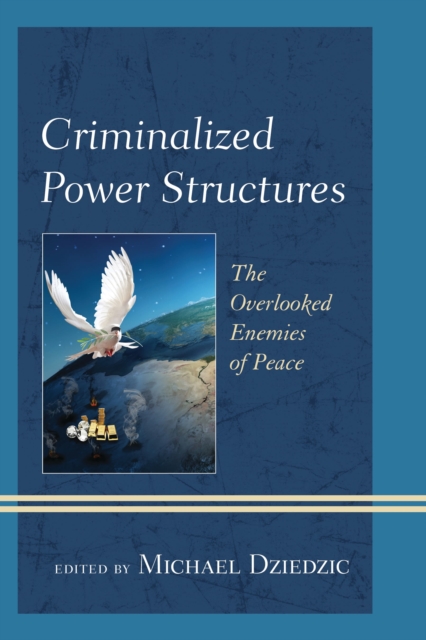
Criminalized power structures
Criminalized power structures (CPS) are illicit networks that profit from transactions in black markets and from criminalized state institutions while perpetuating a culture of impunity. The book articulates a typology for assessing the threats of CPS and for implementing appropriate strategies to achieve sustainable peace.
eBook