
Catalogue Search | MBRL


Are you sure you want to remove the book from the shelf?

{{itemTitle}}
25
result(s) for
"Poverty-Health aspects-United States"
Sort by:

Poverty and Place
This bookexamines ways in which cancer health disparities exist due to class and context inequities even in the most advanced society of the world.This volume, while articulating health disparities in the St.Louis, Missouri metropolitan area, including East St.Louis, Illinois, seeks to move beyond deficit models to focus on health equity.
eBook

Between Citizens and the State
This book tracks the dramatic outcomes of the federal government's growing involvement in higher education between World War I and the 1970s, and the conservative backlash against that involvement from the 1980s onward. Using cutting-edge analysis, Christopher Loss recovers higher education's central importance to the larger social and political history of the United States in the twentieth century, and chronicles its transformation into a key mediating institution between citizens and the state.
Framed around the three major federal higher education policies of the twentieth century--the 1944 GI Bill, the 1958 National Defense Education Act, and the 1965 Higher Education Act--the book charts the federal government's various efforts to deploy education to ready citizens for the national, bureaucratized, and increasingly global world in which they lived. Loss details the myriad ways in which academic leaders and students shaped, and were shaped by, the state's shifting political agenda as it moved from a preoccupation with economic security during the Great Depression, to national security during World War II and the Cold War, to securing the rights of African Americans, women, and other previously marginalized groups during the 1960s and '70s. Along the way, Loss reappraises the origins of higher education's current-day diversity regime, the growth of identity group politics, and the privatization of citizenship at the close of the twentieth century.
At a time when people's faith in government and higher education is being sorely tested, this book sheds new light on the close relations between American higher education and politics.
eBook

American health crisis : one hundred years of panic, planning, and politics
A history of U.S. public health emergencies and how we can turn the tide. Despite enormous advances in medical science and public health education over the last century, access to health care remains a dominant issue in American life. U.S. health care is often hailed as the best in the world, yet the public health emergencies of today often echo the public health emergencies of yesterday: consider the Great Influenza Pandemic of 1918–19 and COVID-19, the displacement of the Dust Bowl and the havoc of Hurricane Maria, the Reagan administration's antipathy toward the AIDS epidemic and the lack of accountability during the water crisis in Flint, Michigan. Spanning the period from the presidency of Woodrow Wilson to that of Donald Trump, American Health Crisis illuminates how—despite the elevation of health care as a human right throughout the world—vulnerable communities in the United States continue to be victimized by structural inequalities across disparate geographies, income levels, and ethnic groups. Martin Halliwell views contemporary public health crises through the lens of historical and cultural revisionings, suturing individual events together into a narrative of calamity that has brought us to our current crisis in health politics. American Health Crisis considers the future of public health in the United States and, presenting a reinvigorated concept of health citizenship, argues that now is the moment to act for lasting change.
eBook

Rethinking Abortion
Mark Graber looks at the history of abortion law in action to argue that the only defensible, constitutional approach to the issue is to afford all women equal choice--abortion should remain legal or bans should be strictly enforced. Steering away from metaphysical critiques of privacy, Graber compares the philosophical, constitutional, and democratic merits of the two systems of abortion regulation witnessed in the twentieth century: pre-Roe v. Wadestatutory prohibitions on abortion andRoe'sban on significant state interference with the market for safe abortion services. He demonstrates that beforeRoe,pro-life measures were selectively and erratically administered, thereby subverting our constitutional commitment to equal justice. Claiming that these measures would be similarly administered if reinstated, the author seeks to increase support for keeping abortion legal, even among those who have reservations about its morality.
Abortion should remain legal, Graber argues, because statutory bans on abortion have a history of being enforced in ways that intentionally discriminate against poor persons and persons of color. In the years beforeRoe, the same law enforcement officials who routinely ignored and sometimes assisted those physicians seeking to terminate pregnancies for their private patients too often prevented competent abortionists from offering the same services to the general public. This double standard violated the fundamental human and constitutional right of equal justice under law, a right that remains a major concern of the equal protection clause of the Fourteenth Amendment.
eBook

Structural Intimacies
One of the most relevant social problems in contemporary American life is the continuing HIV epidemic in the Black population. With vivid ethnographic detail, this book brings together scholarship on the structural dimensions of the AIDS epidemic and the social construction of sexuality to assert that shifting forms of sexual stories-structural intimacies-are emerging, produced by the meeting of intimate lives and social structural patterns. These stories render such inequalities as racism, poverty, gender power disparities, sexual stigma, and discrimination as central not just to the dramatic, disproportionate spread of HIV in Black communities in the United States, but to the formation of Black sexualities.Sonja Mackenzie elegantly argues that structural vulnerability is felt-quite literally-in the blood, in the possibilities and constraints on sexual lives, and in the rhetorics of their telling. The circulation of structural intimacies in daily life and in the political domain reflects possibilities for seeking what Mackenzie callsintimate justiceat the nexus of cultural, economic, political, and moral spheres.Structural Intimaciespresents a compelling case: in an era of deepening medicalization of HIV/AIDS, public health must move beyond individual-level interventions to community-level health equity frames and policy changes
eBook
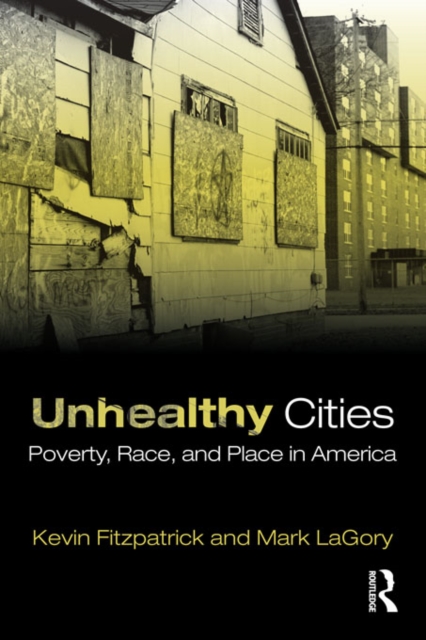
Unhealthy Cities
The purpose of this book is to show the important role that space and place plays in the health of urban residents, particularly those living in high poverty ghettos. The book brings together research and writing from a variety of disciplines to demonstrate the health costs of being poor in America's cities. Both authors are committed to raising awareness of structural factors that promote poverty and injustice in a society that proclaims its commitment to equality of opportunity. Our health is often dramatically affected by where we live; some parts of the city seem to be designed to make people sick. The book is intended for students and professionals in urban sociology, medical sociology, public health, and community planning.
eBook
New century, old disparities
Despite sustained economic growth at the end of the 20th and the beginning of the 21st century, Latin America and the Caribbean still faces high inequality and weak indicators of well-being among certain population groups. Women, people of African ancestry, and indigenous peoples are often at the bottom of the income distribution. The share of female-headed households rose in the past 20 years. By the beginning of the 1990s, women headed 1.2 percent of complete households (households in which both husband and wife are present) and 79.8 percent of single- head households. This book presents a regional overview of gender and ethnic disparities in labor earnings during this last turn of the century. Latin America and the Caribbean provide a rich environment for studying social inequality, because historical inequalities along gender and ethnic lines persist, despite positive indicators of economic development. The extent of inequality and its probable causes vary widely across the many countries in the region. The book adopts a sophisticated econometric methodology for measuring earnings gaps and applies it consistently across and within countries to measure gender and racial or ethnic differences. The analysis includes a dynamic dimension that sheds light on the evolution of earnings gaps over time. The book offers important insights on economic and political strategies that could be adopted to reduce inequality. The reduction of gender-based segregation in the workplace represents an area in which policy interventions can improve the efficiency of labor markets. Determining whether addressing occupational rather than hierarchical segregation is more effective is one of the areas of policy design to which this book aims to make a contribution. Latin America and the Caribbean is also a racially and ethnically diverse region, with some 400 ethnic groups.
eBook

Unhealthy Places
Unhealthy Places focuses on issues of health in today's cities.By arguing that place matters in relation to the population's health, Kevin Fitzpatrick and Mark LaGory make a convincing argument about the general unhealthiness of urban environments and, thus, of the urban dweller.
eBook

Homelessness, health, and human needs
Evaluates the eligibility requirements in existing health care programs, the efficiency of health care delivery, and includes recommendations to improve the availability of health care.
eBook

Katrina's Imprint
Katrina's Imprinthighlights the power of this sentinel American event and its continuing reverberations in contemporary politics, culture, and public policy. Published on the fifth anniversary of Hurricane Katrina, the multidisciplinary volume reflects on how history, location, access to transportation, health care, and social position feed resilience, recovery, and prospects for the future of New Orleans and the Gulf region. Essays examine the intersecting vulnerabilities that gave rise to the disaster, explore the cultural and psychic legacies of the storm, reveal how the process of rebuilding and starting over replicates past vulnerabilities, and analyze Katrina's imprint alongside American's myths of self-sufficiency. A case study of new weaknesses that have emerged in our era, this book offers an argument for why we cannot wait for the next disaster before we apply the lessons that should be learned from Katrina.
eBook