
Catalogue Search | MBRL


Are you sure you want to remove the book from the shelf?

{{itemTitle}}
24,630
result(s) for
"Power (Psychology)"
Sort by:


Power and organizations
A comprehensive account of power and organizations, unlocking power as the central relation of modern organizations and society. The authors present an excellent synthesis of organization, social and political theory to offer an overview of power and organizations that is historically informed, addresses current issues and is comprehensive in scope.
eBook


The Good Life of the Powerful: The Experience of Power and Authenticity Enhances Subjective Well-Being
A common cliché and system-justifying stereotype is that power leads to misery and self-alienation. Drawing on the power and authenticity literatures, however, we predicted the opposite relationship. Because power increases the correspondence between internal states and behavior, we hypothesized that power enhances subjective well-being (SWB) by leading people to feel more authentic. Across four surveys representing markedly different primary social roles (general, work, romantic-relationship, and friendship surveys; Study 1), and in an experiment (Study 2a), we found consistent evidence that experiencing power leads to greater SWB. Moreover, authenticity mediated this effect. Further establishing the causal importance of authenticity, a final experiment (Study 2b), in which authenticity was manipulated, demonstrated that greater authenticity directly increased SWB. Although striving for power lowers well-being, these results demonstrate the pervasive positive psychological effects of having power, and indicate the importance of spreading power to enhance collective well-being.
Journal Article

Power Posing: Brief Nonverbal Displays Affect Neuroendocrine Levels and Risk Tolerance
Humans and other animals express power through open, expansive postures, and they express powerlessness through closed, contractive postures. But can these postures actually cause power? The results of this study confirmed our prediction that posing in high-power nonverbal displays (as opposed to low-power nonverbal displays) would cause neuroendocrine and behavioral changes for both male and female participants: High-power posers experienced elevations in testosterone, decreases in cortisol, and increased feelings of power and tolerance for risk; low-power posers exhibited the opposite pattern. In short, posing in displays of power caused advantaged and adaptive psychological, physiological, and behavioral changes, and these findings suggest that embodiment extends beyond mere thinking and feeling, to physiology and subsequent behavioral choices.That a person can, by assuming two simple I-min poses, embody power and instantly become more powerful has real-world, actionable implications.
Journal Article
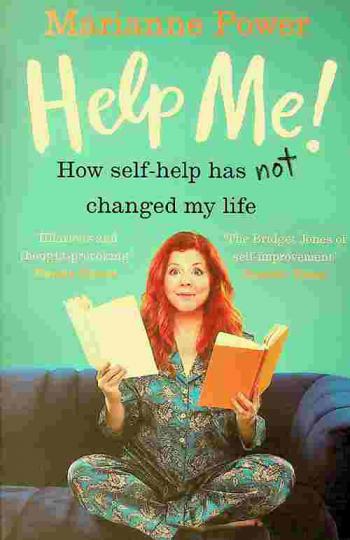
Help me ! : how self-help has not changed my life
Marianne Power was stuck in a rut. Then one day she wondered: could self-help books help her find the elusive perfect life? She decided to test one book a month for a year, following their advice to the letter. What would happen if she followed the 7 Habits of Highly Effective People? Really felt The Power of Now? Could life be transformed? Because she honestly did want all the things these books promised. To find a Love that Lasts and to unearth The Secret to making your dreams come true. What begins as a clever experiment becomes an achingly poignant story. Because self-help can change your life -- but not necessarily for the better . . . Help Me is a hysterically funny and incredibly moving book about a wild and ultimately redemptive journey that will resonate with anyone who's ever dreamed of finding happiness.
The Irony of Harmony: Intergroup Contact Can Produce False Expectations for Equality
Positive intergroup contact has been a guiding framework for research on reducing intergroup tension and for interventions aimed at that goal. We propose that beyond improving attitudes toward the out-group, positive contact affects disadvantaged-group members' perceptions of intergroup inequality in ways that can undermine their support for social change toward equality. In Study 1, participants were assigned to either high- or low-power experimental groups and then brought together to discuss either commonalities between the groups or inter-group differences. Commonality-focused contact, relative to difference-focused contact, produced heightened expectations for fair (i.e., egalitarian) out-group behavior among members of disadvantaged groups. These expectations, however, proved unrealistic when compared against the actions of members of the advantaged groups. Participants in Study 2 were Israeli Arabs (a disadvantaged minority) who reported the amount of positive contact they experienced with Jews. More positive intergroup contact was associated with increased perceptions of Jews as fair, which in turn predicted decreased support for social change. Implications for social change are considered.
Journal Article

Powerarchy : understanding the psychology of oppression for social transformation
\"Harvard-educated psychologist and Bestselling author Dr. Melanie Joy presents a new, psychology and research based, theory for understanding power as a system that that harms dignity and violates integrity- and offers practical ways for readers to start transforming systems of oppression right away\"-- Provided by publisher.
Book

Developmental Changes in Adolescents' Perceptions of Relationships with Their Parents
This 4-wave longitudinal study examines developmental changes in adolescents' perceptions of parent-adolescent relationships by assessing parental support, conflict with parents, and parental power. A total of 951 early adolescents (50.4% boys) and 390 middle adolescents (43.3% boys) participated. Univariate and multivariate growth curve analyses showed that support declined from early to middle adolescence for boys and girls and increased from middle to late adolescence for girls, while stabilizing for boys. Conflict was found to temporarily increase during middle adolescence. Parental power (relative power and dominance of parents) decreased from early to late adolescence. Results indicated that: (1) parent-adolescent relationships become more egalitarian during adolescence, (2) parents perceived by adolescents as powerful are viewed as supportive, especially in early adolescence, and (3) perceived conflict with parents is related to but not an impetus for changes in parent-adolescent relationships towards more equality.
Journal Article