
Catalogue Search | MBRL


Are you sure you want to remove the book from the shelf?

{{itemTitle}}
3,466
result(s) for
"Power (Social sciences) -- Africa"
Sort by:


Coloniality of power in postcolonial Africa : myths of decolonization
This lively book interrogates the African postcolonial condition with a focus on the thematics of liberation predicament and the long standing crisis of dependence (epistemological, cultural, economic, and political) created by colonialism and coloniality. A sophisticated deployment of historical, philosophical, and political knowledge in combination with the equi-primordial concepts of coloniality of power, coloniality of being, and coloniality of knowledge yields a comprehensive and truly refreshing understanding of African realities of subalternity. How global imperial designs and coloniality of power shaped the architecture of African social formations and disciplined the social forces towards a convoluted ëpostcolonial neocolonizedí paralysis dominated by myths of decolonization and illusions of freedom emerges poignantly in this important book. What distinguishes this book is its decolonial entry that enables a critical examination of the grammar of decolonization that is often wrongly conflated with that of emancipation; bold engagement with the intractable question of what and who is an African; systematic explication of the role of coloniality in sustaining Euro-American hegemony; and unmasking of how the ëpostcolonialí is interlocked with the ëneocolonialí paradoxically. It is within this context that the postcolonial African state emerges as a leviathan, and the ëpostcolonialí reality becomes a terrain of contradictions mediated by the logic of violence. No doubt, Sabelo Ndlovu-Gatsheniís handling of complex concepts and difficult questions of the day is remarkable, particularly the decoding and mixing of complex theoretical interventions from Africa and Latin America to enlighten the present, without losing historical perspicacity. To buttress the theoretical arguments, detailed empirical case studies of South Africa, Zimbabwe, DRC and Namibia completes this timely contribution to African Studies.
eBook


The Franco-Mauritian Elite
Mauritian independence in 1968 marked the end of a regime favorable to the Franco-Mauritians, the island's white colonial elite. Now, in postcolonial Mauritius, this group is faced with a much more diverse power constellation and often feels in competition with others vying for their privileges. Though this is a clear departure from the colonial heydays, Franco-Mauritians have been able to continue their elite position into the early twenty-first century. This book focuses on the power of white elites still lingering on in postcolonial realities, and with regards to elites and power in general, addresses anew how an elite group aims to prolong its position over time.
eBook

Ethnic politics and state power in Africa : the logic of the coup-civil war trap
\"Why are some African countries trapped in vicious cycles of ethnic exclusion and civil war, while others experience relative peace? In this groundbreaking book, Philip Roessler addresses this question. Roessler models Africa's weak, ethnically-divided states as confronting rulers with a coup-civil war trap--sharing power with ethnic rivals is necessary to underwrite societal peace and prevent civil war, but increases rivals' capabilities to seize sovereign power in a coup d'âetat. How rulers respond to this strategic trade-off is shown to be a function of their country's ethnic geography and the distribution of threat capabilities it produces. Moving between in-depth case studies of Sudan and the Democratic Republic of the Congo based on years of field work and statistical analyses of powersharing, coups and civil war across sub-Saharan Africa, the book serves as an exemplar of the benefits of mixed methods research for theory-building and testing in comparative politics\"--Publisher description.
Book

The African National Congress and the Regeneration of Political Power
The ANC is a party-movement that draws on its liberation credentials yet is conflicted by a multitude of weaknesses, factions and internal succession battles. Booysen constructs her analysis around the ANC’s four faces of political power – organisation, people, political parties and elections, and policy and government – and explores how, since 1994, it has acted to continuously regenerate its power.
eBook

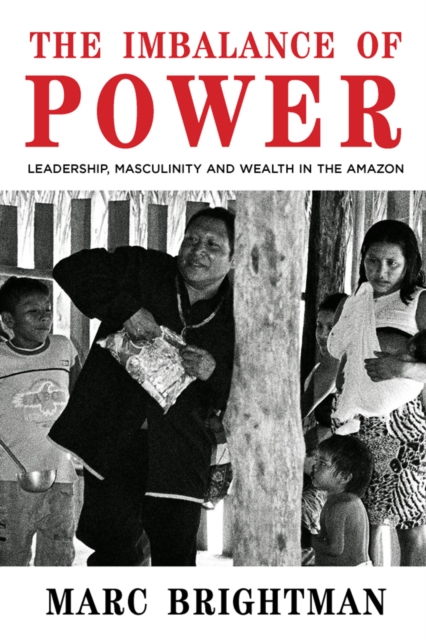
The imbalance of power
The Imbalance of Power demonstrates that the indigenous societies of the Guiana region of Amazonia do not fit conventional characterizations of 'simple' political units with 'egalitarian' political ideologies and 'harmonious' relationships with nature.
eBook


A History of Social Justice and Political Power in the Middle East
From ancient Mesopotamia into the 20th century, \"the Circle of Justice\" as a concept has pervaded Middle Eastern political thought and underpinned the exercise of power in the Middle East. The Circle of Justice depicts graphically how a government's justice toward the population generates political power, military strength, prosperity, and good administration.
This book traces this set of relationships from its earliest appearance in the political writings of the Sumerians through four millennia of Middle Eastern culture. It explores how people conceptualized and acted upon this powerful insight, how they portrayed it in symbol, painting, and story, and how they transmitted it from one regime to the next. Moving towards the modern day, the author shows how, although the Circle of Justice was largely dropped from political discourse, it did not disappear from people's political culture and expectations of government. The book demonstrates the Circle's relevance to the Iranian Revolution and the rise of Islamist movements all over the Middle East, and suggests how the concept remains relevant in an age of capitalism.
A \"must read\" for students, policymakers, and ordinary citizens, this book will be an important contribution to the areas of political history, political theory, Middle East studies and Orientalism.
eBook