
Catalogue Search | MBRL


Are you sure you want to remove the book from the shelf?

{{itemTitle}}
56
result(s) for
"Power (Social sciences) Southern States History."
Sort by:


The Last Afrikaner Leaders
Finalist for the Alan Paton Award
In his latest book, renowned historian Hermann Giliomee challenges the conventional wisdom on the downfall of white rule and the end of apartheid. Instead of impersonal forces, or the resourcefulness of an indomitable resistance movement, he emphasizes the role of Nationalist leaders and of their outspoken critic Frederick van Zyl Slabbert. What motivated each of the last Afrikaner leaders, from Verwoerd to de Klerk? How did each try to reconcile economic growth, white privilege, and security with the demands of an increasingly assertive black leadership and unexpected population figures?
In exploring each leader's background, reasoning, and personal foibles, Giliomee takes issue with the assumption that South Africa was inexorably heading for an ANC victory in 1994. He argues that historical accidents radically affected the course of politics.
Drawing on primary sources and personal interviews, Giliomee offers a fresh and stimulating political history that attempts not to condemn but to understand why the last Afrikaner leaders did what they did, and why their own policies ultimately failed them.
Reconsiderations in Southern African History
eBook

Conjuring Crisis
How have civil rights transformed racial politics in America? Connecting economic and social reforms to racial and class inequality,Conjuring Crisiscounters the myth of steady race progress by analyzing how the federal government and local politicians have sometimes \"reformed\" politics in ways that have amplified racism in the post civil-rights era.In the 1990s at Fort Bragg and Fayetteville, North Carolina, the city's dominant political coalition of white civic and business leaders had lost control of the city council. Amid accusations of racism in the police department, two white council members joined black colleagues in support of the NAACP's demand for an investigation. George Baca's ethnographic research reveals how residents and politicians transformed an ordinary conflict into a \"crisis\" that raised the specter of chaos and disaster. He explores new territory by focusing on the broader intersection of militarization, urban politics, and civil rights.
eBook

Living for the City
In this nuanced and groundbreaking history, Donna Murch argues that the Black Panther Party (BPP) started with a study group. Drawing on oral history and untapped archival sources, she explains how a relatively small city with a recent history of African American settlement produced such compelling and influential forms of Black Power politics.During an era of expansion and political struggle in California's system of public higher education, black southern migrants formed the BPP. In the early 1960s, attending Merritt College and other public universities radicalized Huey Newton, Bobby Seale, and many of the young people who joined the Panthers' rank and file. In the face of social crisis and police violence, the most disfranchised sectors of the East Bay's African American community--young, poor, and migrant--challenged the legitimacy of state authorities and of an older generation of black leadership. By excavating this hidden history,Living for the Citybroadens the scholarship of the Black Power movement by documenting the contributions of black students and youth who created new forms of organization, grassroots mobilization, and political literacy.
eBook
Disturbing the Peace
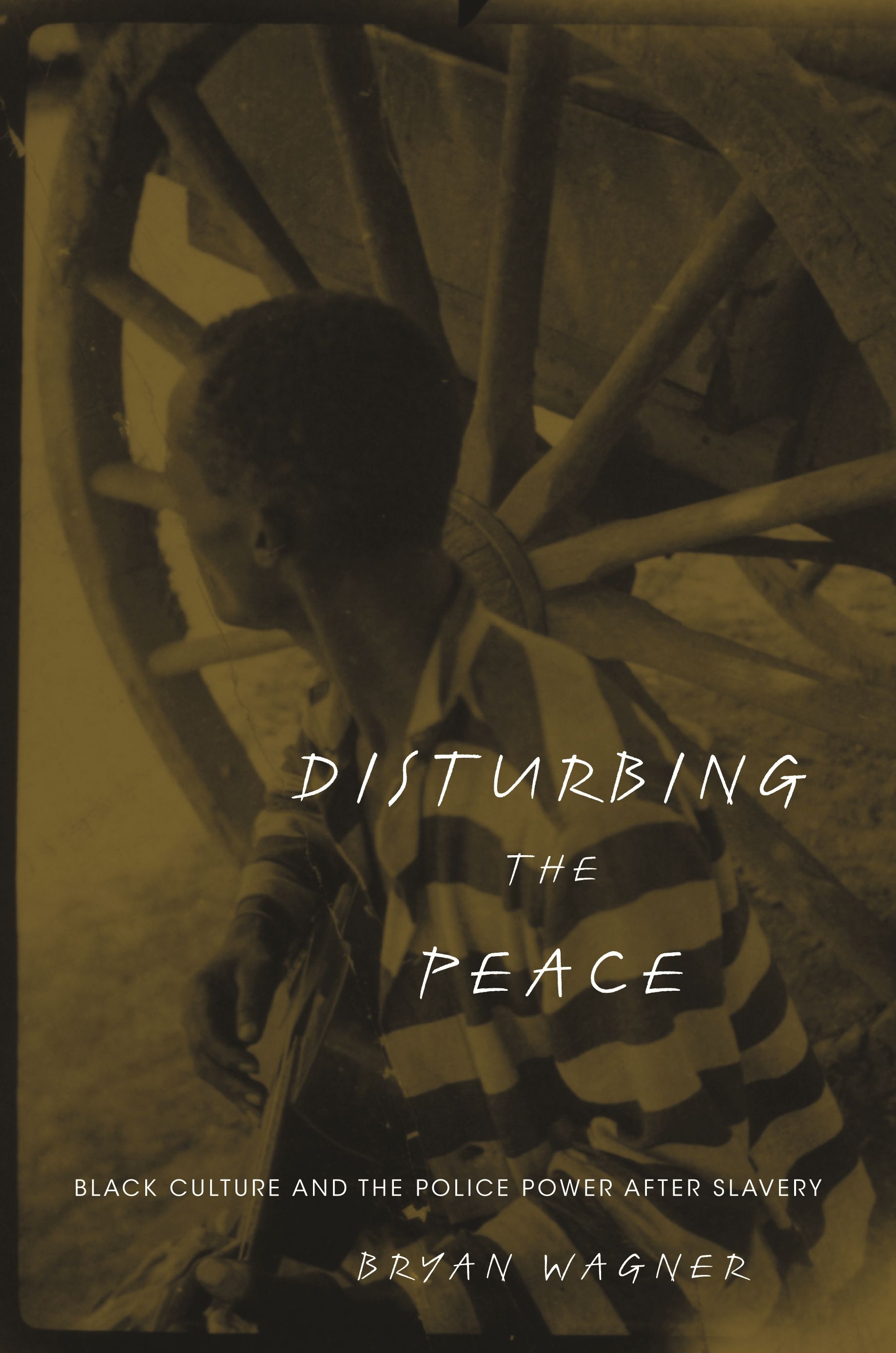
W. C. Handy waking up to the blues on a train platform, Buddy Bolden eavesdropping on the drums at Congo Square, John Lomax taking his phonograph recorder into a southern penitentiary—some foundational myths of the black vernacular remain inescapable, even as they come under increasing pressure from skeptics. In Disturbing the Peace, Bryan Wagner revises the history of the black vernacular tradition and gives a new account of black culture by reading these myths in the context of the tradition's ongoing engagement with the law. Returning to some familiar examples (trickster tales, outlaw legends, blues lyrics) central to previous studies of the black vernacular expression, Wagner uses an analytic framework he has developed from the historical language of the law to give new and surprising analyses. Wagner's work draws both on his deep understanding of history and on a wealth of primary sources that range from novels to cartoons to popular ballads and early blues songs to newspapers and court reports. Through his innovative engagement with them, Wagner gives us a new and deeper understanding of black cultural expression, revealing its basis in the relational workings of African Americans in the social world.
eBook

Race in the American South
The issue of race has indelibly shaped the history of the United States. Nowhere has the drama of race relations been more powerfully staged than in the American South. This book charts the turbulent course of southern race relations from the colonial origins of the plantation system to the maturation of slavery in the nineteenth century, through the rise of a new racial order during the Civil War and Reconstruction, to the civil rights revolution of the twentieth century. While the history of race in the southern states has been shaped by a basic struggle between black and white, the authors show how other forces such as class and gender have complicated the colour line.
eBook

Killing Poetry
Winner of the 2019 Lilla A. Heston Award
Co-winner of the 2018 Ethnography Division’s Best Book from the NCA
In recent decades, poetry slams and the spoken word artists who compete in them have sparked a resurgent fascination with the world of poetry. However, there is little critical dialogue that fully engages with the cultural complexities present in slam and spoken word poetry communities, as well as their ramifications.
In Killing Poetry , renowned slam poet, Javon Johnson unpacks some of the complicated issues that comprise performance poetry spaces. He argues that the truly radical potential in slam and spoken word communities lies not just in proving literary worth, speaking back to power, or even in altering power structures, but instead in imagining and working towards altogether different social relationships. His illuminating ethnography provides a critical history of the slam, contextualizes contemporary black poets in larger black literary traditions, and does away with the notion that poetry slams are inherently radically democratic and utopic.
Killing Poetry —at times autobiographical, poetic, and journalistic—analyzes the masculine posturing in the Southern California community in particular, the sexual assault in the national community, and the ways in which related social media inadvertently replicate many of the same white supremacist, patriarchal, and mainstream logics so many spoken word poets seem to be working against. Throughout, Johnson examines the promises and problems within slam and spoken word, while illustrating how community is made and remade in hopes of eventually creating the radical spaces so many of these poets strive to achieve.
eBook

Removing Mountains
In this rich ethnography of life in Appalachia, Rebecca R. Scott examines mountaintop removal in light of controversy and protests from environmental groups calling for its abolishment. Removing Mountains demonstrates that the paradox that faces this community—forced to destroy their land to make a wage—raises important questions related to the environment, American national identity, place, and white working-class masculinity.
eBook

E. J. Edmunds, School Integration, and White Supremacist Backlash in Reconstruction New Orleans
When the New Orleans school board appointed E. J. Edmunds, a light-skinned Afro-Creole man, the mathematics teacher for the city's best high school in 1875, the senior students walked out rather than have a “negro” as a teacher of “white youths.” Edmunds's appointment was a final, bold act by the city's mixed-race intellectual elite in exercising the political power they held under Radical Reconstruction to strip racial designations from public schools. White supremacist Redeemers responded with a vicious propaganda campaign to define, differentiate, and diminish the “negro race.” Edmunds navigated the shifting landscape of race in the New Orleans public schools first as a student and then as a teacher, and the details of his life show the impact on ordinary Afro-Creoles as the city's warring politicians used the public schools both to undermine and reinforce the racial order.
Journal Article
The Dixiecrat revolt and the end of the Solid South, 1932-1968
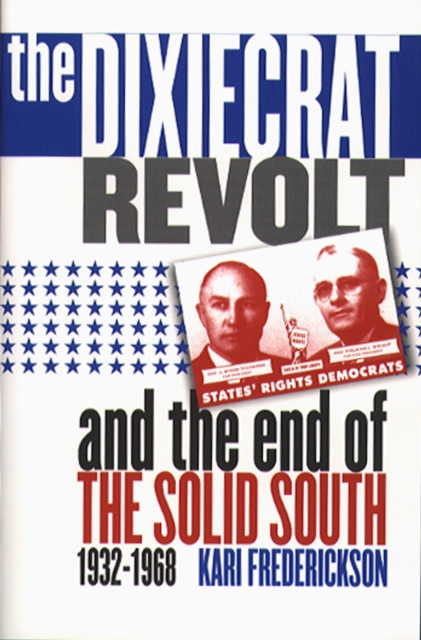
In 1948, a group of conservative white southerners formed the States' Rights Democratic Party, soon nicknamed the \"Dixiecrats,\" and chose Strom Thurmond as their presidential candidate. Thrown on the defensive by federal civil rights initiatives and unprecedented grassroots political activity by African Americans, the Dixiecrats aimed to reclaim conservatives' former preeminent position within the national Democratic Party and upset President Harry Trumans bid for reelection. The Dixiecrats lost the battle in 1948, but, as Kari Frederickson reveals, the political repercussions of their revolt were significant. Frederickson situates the Dixiecrat movement within the tumultuous social and economic milieu of the 1930s and 1940s South, tracing the struggles between conservative and liberal Democrats over the future direction of the region. Enriching her sweeping political narrative with detailed coverage of local activity in Alabama, Louisiana, Mississippi, and South Carolina the flashpoints of the Dixiecrat campaign she shows that, even without upsetting Truman in 1948, the Dixiecrats forever altered politics in the South. By severing the traditional southern allegiance to the national Democratic Party in presidential elections, the Dixiecrats helped forge the way for the rise of the Republican Party in the region.
eBook