
Catalogue Search | MBRL


Are you sure you want to remove the book from the shelf?

{{itemTitle}}
12
result(s) for
"Praxiteles"
Sort by:


Praxiteles to Caravaggio: The Apollo Sauroktonos Redefined
An epigram of Martial (14.172) that describes an anonymous bronze statue of a youth (puer) killing a lizard indicates a new reading of the sculpture known as the Apollo Sauroktonos. Contrary to Pliny (Natural History 34.69-70), it does not portray Apollo and is not attributable to the sculptor Praxiteles. The eroticized pose, the eccentric hairdo, and the genre subject matter are fitting neither for the god nor for the mid-fourth-century date. Arguably, this statue type, so popular in Roman times, was part of a trend in the Hellenistic period for genre figures and owed its considerable popularity to the Roman taste for \"sexy boys.\"
Journal Article
The art of Praxiteles III
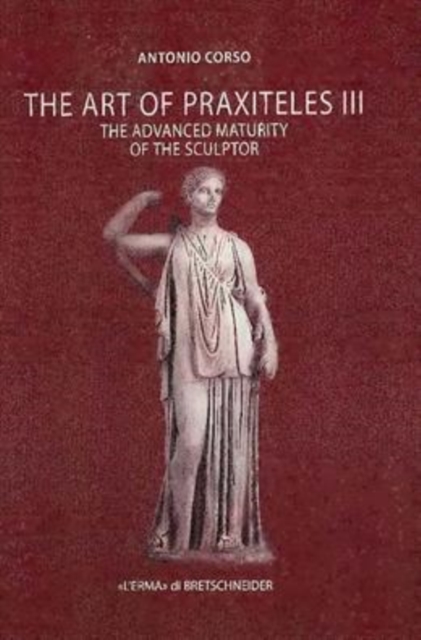
This book is focused on the advanced maturity of the famous Athenian sculptor Praxiteles, who flourished in the 4th c. BC. The following works of the artist are considered: the Triad of Leto, Apollo and Artemis at Megara; the statue of Leto protecting Meliboea, a young daughter of Niobe, at Argos; the group of Drunkenness with the Resting Satyr; the group of Niobe with the dying Niobids; the statues of Success and of Good Fortune; the Personification of late Summer; the statue of Eros at Messana in Sicily as well as a statue set up on Delos.For the first time complete genealogical trees of all surviving copies and variations derived from these masterpieces are provided. The art of Praxiteles is understood in the context of the history of the time and is linked to developments in the realm of other visual arts as well as of philosophy and of literature.Thus this study leads to a new and original interpretation of the greatest late classical Greek sculptor. Biographical profileAntonio Corso was born near Padua, studied at Padua, Athens, Frankfurt and London and published more than 100 scientific works. His publications include an essay on Pericles' architecture (Venice 1986), large sections of the Italian editions of Pliny the Elder (Turin 1988) and of Vitruvius (Turin 1997), a catalogue of ancient and medieval testimonia on Praxiteles in 3 volumes (Rome 1988, 1990 and 1992) and the first two volumes of his reconstruction of the art and career of Praxiteles (Rome 2004 and 2007). He delivered several dozens of lectures and papers in academic institutions and congresses held in many European countries and is Assistant Editor of the Swiss periodical \"Numismatica e Antichita Classiche. Quaderni Ticinesi\".
eBook

Aristotle
This definitive biography shows that Aristotle's philosophy is best understood on the basis of a firm knowledge of his life and of the school he founded. First published in Italian, and now translated, updated, and expanded for English readers, this concise chronological narrative is the most authoritative account of Aristotle's life and his Lyceum available in any language. Gathering, distilling, and analyzing all the evidence and previous scholarship, Carlo Natali, one of the world's leading Aristotle scholars, provides a masterful synthesis that is accessible to students yet filled with evidence and original interpretations that specialists will find informative and provocative.
Cutting through the controversy and confusion that have surrounded Aristotle's biography, Natali tells the story of Aristotle's eventful life and sheds new light on his role in the foundation of the Lyceum. Natali offers the most detailed and persuasive argument yet for the view that the school, an important institution of higher learning and scientific research, was designed to foster a new intellectual way of life among Aristotle's followers, helping them fulfill an aristocratic ideal of the best way to use the leisure they enjoyed. Drawing a wealth of connections between Aristotle's life and thinking, Natali demonstrates how the two are mutually illuminating.
For this edition, ancient texts have been freshly translated on the basis of the most recent critical editions; indexes have been added, including a comprehensive index of sources and an index to previous scholarship; and scholarship that has appeared since the book's original publication has been incorporated.
eBook

Mute Poetry, Speaking Pictures
Why do painters sometimes wish they were poets--and why do poets sometimes wish they were painters? What happens when Rembrandt spells out Hebrew in the sky or Poussin spells out Latin on a tombstone? What happens when Virgil, Ovid, or Shakespeare suspend their plots to describe a fictitious painting? In Mute Poetry, Speaking Pictures, Leonard Barkan explores such questions as he examines the deliciously ambiguous history of the relationship between words and pictures, focusing on the period from antiquity to the Renaissance but offering insights that also have much to say about modern art and literature.
The idea that a poem is like a picture has been a commonplace since at least ancient Greece, and writers and artists have frequently discussed poetry by discussing painting, and vice versa, but their efforts raise more questions than they answer. From Plutarch (\"painting is mute poetry, poetry a speaking picture\") to Horace (\"as a picture, so a poem\"), apparent clarity quickly leads to confusion about, for example, what qualities of pictures are being urged upon poets or how pictorial properties can be converted into poetical ones.
The history of comparing and contrasting painting and poetry turns out to be partly a story of attempts to promote one medium at the expense of the other. At the same time, analogies between word and image have enabled writers and painters to think about and practice their craft. Ultimately, Barkan argues, this dialogue is an expression of desire: the painter longs for the rich signification of language while the poet yearns for the direct sensuousness of painting.
eBook

A Tale of Seven Nudes: The Capitoline and Medici Aphrodites, Four Nymphs at Elean Herakleia, and an Aphrodite at Megalopolis
The Capitoline Aphrodite (fig. 1) counts among the most copied statues of antiquity. In 1951, Bianca Felletti Maj collected 101 replicas of the type compared with 33 for the Medici Aphrodite (fig. 2) and a mere five for the so-called Aphrodite of the Troad; and many more examples have surfaced since.’ Yet despite the Capitoline type's popularity, the date, location and authorship of its original remain clouded, as does its relation to these other ‘pudica’-type Aphrodites, especially the Medici. Leaving aside the Aphrodite of the Troad, this article presents new evidence that may resolve one of these problems and sheds some new light upon some of the others.
Journal Article
Puerilities
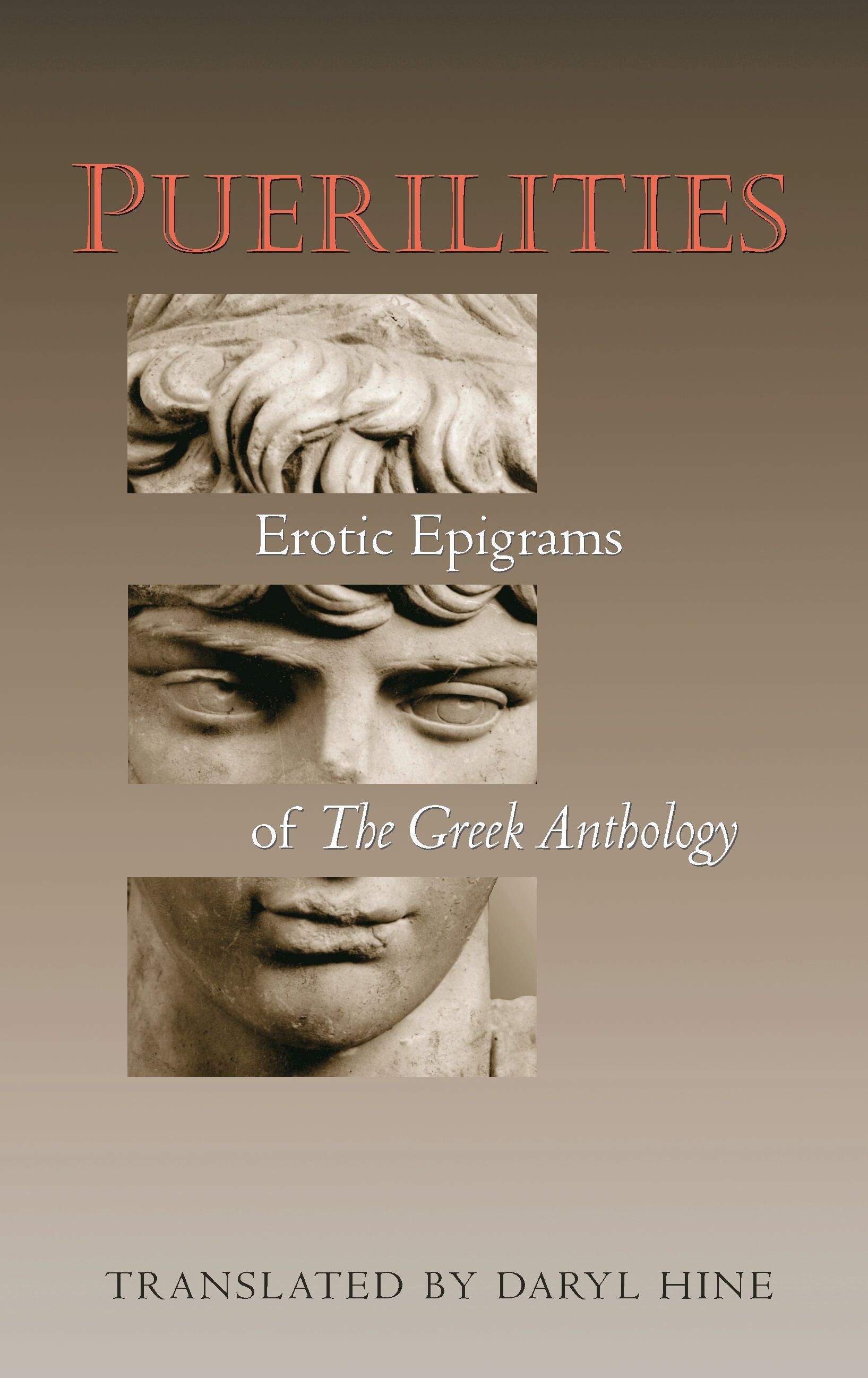
Elegiac lyrics celebrating the love of boys, which the translator termsPuerilities, comprise most of the twelfth book ofThe Greek Anthology. That book, the so-calledMusa Puerilis, is brilliantly translated in this, the first complete verse version in English. It is a delightful eroticopia of short poems by great and lesser-known Greek poets, spanning hundreds of years, from ancient times to the late Christian era.
The epigrams--wry, wistful, lighthearted, libidinous, and sometimes bawdy--revel in the beauty and fickle affection of boys and young men and in the fleeting joys of older men in loving them. Some, doubtless bandied about in the lax and refined setting of banquets, are translated as limericks. Also included are a few fine and often funny poems about girls and women.
Fashion changes in morality as well as in poetry. The sort of attachment that inspired these verses was considered perfectly normal and respectable for over a thousand years. Some of the very best Greek poets--including Strato of Sardis, Theocritus, and Meleager of Gadara--are to be found in these pages. The more than two hundred fifty poems range from the lovely to the playful to the ribald, but all are, as an epigram should be, polished and elegant. The Greek originals face the translations, enhancing the volume's charm.
A friend of Youth, I have no youth in mind, For each has beauties, of a different kind. --Strato I've had enough to drink; my heart and soul As well as tongue are losing self-control. The lamp flame bifurcates; I multiply The dinner guests by two each time I try. Not only shaken up by the wine-waiter, I ogle too the boy who pours the water. --Strato Venus, denying Cupid is her son, Finds in Antiochus a better one. This is the boy to be enamored of, Boys, a new love superior to Love. --Meleager
eBook

Jean Marcadé and Praxiteles at Delos
ABSTRACT IN FRENCH: En 1949, lors de la fouille de la Maison de l'Hermès à Délos, Jean Marcadé a découvert une base portant une inscription fragmentaire et a proposé de restituer le nom du sculpteur Praxitèle. Plusieurs études récentes, en particulier la publication d'une nouvelle base signée du grand sculpteur athénien, ont été l'occasion de préciser nos connaissances sur les pratiques de la signature dans l'atelier du célèbre sculpteur, sans pourtant permettre de lever toutes les incertitudes à propos du document délien. // ABSTRACT IN ENGLISH: In 1949, during the excavation of the House of Hermes in Delos, Jean Marcadé found a base with a fragmentary inscription and proposed to restore the name of the sculptor Praxiteles. Several recent studies, notably the publication of a new base with the signature of the great Athenian sculptor, allows us to clarify our knowledge of the signature practices in Praxiteles' workshop. They do not, however, allow a solution to all the uncertainties about the Delian base.
Journal Article
Jean Marcadé et Praxitèle à Délos
En 1949, lors de la fouille de la Maison de l’Hermès à Délos, Jean Marcadé a découvert une base portant une inscription fragmentaire et a proposé de restituer le nom du sculpteur Praxitèle. Plusieurs études récentes, en particulier la publication d’une nouvelle base signée du grand sculpteur athénien, ont été l’occasion de préciser nos connaissances sur les pratiques de la signature dans l’atelier du célèbre sculpteur, sans pourtant permettre de lever toutes les incertitudes à propos du document délien. Jean Marcadé and Praxiteles at DelosIn 1949, during the excavation of the House of Hermes in Delos, Jean Marcadé found a base with a fragmentary inscription and proposed to restore the name of the sculptor Praxiteles. Several recent studies, notably the publication of a new base with the signature of the great Athenian sculptor, allows us to clarify our knowledge of the signature practices in Praxiteles’ workshop. They do not, however, allow a solution to all the uncertainties about the Delian base.
Journal Article

For the love of art. Notes on agalmatophilia and Imitatio Creatoris, from Plato to Winckelmann
With the story of Pygmalion, the classical embodiment of the «living image», the mythographers were allowed to compare the creative role of such a legendary character, capable of devising animated and rational beings, with the power of the gods. Besides this one, other accounts from Antiquity have come to us with the same blend of aesthetics, magic and technical skill, largely referred to Praxiteles and his most famous sculptures: the Aphrodite of Knidos and the Erotes of Parion and Thespiae. All these testimonies exemplify the so-called «love for statues», also known as «Pygmalionism» or more frequently as «Agalmatophilia». This paper analyses the main consequences of Agalmatophilia and Imitatio Creatoris: the power of the deus artifex, the bond between the artist and his creation, and the composite condition —half alive, half artificial— of the artefact produced. Through the Post-Classical Age, Agalmatophilia successively became an apologetic model to discourse on the dangers of idolatry; a moralising exemplum; a glorification of the genius and a claim for the debate on the paragone during the Renaissance and Baroque periods. In the 18th Century, by way of coda, the figure of Pygmalion would be praised as an allegory of the creative endeavour of the early Greek artists.
Journal Article