
Catalogue Search | MBRL


Are you sure you want to remove the book from the shelf?

{{itemTitle}}
13
result(s) for
"Precision bombing History."
Sort by:
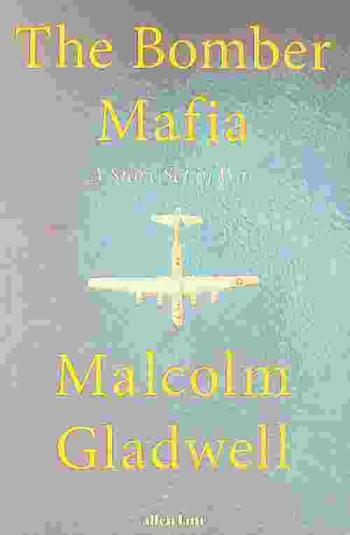
The bomber Mafia : a story set in war
'The Bomber Mafia is a case study in how dreams go awry. When some shiny new idea drops from the heavens, it does not land softly in our laps. It lands hard, on the ground, and shatters.' In the years before the Second World War, in a sleepy air force base in central Alabama, a small group of renegade pilots put forth a radical idea. What if we made bombing so accurate that wars could be fought entirely from the air? What if we could make the brutal clashes between armies on the ground a thing of the past? This book tells the story of what happened when that dream was put to the test. The Bomber Mafia follows the stories of a reclusive Dutch genius and his homemade computer, Winston Churchill's forbidding best friend, a team of pyromaniacal chemists at Harvard, a brilliant pilot who sang vaudeville tunes to his crew, and the bomber commander, Curtis Emerson LeMay, who would order the bloodiest attack of the Second World War. In this tale of innovation and obsession, Gladwell asks- what happens when technology and best intentions collide in the heat of war? And what is the price of progress?

Beneficial Bombing
The Progressive Era, marked by a desire for economic, political,
and social reform, ended for most Americans with the ugly reality
and devastation of World War I. Yet for Army Air Service officers,
the carnage and waste witnessed on the western front only served to
spark a new progressive movement-to reform war by relying on
destructive technology as the instrument of change. In
Beneficial Bombing Mark Clodfelter describes how American
airmen, horrified by World War I's trench warfare, turned to the
progressive ideas of efficiency and economy in an effort to reform
war itself, with the heavy bomber as their solution to limiting the
bloodshed. They were convinced that the airplane, used as a bombing
platform, offered the means to make wars less lethal than conflicts
waged by armies or navies. Clodfelter examines the progressive
idealism that led to the creation of the U.S. Air Force and its
doctrine that the finite destruction of precision bombing would end
wars more quickly and with less suffering for each
belligerent. What is more, his work shows how these progressive
ideas emerged intact after World War II to become the foundation of
modern U.S. Air Force doctrine. Drawing on a wealth of archival
material, including critical documents unavailable to previous
researchers, Clodfelter presents the most complete analysis ever of
the doctrinal development underpinning current U.S. Air Force
notions about strategic bombing.
eBook

The Bomber Mafia : a dream, a temptation, and the longest night of the second World War
\"Malcolm Gladwell weaves together the stories of a Dutch genius and his homemade computer, a band of brothers in central Alabama, a British psychopath, and pyromaniacal chemists at Harvard to examine one of the greatest moral challenges in modern American history. Most military thinkers in the years leading up to World War II saw the airplane as an afterthought. But a small band of idealistic strategists had a different view. This 'Bomber Mafia' asked: What if precision bombing could, just by taking out critical choke points -- industrial or transportation hubs -- cripple the enemy and make war far less lethal? In his podcast, Revisionist History, Gladwell re-examines moments from the past and asks whether we got it right the first time. In The Bomber Mafia, he steps back from the bombing of Tokyo, the deadliest night of the war, and asks, \"Was it worth it?\" The attack was the brainchild of General Curtis LeMay, whose brutal pragmatism and scorched-earth tactics in Japan cost thousands of civilian lives, but may have spared more by averting a planned US invasion. Things might have gone differently had LeMay's predecessor, General Haywood Hansell, remained in charge. As a key member of the Bomber Mafia, Haywood's theories of precision bombing had been foiled by bad weather, enemy jet fighters, and human error. When he and Curtis LeMay squared off for a leadership handover in the jungles of Guam, LeMay emerged victorious, leading to the darkest night of World War II. The Bomber Mafia is a riveting tale of persistence, innovation, and the incalculable wages of war.\" -- Provided by publisher.
Book

Rhetoric and Reality in Air Warfare
A major revision of our understanding of long-range bombing, this book examines how Anglo-American ideas about \"strategic\" bombing were formed and implemented. It argues that ideas about bombing civilian targets rested on--and gained validity from--widespread but substantially erroneous assumptions about the nature of modern industrial societies and their vulnerability to aerial bombardment. These assumptions were derived from the social and political context of the day and were maintained largely through cognitive error and bias. Tami Davis Biddle explains how air theorists, and those influenced by them, came to believe that strategic bombing would be an especially effective coercive tool and how they responded when their assumptions were challenged.
Biddle analyzes how a particular interpretation of the World War I experience, together with airmen's organizational interests, shaped interwar debates about strategic bombing and preserved conceptions of its potentially revolutionary character. This flawed interpretation as well as a failure to anticipate implementation problems were revealed as World War II commenced. By then, the British and Americans had invested heavily in strategic bombing. They saw little choice but to try to solve the problems in real time and make long-range bombing as effective as possible.
Combining narrative with analysis, this book presents the first-ever comparative history of British and American strategic bombing from its origins through 1945. In examining the ideas and rhetoric on which strategic bombing depended, it offers critical insights into the validity and robustness of those ideas--not only as they applied to World War II but as they apply to contemporary warfare.
eBook


Strategy in the Missile Age
Strategy in the Missile Age first reviews the development of modern military strategy to World War II, giving the reader a reference point for the radical rethinking that follows, as Dr. Brodie considers the problems of the Strategic Air Command, of civil defense, of limited war, of counterforce or pre-emptive strategies, of city-busting, of missile bases in Europe, and so on. The book, unlike so many on modern military affairs, does not present a program or defend a policy, nor is it a brief for any one of the armed services. It is a balanced analysis of the requirements of strength for the 1960's, including especially the military posture necessary to prevent war. A unique feature is the discussion of the problem of the cost of preparedness in relation to the requirements of the national economy, so often neglected by other military thinkers.
Originally published in 1959.
The Princeton Legacy Library uses the latest print-on-demand technology to again make available previously out-of-print books from the distinguished backlist of Princeton University Press. These editions preserve the original texts of these important books while presenting them in durable paperback and hardcover editions. The goal of the Princeton Legacy Library is to vastly increase access to the rich scholarly heritage found in the thousands of books published by Princeton University Press since its founding in 1905.
eBook

Clean Bombs and Dirty Wars
After the United States, along with NATO allies, bombed the
Serbian forces of Slobodan Milosevic for seventy-eight days in
1999, Milosevic withdrew his army from Kosovo. With no troops on
the ground, political and military leaders congratulated themselves
on the success of Operation Allied Force, considered to be the
first military victory won through the use of strategic air power
alone. This apparent triumph motivated military and political
leaders to embrace a policy of using \"clean bombs\" (precision
munitions and air strikes)-without a dirty ground war-as the
preferred choice for answering military aggression. Ten years later
it inspired a similar air campaign against Muammar Gaddafi's forces
in Libya as a groundswell of protests erupted into revolution.
Clean Bombs and Dirty Wars offers a fresh perspective
on the role, relevance, and effectiveness of air power in
contemporary warfare, including an exploration of the political
motivations for its use as well as a candid examination of
air-to-ground targeting processes. Using recently declassified
materials from the William J. Clinton Presidential Library along
with primary evidence culled from social media posted during the
Arab Spring, Robert H. Gregory Jr. shows that the argument that air
power eliminates the necessity for boots on the ground is an
artificial and illusory claim.
eBook

Weapons: The Growth & Spread of the Precision-Strike Regime
For two decades, scholars and practitioners have argued that the world is experiencing a Revolution in Military Affairs brought on by the development and diffusion of precision-strike and related capabilities. The United States took an early lead in exploiting the promise of precision-strike systems, and the use of precision weaponry has given the United States a battlefield edge for twenty years. However, these weapons are now spreading: other countries, and non-state actors, are acquiring them and developing countermeasures against them. As the precision-strike regime matures, the United States will see its edge erode. The ability of the United States to project power will diminish considerably. In addition, U.S. forces, and eventually the United States itself, will be increasingly vulnerable to precision weapons in the hands of our adversaries.
Journal Article
Is civilized war possible?
The Bomber Mafia nearly changed the world-and you've likely never heard of them.
Streaming Video
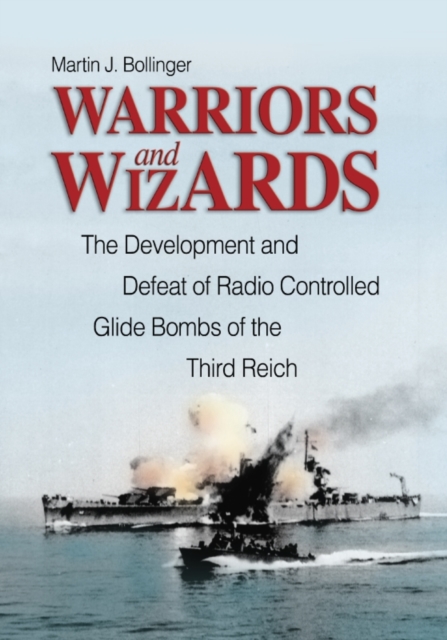
Warriors and Wizards
In August 1943 the Luftwaffe began using radio-controlled anti-ship glide bombs, and within weeks they had sunk one battleship, crippled another, wrecked two cruisers, and destroyed numerous merchant ships. Yet a year later the Germans abandoned their use, defeated in part by electronic systems to jam the radio links that guided the bombs. Drawing on a wealth of new sources, Martin Bollinger examines what happened from both a historical and technological perspective and lays out a mission-by-mission analysis of effectiveness. Based on interviews with participants, intelligence documents, and archival records in four countries, his book chronicles the yearlong battle between Allied seamen and Luftwaffe airmen (the warriors) and German and Allied scientists (the wizards) for a story of courage, technical achievement, and sacrifice.
eBook