
Catalogue Search | MBRL


Are you sure you want to remove the book from the shelf?

{{itemTitle}}
8
result(s) for
"Preface (liturgy)"
Sort by:

John Calvin, the Church and the Eucharist
Calvin's eucharistic doctrine has been approached in the past from the standpoint of his polemic with the Lutherans and the Zwinglians, but Father McDonnell believes that Calvin's primary position was determined by his rejection of Roman Catholicism. The author, therefore, explores Calvin's eucharistic doctrine through a comprehensive analysis of his stand against the Roman Catholic Church. Introductory chapters are devoted to the broader currents of pre-Reformation thought: Scotist tradition, devotiomoderna, humanism, and the Platonic renewal. The study continues with a discussion of St. Augustine, the medieval disputants, and the doctrines of Calvin's contemporaries-Luther, Bucer, and Melanchthon. The final chapter considers the relevancy of Calvin's objections to Catholic eucharistic doctrine and their relation to modern developments in Catholic sacramental thought.
Originally published in 1967.
The Princeton Legacy Library uses the latest print-on-demand technology to again make available previously out-of-print books from the distinguished backlist of Princeton University Press. These editions preserve the original texts of these important books while presenting them in durable paperback and hardcover editions. The goal of the Princeton Legacy Library is to vastly increase access to the rich scholarly heritage found in the thousands of books published by Princeton University Press since its founding in 1905.
eBook

Advent Lyrics of the Exeter Book
The Advent Lyrics, a group of Old English religious antiphons (formerly called Christ I) dating from about the 9th century, are presented in this edition as an independent group of poems disengaged, for the first time, from Cynewulf's Christ. Professor Campbell’s study focuses on the significance of the antiphons as lyrics rather than as philological documents. The book includes a full critical introduction, a new text and modern English translation (on facing pages), critical notes, and a glossary.Originally published in 1959.The Princeton Legacy Library uses the latest print-on-demand technology to again make available previously out-of-print books from the distinguished backlist of Princeton University Press. These editions preserve the original texts of these important books while presenting them in durable paperback and hardcover editions. The goal of the Princeton Legacy Library is to vastly increase access to the rich scholarly heritage found in the thousands of books published by Princeton University Press since its founding in 1905.
eBook

Kierkegaard's journals and notebooks
For over a century, the Danish thinker Søren Kierkegaard (1813-55) has been at the center of a number of important discussions, concerning not only philosophy and theology, but also, more recently, fields such as social thought, psychology, and contemporary aesthetics, especially literary theory.
Despite his relatively short life, Kierkegaard was an extraordinarily prolific writer, as attested to by the 26-volume Princeton University Press edition of all of his published writings. But Kierkegaard left behind nearly as muchunpublishedwriting, most of which consists of what are called his \"journals and notebooks.\" Kierkegaard has long been recognized as one of history's great journal keepers, but only rather small portions of his journals and notebooks are what we usually understand by the term \"diaries.\" By far the greater part of Kierkegaard's journals and notebooks consists of reflections on a myriad of subjects--philosophical, religious, political, personal. Studying his journals and notebooks takes us into his workshop, where we can see his entire universe of thought. We can witness the genesis of his published works, to be sure--but we can also see whole galaxies of concepts, new insights, and fragments, large and small, of partially (or almost entirely) completed but unpublished works.Kierkegaard's Journals and Notebooksenables us to see the thinker in dialogue with his times and with himself.
Volume 4 of this 11-volume series includes the first five of Kierkegaard's well-known \"NB\" journals, which contain, in addition to a great many reflections on his own life, a wealth of thoughts on theological matters, as well as on Kierkegaard's times, including political developments and the daily press.
Kierkegaard wrote his journals in a two-column format, one for his initial entries and the second for the extensive marginal comments that he added later. This edition of the journals reproduces this format, includes several photographs of original manuscript pages, and contains extensive scholarly commentary on the various entries and on the history of the manuscripts being reproduced.
eBook

Christianity and History
In Part I of Christianity and History, the author asks whether the committed Christian should be more conscious than the uncommitted of some meaning in history. In answering this he offers a critique of Arnold Toynbee and makes some penetrating observations on the teaching of history. Part II is concerned with the author's special field-the Protestant Reformation and its origins. Calvinism, with its dynamic sense of the historical process, receives special treatment, and there is a brilliant essay on Machiavelli and Thomas More. Three of the essays included in this new book appear here for the first time.
Originally published in 1964.
The Princeton Legacy Library uses the latest print-on-demand technology to again make available previously out-of-print books from the distinguished backlist of Princeton University Press. These editions preserve the original texts of these important books while presenting them in durable paperback and hardcover editions. The goal of the Princeton Legacy Library is to vastly increase access to the rich scholarly heritage found in the thousands of books published by Princeton University Press since its founding in 1905.
eBook
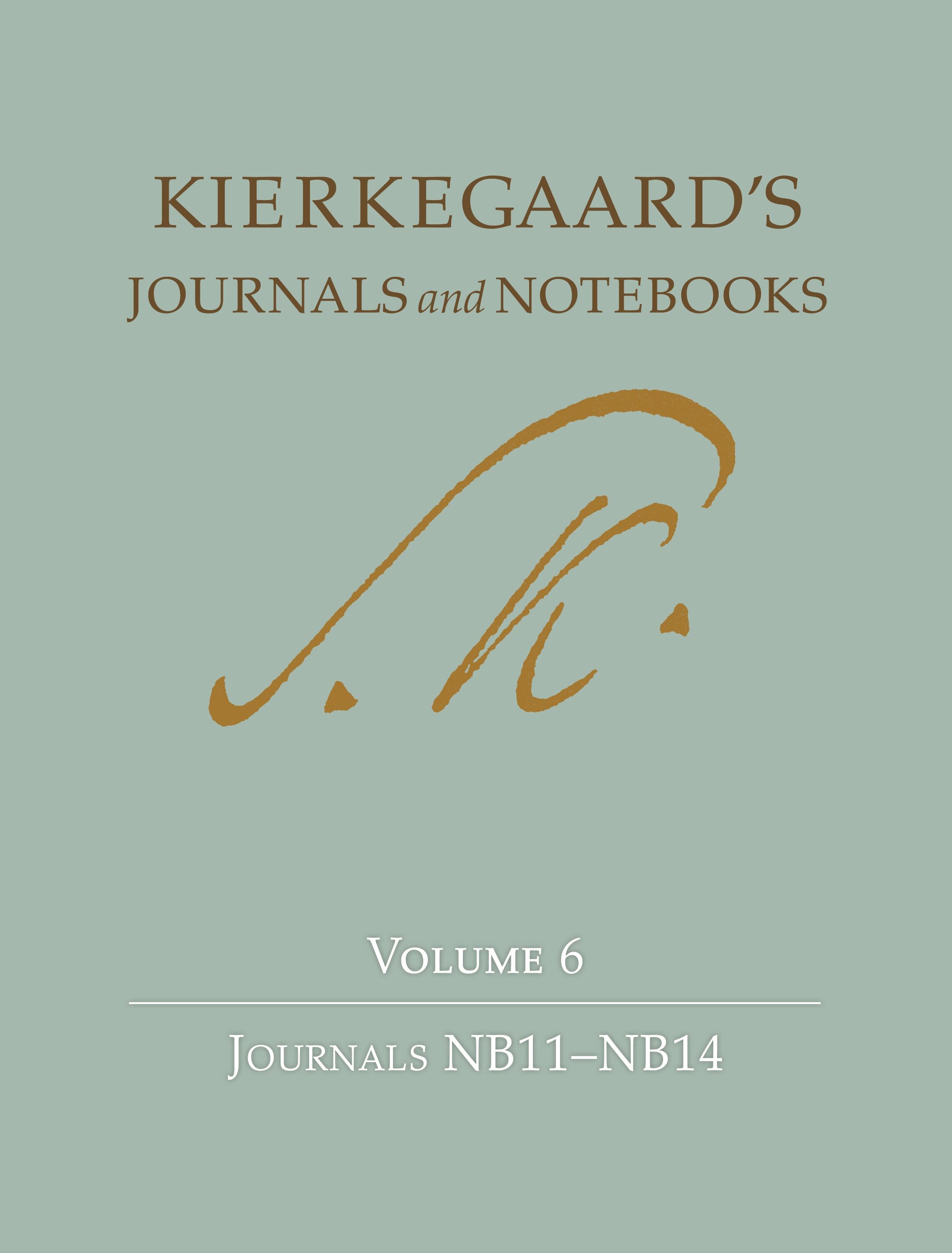
Kierkegaard's journals and notebooks
For over a century, the Danish thinker Søren Kierkegaard (1813-55) has been at the center of a number of important discussions, concerning not only philosophy and theology, but also, more recently, fields such as social thought, psychology, and contemporary aesthetics, especially literary theory.
Despite his relatively short life, Kierkegaard was an extraordinarily prolific writer, as attested to by the 26-volume Princeton University Press edition of all of his published writings. But Kierkegaard left behind nearly as much unpublished writing, most of which consists of what are called his \"journals and notebooks.\" Kierkegaard has long been recognized as one of history's great journal keepers, but only rather small portions of his journals and notebooks are what we usually understand by the term \"diaries.\" By far the greater part of Kierkegaard's journals and notebooks consists of reflections on a myriad of subjects--philosophical, religious, political, personal. Studying his journals and notebooks takes us into his workshop, where we can see his entire universe of thought. We can witness the genesis of his published works, to be sure--but we can also see whole galaxies of concepts, new insights, and fragments, large and small, of partially (or almost entirely) completed but unpublished works.Kierkegaard's Journals and Notebooksenables us to see the thinker in dialogue with his times and with himself.
Volume 6 of this 11-volume series includes four of Kierkegaard's important \"NB\" journals (Journals NB11 through NB14), covering the months from early May 1849 to the beginning of 1850. At this time Denmark was coming to terms with the 1848 revolution that had replaced absolutism with popular sovereignty, while the war with the German states continued, and the country pondered exactly what replacing the old State Church with the Danish People's Church would mean. In these journals Kierkegaard reflects at length on political and, especially, on ecclesiastical developments. His brooding over the ongoing effects of his fight with the satirical journalCorsaircontinues, and he also examines and re-examines the broader personal and religious significance of his broken engagement with Regine Olsen. These journals also contain reflections by Kierkegaard on a number of his most important works, including the two works written under his \"new\" pseudonym Anti-Climacus (The Sickness unto DeathandPractice in Christianity) and his various attempts at autobiographical explanations of his work. And, all the while, the drumbeat of his radical critique of \"Christendom\" continues and escalates.
Kierkegaard wrote his journals in a two-column format, one for his initial entries and the second for the extensive marginal comments that he added later. This edition of the journals reproduces this format, includes several photographs of original manuscript pages, and contains extensive scholarly commentary on the various entries and on the history of the manuscripts being reproduced.
eBook

Kierkegaard's Journals and Notebooks: Volume 7, Journals NB15-NB20
For over a century, the Danish thinker Søren Kierkegaard (1813-55) has been at the center of a number of important discussions, concerning not only philosophy and theology, but also, more recently, fields such as social thought, psychology, and contemporary aesthetics, especially literary theory.
Despite his relatively short life, Kierkegaard was an extraordinarily prolific writer, as attested to by the 26-volume Princeton University Press edition of all of his published writings. But Kierkegaard left behind nearly as much unpublished writing, most of which consists of what are called his \"journals and notebooks.\" Kierkegaard has long been recognized as one of history's great journal keepers, but only rather small portions of his journals and notebooks are what we usually understand by the term \"diaries.\" By far the greater part of Kierkegaard's journals and notebooks consists of reflections on a myriad of subjects--philosophical, religious, political, personal. Studying his journals and notebooks takes us into his workshop, where we can see his entire universe of thought. We can witness the genesis of his published works, to be sure--but we can also see whole galaxies of concepts, new insights, and fragments, large and small, of partially (or almost entirely) completed but unpublished works.Kierkegaard's Journals and Notebooksenables us to see the thinker in dialogue with his times and with himself.
Volume 7 of this 11-volume series includes six of Kierkegaard's important \"NB\" journals (Journals NB15 through NB20), covering the months from early January 1850 to mid-September of that year. By this time it had become clear that popular sovereignty, ushered in by the revolution of 1848 and ratified by the Danish constitution of 1849, had come to stay, and Kierkegaard now intensified his criticism of the notion that everything, even matters involving the human soul, could be decided by \"balloting.\" He also continued to direct his barbs at the established Danish Church and its clergy (particularly Bishop J. P. Mynster and Professor H. L. Martensen), at the press, and at the attempt by modern philosophy to comprehend the incomprehensibility of faith. Kierkegaard's reading notes include entries on Augustine, the Stoics, German mystics, Luther, pietist authors, and Rousseau, while his autobiographical reflections circle around the question of which, if any, of several essays explaining his life and works he ought to publish. Perhaps unsurprisingly, Kierkegaard's more personal reflections return once again to his public feud with M. A. Goldschmidt and his broken engagement to Regine Olsen.
Kierkegaard wrote his journals in a two-column format, one for his initial entries and the second for the extensive marginal comments that he added later. This edition of the journals reproduces this format, includes several photographs of original manuscript pages, and contains extensive scholarly commentary on the various entries and on the history of the manuscripts being reproduced.
eBook

The Tibetan Book of the Dead
The Tibetan Book of the Deadis the most famous Buddhist text in the West, having sold more than a million copies since it was first published in English in 1927. Carl Jung wrote a commentary on it, Timothy Leary redesigned it as a guidebook for an acid trip, and the Beatles quoted Leary's version in their song \"Tomorrow Never Knows.\" More recently, the book has been adopted by the hospice movement, enshrined by Penguin Classics, and made into an audiobook read by Richard Gere. Yet, as acclaimed writer and scholar of Buddhism Donald Lopez writes, \"The Tibetan Book of the Deadis not really Tibetan, it is not really a book, and it is not really about death.\" In this compelling introduction and short history, Lopez tells the strange story of how a relatively obscure and malleable collection of Buddhist texts of uncertain origin came to be so revered--and so misunderstood--in the West.
The central character in this story is Walter Evans-Wentz (1878-1965), an eccentric scholar and spiritual seeker from Trenton, New Jersey, who, despite not knowing the Tibetan language and never visiting the country, crafted and namedThe Tibetan Book of the Dead. In fact, Lopez argues, Evans-Wentz's book is much more American than Tibetan, owing a greater debt to Theosophy and Madame Blavatsky than to the lamas of the Land of Snows. Indeed, Lopez suggests that the book's perennial appeal stems not only from its origins in magical and mysterious Tibet, but also from the way Evans-Wentz translated the text into the language of a very American spirituality.
eBook

Sacramentary, Lectionary and Antiphoner
This set of three chapters sets the seventh-century Roman stage for the Advent Project. The first treats the development of the sacramentary and lectionary in the hope that recounting the histories of these books will shed light on that of the more illusive Mass antiphoner. The second and the third attempt in differing ways to date the composition of that antiphoner, this being synonymous with dating the Advent Project itself. I introduce the three by invoking a fundamentally important distinction that Willi Apel makes in discussing the origins of Proper chants.
Apel maintains that we must take care to separate
Book Chapter