
Catalogue Search | MBRL


Are you sure you want to remove the book from the shelf?

{{itemTitle}}
6
result(s) for
"Prehistoric peoples -- Africa, East"
Sort by:

China and East Africa : ancient ties, contemporary flows
'China and East Africa' marks the culmination of a new round of archaeological and historical research on the relations between China and Africa, from the origins to the present. Africa and Asia have always been in constant contact, through land and seas. The contributors to this volume debate and present the results of their research on the very complex and intricate networks of connections that crisscrossed the Indian Ocean and surrounding lands linking Africa to East Asia.
Book
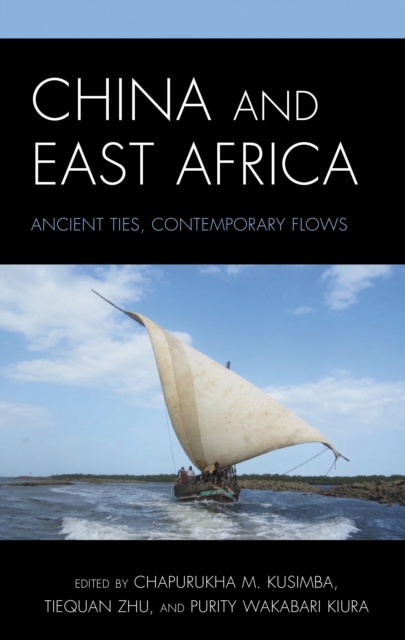
China and East Africa : ancient ties, contemporary flows
China and East Africa: Ancient Ties and Contemporary Flows marks the culmination of a new round of archaeological and historical research on the relations between China and Africa, from the origins to the present.Africa and Asia have always been in constant contact, through land and seas.
eBook

Widespread exploitation of the honeybee by early Neolithic farmers
Detection of molecular biomarkers characteristic of beeswax in pottery vessels at archaeological sites reveals that humans have exploited bee products (such as beeswax and honey) at least 9,000 years ago since the beginnings of agriculture.
Hive products in use before the beginnings of agriculture
Bees and humans have enjoyed a long association, as evidenced by bee iconography in rock art and ancient Egyptian paintings and carvings, and a few isolated reports of beeswax in archeological contexts. But when did this association become common? Mélanie Roffet-Salque
et al
. use the telltale gas chromatographic signature of beeswax from lipid residues preserved in pottery vessels to plot the use of beeswax across Neolithic Europe, the Middle East and North Africa. They demonstrate its extensive and possibly continuous use in some places for 8,000 years or more. The association, therefore, goes back to the beginnings of agriculture and possibly earlier.
The pressures on honeybee (
Apis mellifera
) populations, resulting from threats by modern pesticides, parasites, predators and diseases, have raised awareness of the economic importance and critical role this insect plays in agricultural societies across the globe. However, the association of humans with
A. mellifera
predates post-industrial-revolution agriculture, as evidenced by the widespread presence of ancient Egyptian bee iconography dating to the Old Kingdom (approximately 2400
bc
)
1
. There are also indications of Stone Age people harvesting bee products; for example, honey hunting is interpreted from rock art
2
in a prehistoric Holocene context and a beeswax find in a pre-agriculturalist site
3
. However, when and where the regular association of
A. mellifera
with agriculturalists emerged is unknown
4
. One of the major products of
A. mellifera
is beeswax, which is composed of a complex suite of lipids including
n
-alkanes,
n
-alkanoic acids and fatty acyl wax esters. The composition is highly constant as it is determined genetically through the insect’s biochemistry. Thus, the chemical ‘fingerprint’ of beeswax provides a reliable basis for detecting this commodity in organic residues preserved at archaeological sites, which we now use to trace the exploitation by humans of
A. mellifera
temporally and spatially. Here we present secure identifications of beeswax in lipid residues preserved in pottery vessels of Neolithic Old World farmers. The geographical range of bee product exploitation is traced in Neolithic Europe, the Near East and North Africa, providing the palaeoecological range of honeybees during prehistory. Temporally, we demonstrate that bee products were exploited continuously, and probably extensively in some regions, at least from the seventh millennium cal
bc
, likely fulfilling a variety of technological and cultural functions. The close association of
A. mellifera
with Neolithic farming communities dates to the early onset of agriculture and may provide evidence for the beginnings of a domestication process.
Journal Article

Middle Stone Age Shell Beads from South Africa
Henshilwood et al focus on the middle stone age shell beads from South Africa. The shells cannot derive from the cave walls, are too small to be leftovers from human food, and were not brought to the site accidentally by animals, because their only known predator is a gastropod.
Journal Article

South-Eastern Mediterranean Peoples Between 130,000 and 10,000 Years Ago
The Upper Pleistocene era encompassed a period of dramatic cultural developments in the south-eastern Mediterranean basin. This book highlights and synthesizes the latest research and current scientific debate on the archaeology of this time period in North Africa and the Near East. Recent archaeological research in North Africa has meant this region now plays a decisive role in scientific debate. After decades of neglect, the archaeological record from North Africa has now been seen to parallel in significance that of the Near East. This book offers an opportunity to observe the Afro-Asian side of the Mediterranean basin as an uninterrupted land, as it was for its Upper Pleistocene inhabitants. Areas of focus include the Out-of-Africa movement of anatomically modern humans (Homo sapiens) into the Levant and the transition from the Middle Palaeolithic/Middle Stone Age to the Upper Palaeolithic/Later Stone Age, during which a change of lifestyle took place, based on plant cultivation and animal husbandry. These topics are of crucial interest to anyone studying human evolution, prehistoric archaeology, anthropology, and palaeo-environmental studies. This volume brings together data as well as perspectives from various scholars, often separated by their areas of interest and location. This volume is complementary to The Mediterranean from 50,000 to 25,000 BP: Turning Points and New Directions edited by M. Camps and C. Szmidt (Oxbow Books, 2009).
eBook

The archaeology of the Phuthiatsana-ea-Thaba Bosiu Basin, Lesotho, southern Africa: changes in Later Stone Age regional demography
A field survey of an unexplored zone of southern Africa that enlarges and develops knowledge of the region's prehistory is presented. The western Lesotho site of the Phuthiatsana-ea-Thaba Bosiu Basin was chosen.
Journal Article