
Catalogue Search | MBRL


Are you sure you want to remove the book from the shelf?

{{itemTitle}}
11
result(s) for
"Prehistoric peoples-Material culture"
Sort by:


Technology as human social tradition
Technology as Human Social Tradition outlines a novel approach to studying variability and cumulative change in human technology—prominent research themes in both archaeology and anthropology. Peter Jordan argues that human material culture is best understood as an expression of social tradition. In this approach, each artifact stands as an output of a distinctive operational sequence with specific choices made at each stage in its production. Jordan also explores different material culture traditions that are propagated through social learning, factors that promote coherent lineages of tradition to form, and the extent to which these cultural lineages exhibit congruence with one another and with language history. Drawing on the application of cultural transmission theory to empirical research, Jordan develops a descent-with-modification perspective on the technology of Northern Hemisphere hunter-gatherers. Case studies from indigenous societies in Northwest Siberia, the Pacific Northwest Coast, and Northern California provide cross-cultural insights related to the evolution of material culture traditions at different social and spatial scales. This book promises new ways of exploring some of the primary factors that generate human cultural diversity in the deep past and through to the present.
eBook

Settlement, society and cognition in human evolution : landscapes in the mind
\"This volume provides a landscape narrative of early hominin evolution, linking conventional material and geographic aspects of the early archaeological record with wider and more elusive social, cognitive and symbolic landscapes. It seeks to move beyond a limiting notion of early hominin culture and behavior as dictated solely by the environment to present the early hominin world as the outcome of a dynamic dialogue between the physical environment and its perception and habitation by active agents. This international group of contributors presents theoretically informed yet empirically based perspectives on hominin and human landscapes\"-- Provided by publisher.
Book

The Architecture of Hunting
As one of the most significant economic innovations in prehistory, hunting architecture radically altered life and society for hunter-gatherers. The development of these structures indicates that foragers designed their environments, had a deep knowledge of animal behavior, and interacted with each other in complex ways that reach beyond previous assumptions. Combining underwater archaeology, terrestrial archaeology, and ethnographic and historical research, The Architecture of Hunting investigates the creation and use of hunting architecture by hunter-gatherers. Hunting architecture—including blinds, drive lanes, and fishing weirs—is a global phenomenon found across a broad spectrum of cultures, time, geography, and environments. Relying on similar behaviors in species such as caribou, bison, guanacos, antelope, and gazelles, cultures as diverse as Sami reindeer herders, the Inka, and ancient bison hunters on the North American plains have employed such structures, combined with strategically situated landforms, to ensure adequate food supplies while maintaining a nomadic way of life. Using examples of hunting architecture from across the globe and how they influence forager mobility, territoriality, property, leadership, and labor aggregation, Ashley Lemke explores this architecture as a form of human niche construction and considers the myriad ways such built structures affect hunter-gatherer lifeways. Bringing together diverse sources under the single category of “hunting architecture,” The Architecture of Hunting serves as the new standard guide for anyone interested in hunter-gatherers and their built environment.
eBook

Technology as human social tradition : cultural transmission among hunter-gatherers
\"This book examines three interlocking topics that are central to all archaeological and anthropological inquiry: the role of technology in human existence; the reproduction of social traditions; the factors that generate cultural diversity and change. The overall aim is to outline a new kind of approach for researching variability and transformation in human material culture, and the main argument is that these technological traditions exhibit heritable continuity: they consist of information stored in human brains and then passed onto others through social learning. Technological traditions can therefore be understood as manifestations of a complex transmission system, and applying this new perspective to human material culture builds on, but also largely transcends, much of the earlier work conducted by archaeologists and anthropologists into the significance, function and social meanings associated with tools, objects and vernacular architecture\"-- Provided by publisher.
Book

How ancient Europeans saw the world
The peoples who inhabited Europe during the two millennia before the Roman conquests had established urban centers, large-scale production of goods such as pottery and iron tools, a money economy, and elaborate rituals and ceremonies. Yet as Peter Wells argues here, the visual world of these late prehistoric communities was profoundly different from those of ancient Rome's literate civilization and today's industrialized societies. Drawing on startling new research in neuroscience and cognitive psychology, Wells reconstructs how the peoples of pre-Roman Europe saw the world and their place in it. He sheds new light on how they communicated their thoughts, feelings, and visual perceptions through the everyday tools they shaped, the pottery and metal ornaments they decorated, and the arrangements of objects they made in their ritual places--and how these forms and patterns in turn shaped their experience.
How Ancient Europeans Saw the Worldoffers a completely new approach to the study of Bronze Age and Iron Age Europe, and represents a major challenge to existing views about prehistoric cultures. The book demonstrates why we cannot interpret the structures that Europe's pre-Roman inhabitants built in the landscape, the ways they arranged their settlements and burial sites, or the complex patterning of their art on the basis of what these things look like to us. Rather, we must view these objects and visual patterns as they were meant to be seen by the ancient peoples who fashioned them.
eBook

Human mobility and technological transfer in the prehistoric Mediterranean
\"The diverse forms of regional connectivity in the ancient world have recently become an important focus for those interested in the deep history of globalisation. This volume represents a significant contribution to this new trend as it engages thematically with a wide range of connectivities in the later prehistory of the Mediterranean, from the later Neolithic of northern Greece to the Levantine Iron Age, and with diverse forms of materiality, from pottery and metal to stone and glass. With theoretical overviews from leading thinkers in prehistoric mobilities, and commentaries from top specialists in neighbouring domains, the volume integrates detailed case studies within a comparative framework. The result is a thorough treatment of many of the key issues of regional interaction and technological diversity facing archaeologists working across diverse places and periods. As this book presents key case studies for human and technological mobility across the eastern Mediterranean in later prehistory, it will be of interest primarily to Mediterranean archaeologists, though also to historians and anthropologists\"-- Provided by publisher.
Book
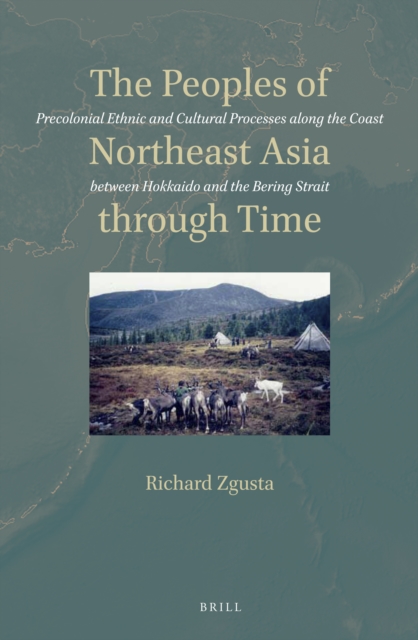
The Peoples of Northeast Asia through Time
The focus of Richard Zgusta's The Peoples of Northeast Asia through Time is the formation of indigenous ethnic and cultural groups of coastal northeast Asia. Most chapters consist of ethnographic summaries followed by interdisciplinary reconstructions of ethnogenesis and cultural development.
eBook

Material Relations
Focusing on marriage figurines-double human figurines that represent relations formed through social alliances-Hendon, Joyce, and Lopiparo examine the material relations created in Honduras between AD 500 and 1000, a period of time when a network of social houses linked settlements of a variety of sizes in the region. The authors analyze these small, seemingly insignificant artifacts using the theory of materiality to understand broader social processes.
They examine the production, use, and disposal of marriage figurines from six sites-Campo Dos, Cerro Palenque, Copán, Currusté, Tenampua, and Travesia-and explore their role in rituals and ceremonies, as well as in the forming of social bonds and the celebration of relationships among communities. They find evidence of historical traditions reproduced over generations through material media in social relations among individuals, families, and communities, as well as social differences within this network of connected yet independent settlements.
Material Relationsprovides a new and dynamic understanding of how social houses functioned via networks of production and reciprocal exchange of material objects and will be of interest to Mesoamerican archaeologists, anthropologists, and art historians.
eBook

Social Bodies
Using as his example post-World War I Italy and the government's interest in the size, growth rate, and \"vitality\" of its national population, David Horn suggests a genealogy for our present understanding of procreation as a site for technological intervention and political contestation.Social Bodieslooks at how population and reproductive bodies came to be the objects of new sciences, technologies, and government policies during this period. It examines the linked scientific constructions of Italian society as a body threatened by the \"disease\" of infertility, and of women and men associalbodies--located neither in nature nor in the private sphere, but in that modern domain of knowledge and intervention carved out by statistics, sociology, social hygiene, and social work.
Situated at the intersection of anthropology, cultural studies, and feminist studies of science, the book explores the interrelated factors that produced the practices of reason we call social science and social planning. David Horn draws on many sources to analyze the discourses and practices of \"social experts,\" the resistance these encountered, and the often unintended effects of the new objectification of bodies and populations. He shows how science, while affirming that maternity was part of woman's \"nature,\" also worked to remove reproduction from the domain of the natural, making it an object of technological intervention. This reconstitution of bodies through the sciences and technologies of the social, Horn argues, continues to have material consequences for women and men throughout the West.
eBook