
Catalogue Search | MBRL


Are you sure you want to remove the book from the shelf?

{{itemTitle}}
1,159
result(s) for
"Premarital sex"
Sort by:

Social Class and Sexual Liberalism in Contemporary China: An Analysis of Attitudes towards Sexuality
IntroductionBy constructing the sexual liberalism index (SLI), this study tests the hypothesis that social class impacts sexual liberalism in China.MethodsThis study uses the Seventh World Value Survey (2017–2022) as data source. Based on survey questions regarding homosexuality, premarital sex, and casual sex, the author constructed a sexual liberalism index (SLI) and checked its correlation with social class by conducting a multivariate ordinary least squares (OLS) regression analysis. Control variables include gender, marital status, place of residence (urban or rural), and age group.ResultsThe results show that social class is a significant predictor of sexual liberalism, with higher social class corresponding to higher levels of sexual liberalism. Other predictors such as marital status, place of residence, and age group also have significant but smaller impacts on sexual liberalism.ConclusionsThe overall level of sexual liberalism among the general population is limited. China’s SLI value is low in both global and regional context. The study suggests that the “sexual revolution” in China is still ongoing. A variety of phenomena can be linked to conservative attitudes.Policy ImplicationsPolicymakers could consider targeted support programs and educational campaigns for various groups based on their socioeconomic status. By prioritizing comprehensive sex education, promoting safe sex practices, and challenging societal norms, policymakers can contribute to fostering a more informed, inclusive, and supportive environment for diverse sexual attitudes and behaviors in contemporary Chinese society.
Journal Article

Evolution's rainbow : diversity, gender, and sexuality in nature and people
In this innovative celebration of diversity and affirmation of individuality in animals and humans, Joan Roughgarden challenges accepted wisdom about gender identity and sexual orientation. A distinguished evolutionary biologist, Roughgarden takes on the medical establishment, the Bible, social science—and even Darwin himself. She leads the reader through a fascinating discussion of diversity in gender and sexuality among fish, reptiles, amphibians, birds, and mammals, including primates. Evolution's Rainbow explains how this diversity develops from the action of genes and hormones and how people come to differ from each other in all aspects of body and behavior. Roughgarden reconstructs primary science in light of feminist, gay, and transgender criticism and redefines our understanding of sex, gender, and sexuality. Witty, playful, and daring, this book will revolutionize our understanding of sexuality.
Roughgarden argues that principal elements of Darwinian sexual selection theory are false and suggests a new theory that emphasizes social inclusion and control of access to resources and mating opportunity. She disputes a range of scientific and medical concepts, including Wilson's genetic determinism of behavior, evolutionary psychology, the existence of a gay gene, the role of parenting in determining gender identity, and Dawkins's \"selfish gene\" as the driver of natural selection. She dares social science to respect the agency and rationality of diverse people; shows that many cultures across the world and throughout history accommodate people we label today as lesbian, gay, and transgendered; and calls on the Christian religion to acknowledge the Bible's many passages endorsing diversity in gender and sexuality. Evolution's Rainbow concludes with bold recommendations for improving education in biology, psychology, and medicine; for democratizing genetic engineering and medical practice; and for building a public monument to affirm diversity as one of our nation's defining principles.
eBook

Premarital sexual intercourse-related individual factors among Iranian Adolescents : a qualitative study
Background:
Understanding sexual behavior before marriage is relatively rare in the East, especially in Islamic societies, because sexuality is a sensitive subject for many Muslims.
Objectives: The purpose of this study was to identify premarital sexual intercourse-related individual factors among Iranian adolescents.
Patients and Methods: This qualitative study was performed on 30 students of Payame Noor university of Shiraz city, Iran, in 2014. The study sample includes male and female university students selected using the convenience sampling method. Semistructured interviews were used to collect data. All interviews were conducted by the researcher in a comfortable atmosphere and carried out without the presence of others. Each interview lasted between 30 - 20 minutes. Interviews continued until data saturation occurred. Data were analyzed using the qualitative content analysis method. Participation in the study was voluntary by obtaining an informed consent.
Results: The study included 30 participants, 56.6% (n = 17) males and 43.4% (n = 13) females. The age range of study, participants was from 19 to 25 years of age. Data analysis showed that three main categories extracted in shaping premarital sexual intercourse in adolescents: health beliefs, religious-spiritual beliefs, and character.
Conclusions: This study can help find a culturally appropriate intervention to delay sexual initiation and prevent sexual behavior before marriage in adolescents and young adults. The results of the present study have both experimental and theoretical implications for future research. Finally, this study is a form of shared experience that can help similar studies.
Journal Article

Premarital Sex in Biblical Law: a Cross-Cultural Perspective
Abstract
It is commonly held in recent scholarship that biblical law, like the society in which it was generated, did not regard premarital sex as a severe offence. The law of the slandered bride (Deut 22:13-22), which determines that a bride that was found non-virgin on her wedding night shall be killed, has therefore become during the last decades a riddle for biblical law researchers, who try to explain the girl's sin in various ways. We claim that this view ignores the wealth of ethnographic data that shows that harsh treatment of premarital sex is common, especially in patrilineal and patrilocal societies (as was ancient Israelite society). Moreover, a reexamination of other biblical laws regarding sexual conduct in light of the same ethnographic data shows that they reflect the very same attitudes. The different laws are not contradictory but rather complementary-all reflecting a typical patriarchal, androcentric, traditional society.
Journal Article

The Long Sexual Revolution
Between 1800 and 1975, sexuality in the West was transformed. Hera Cook shows how the growing effectiveness of contraception gradually eroded the connection between sexuality and reproduction. The increasing control over fertility was crucial to the remaking of heterosexual physical sexual behaviour and had a massive impact on women's lives. Dr Coo.
eBook

Regulating Desire
Starting with the mid-nineteenth-century campaign by the American Female Moral Reform Society to criminalize seduction and moving forward to the late twentieth-century conservative effort to codify a national abstinence-only education policy, Regulating Desire explores the legal regulation of young women's sexuality in the United States. The book covers five distinct time periods in which changing social conditions generated considerable public anxiety about youthful female sexuality and examines how successive generations of reformers sought to revise the law in an effort to manage unruly desires and restore a gendered social order. J. Shoshanna Ehrlich draws upon a rich array of primary source materials, including reform periodicals, court cases, legislative hearing records, and abstinence curricula to create an interdisciplinary narrative of socially embedded legal change. Capturing the complex and dynamic nature of the relationship between the state and the sexualized youthful female body, she highlights how the law both embodies and shapes gendered understandings of normative desire as mediated by considerations of race and class.
eBook

What predicts the early sexual debut among unmarried adolescents
The societal norm in India is such that adolescents are expected to respect and follow traditional values and view early sexual debut as undesirable and deviant from the social mores. However, a dramatic shift in attitudes towards sex before marriage has been observed in India. We in this study, aim to study the factors associated with early sexual debut among unmarried adolescents. The study used data from the Understanding the lives of adolescents and young adults (UDAYA) survey conducted in 2016 with 15,388 adolescents aged 10-19 years from two Indian states. Bivariate and logistic regression analyses were performed to determine the associated factors. Adolescent boys (9%) were more prone to early sexual debut compared to girls (4%). Both boys (17.2%) and girls (6%) who were school dropouts had significantly higher chances of early sexual debut. Boys who had rare [OR: 2.28; CI: 1.12-4.64] or frequent media exposure [OR: 2.70; CI: 1.36-5.32] were significantly more likely to report early sexual debut than those who had no media exposure. Further, the likelihood of early sexual debut was significantly higher among boys [OR: 3.01; CI: 2.34-3.87] and girls [OR: 1.87; CI: 1.12-3.12] who had exposure to pornography compared to their counterparts. The odds of early sexual debut were higher among boys [OR: 1.89; CI: 1.19-3.01] and girls [OR: 1.77; CI: 1.30-2.41] who had moderately-severe/severe depressive symptoms compared to their counterparts. The results highlight that Indian unmarried adolescents demand the appropriate knowledge to promote safer sexual behavior and lead a responsible and healthy lifestyle. The preventive efforts must be multifaceted with involvement at the individual and parental levels. Especially, interventions appear advantageous to be parents-focused emphasizing family life education that can prevent risky sexual behaviors among adolescent boys and girls. And the public programs should focus on sexual health promotion considering the physical and psychosocial changes during early ages of sex life.
Journal Article

Premarital first births: The influence of the timing of sexual onset versus post-onset risks in the United States
Motivated by long-standing debates between abstinence proponents and sceptics, we examine how socio-economic factors influence premarital first births via: (i) age at first sexual intercourse and (ii) the risk of a premarital first birth following the onset of sexual activity. Factors associated with an earlier age at first intercourse will imply more premarital first births owing to increased exposure to risk, but many of these same factors will also be associated with higher risks of a premarital first birth following onset. Our analyses confirm previous findings that women from disadvantaged backgrounds are younger at first intercourse and have higher premarital first-birth risks than women from more advantaged backgrounds. However, differences in onset timing have a strikingly smaller influence on premarital first-birth probabilities than do differences in post-onset risks. Our findings thus suggest that premarital first births result primarily from differences in post-onset risk behaviours as opposed to differences in onset timing.
Journal Article
Changes and predictors of premarital sex intercourse among never-married women
Premarital sexual intercourse (PSI) predisposes never-married women to unwanted pregnancy, abortion, sexually transmitted infections, HIV/AIDS, and high rates of school dropout. This study examines changes and predictors of PSI among never-married women (15-24) in Nigeria. The study used a 15-year duration of three wave's pooled individual recode (IR) dataset of the Nigeria Demographic and Health Surveys (NDHS) of 2008, 2013, and 2018. A weighted sample size of 23,446 never-married young women was analysed using frequency tables, charts, and multilevel binary logistic regression. The prevalence of PSI among never-married women (15-24) over the 15-year duration of 3 waves of NDHS datasets was 31.3% [95%CI: 30.3, 32.3] in Nigeria. Prevalence of PSI steadily decreased from 36.8% in 2008 to 31.7% in 2013 and 26.6% in 2018. A 5-year percentage change between 2008 and 2013 showed that PSI declined by 13.2%, 16.2% between 2013 and 2018, and 27.7% over 10 years (2008-2018). Never-married women aged 20-24 had higher odds (OR= 7.8, 95%CI [6.9, 8.8], p < 0.001) of engaging in PSI than those aged 15-19. The community's knowledge of modern methods, literacy level, socio-economic status, education, religion, region of residence, employment status, and exposure to mass media were strongly associated with PSI. The intra-class correlation value of 10.1% indicates that contextual factors significantly explained the variations in PSI between clusters. The proportional change in variance of 41.3% explained the variability in the odds of PSI explained by each model with more terms. This study established a steady decrease in the prevalence of PSI among never-married women (15-24) over the 15-year duration of 3 waves of NDHS datasets (2008, 2013, and 2018). Thus, we conclude that concerted efforts are required to empower young women to contribute to a further reduction in PSI to improve the general national health status of women and to ensure progress towards achieving a reduction in early pregnancies among unmarried women in Nigeria.
Journal Article
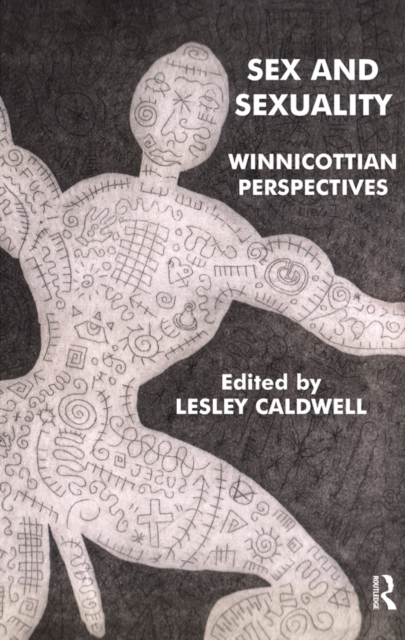
Sex and Sexuality
\"Winnicott\" and \"sex\" are two subjects that are rarely associated with one another. Sexuality is not a prominent theme within the work of Winnicott, who preferred to concentrate on the development of the self from infancy. However, his writings contain unexplored insights into sexuality and it is these hidden insights that prompted the author to invite papers from leading analysts to expand upon them. This collection provides a fresh and innovative look at the work of Winnicott and into sexuality, in particular infantile sexuality. The unusual link of Winnicott to Freud and to a psychoanalysis located in the drives encourages a different perspective into British psychoanalysis. Other diverse themes include a historical examination of Winnicott through the British Society; an exploration of the similarities between Laplanche and Winnicott; the use of Winnicott's work in the treatment of sexual dysfunction; and the interrelation between sexuality and play. This is the sixth volume in the Winnicott Studies Monograph Series.
eBook