
Catalogue Search | MBRL


Are you sure you want to remove the book from the shelf?

{{itemTitle}}
44
result(s) for
"Prenatal diagnosis -- Moral and ethical aspects"
Sort by:


Babies by Design
We stand on the brink of unprecedented growth in our ability to understand and change the human genome. New reproductive technologies now enable parents to select some genetic traits for their children, and soon it will be possible to begin to shape ourselves as a species. Despite the loud cries of alarm that such a prospect inspires, Ronald Green argues that we will-and we should-undertake the direction of our own evolution.
A leader in the bioethics community, Green offers a scientifically and ethically informed view of human genetic self-modification and the possibilities it opens up for a better future. Fears of a terribleBrave New Worldor a new eugenics movement are overblown, he maintains, and in the more likely future, genetic modifications may improve parents' ability to enhance children's lives and may even promote social justice.
The author outlines the new capabilities of genomic science, addresses urgent questions of safety that genetic interventions pose, and explores questions of parenting and justice. He also examines the religious implications of gene modification. Babies by design are assuredly in the future, Green concludes, and by making responsible choices as we enter that future, we can incorporate gene technology in a new age of human adventure.
eBook
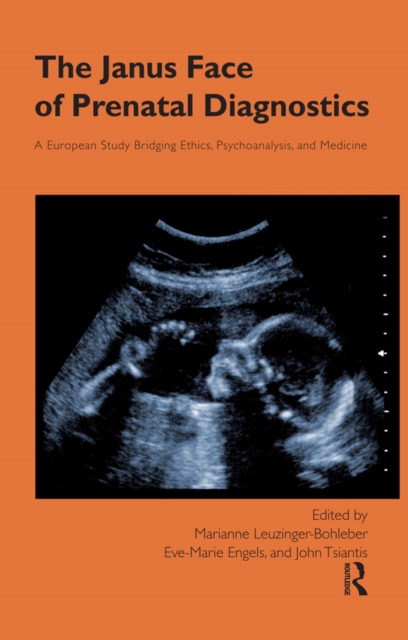
The janus face of prenatal diagnostics
Coping with modern technology in the life sciences (biology and medicine) became a major issue for people living in the Twentieth Century, and continues to be so in the present century. Biotechnology creates new opportunities and possibilities, but also new dangers, risks, and ethical concerns.
In this volume, ethical dilemmas in the context of a specific biomedical technology are discussed. Experts in ethics, philosophy, psychoanalysis, and medicine jointly investigated a field of prenatal and genetic research that seems particularly challenging: prenatal diagnostics. In many European countries amniocentesis, for example, is a routine diagnostic tool for women becoming pregnant after the age of thirty-five. In recent decades, enormous progress has been made in diagnosing genetically-based diseases and other serious prenatal abnormalities. Today, we know that a positive prenatal genetic diagnostic creates distress for all women and their partners, and necessitates making the difficult decision as to whether or not to allow the pregnancy to continue. As is demonstrated in this volume through the summaries of interviews with couples, the reactions of women and their partners who are facing this situation can be very different.
The new and innovative interdisciplinary dialogue on this topic that is presented in this volume offers a deeper understanding of the ethical dilemmas raised by prenatal and genetic diagnostics, and explores ways to support couples in this extremely difficult situation.
eBook
The Ethics of Consent and Choice in Prenatal Screening
Increasingly, notions of individual autonomy, personal \"choice\" and preference have become woven into our reproductive expectations. With respect to prenatal screening, the choices sought, offered or denied are shaped and interpreted through a range of so.
eBook

Ethics, Sexual Orientation, and Choices about Children
Parents routinely turn to prenatal testing to screen for genetic or chromosomal disorders or to learn their child's sex. What if they could use similar prenatal interventions to learn (or change) their child's sexual orientation? Bioethicists have debated the moral implications of this still-hypothetical possibility for several decades. Some commentators fear that any scientific efforts to understand the origins of homosexuality could mean the end of gay and lesbian people, if parents shy away from having homosexual children. Others defend parents' rights to choose the traits of their children in general and see no reason to treat sexual orientation differently. In this book, Timothy Murphy traces the controversy over prenatal selection of sexual orientation, offering a critical review of the literature and presenting his own argument in favor of parents' reproductive liberty. Arguing against commentators who want to restrict the scientific study of sexual orientation or technologies that emerge from that study, Murphy proposes a defense of parents' right to choose. This, he argues, is the only view that helps protect children from hurtful family environments, that is consistent with the increasing powers of prenatal interventions, and that respects human futures as something other than accidents of the genetic lottery.
eBook

Ethical dilemmas in continuing pregnancy after a prenatal diagnosis of congenital heart defects: a systematic review and narrative synthesis
Background
Congenital heart defects (CHD) are a significant cause of prenatal and postnatal morbidity and mortality, leading to complex ethical and moral decisions for parents when diagnosed in utero. The decision to continue or terminate a pregnancy after a CHD diagnosis involves multifaceted considerations, including cultural, religious, and personal values, alongside medical, ethical, and socioeconomic factors. This systematic review delves into the multifaceted moral considerations involved in the decision-making process regarding continuing a pregnancy following a CHD diagnosis.
Methods
A systematic review of the literature was conducted using a narrative synthesis approach. Peer-reviewed qualitative, quantitative, and mixed-methods studies addressing ethical issues related to parental decision-making and clinical care following a prenatal CHD diagnosis were included. A comprehensive search was performed across multiple databases: MEDLINE, PsycINFO, Scopus, Web of Science (WOS), CINAHL, ProQuest, ERIC, and Embase. Findings were synthesized thematically to identify key ethical tensions, factors contributing to moral complexity, challenges faced by parents and healthcare providers, and supportive strategies.
Results
The synthesis of 25 studies from North America, Europe, Australia, and the Middle East (Iran) revealed a universal parental experience of acute psychological crisis following a prenatal diagnosis of CHD. However, the ethical frameworks guiding parental decision-making were highly context-dependent. Three overarching themes emerged: (1) a central ethical tension between the sanctity of life and the quality of life, with perspectives strongly shaped by religious beliefs, legal statutes, and cultural norms; (2) The Lived Experience of the Decision-Making Crisis; and (3) Strategies for Navigating the Ethical Terrain.
Conclusion
A prenatal CHD diagnosis initiates a profound moral journey for parents that extends far beyond a medical decision. The resulting psychological crisis—driven by the tension between sanctity and quality of life—underscores the need for a shift in clinical practice. Evidence supports the adoption of a holistic, multidisciplinary framework grounded in cultural sensitivity and empathetic communication to empower parents in making value-congruent choices during one of life’s most difficult experiences.
Journal Article

Choosing children : genes, disability, and design
Progress in genetic and reproductive technology now offers us the possibility of choosing what kinds of children we do and don't have. Should we welcome this power, or should we fear its implications? There is no ethical question more urgent than this: we may be at a turning-point in the history of humanity. This book shows us how we might try to answer this question, and examines other provoking and disturbing questions. Surely parents owe it to their children to give them the best life they can? Increasingly we are able to reduce the number of babies born with disabilities and disorders. But there is a powerful new challenge to conventional thinking about the desirability of doing so: this comes from the voices of those who have these conditions. They call into question the very definition of disability. How do we justify trying to avoid bringing people like them into being? In 2002 a deaf couple used sperm donated by a friend with hereditary deafness to have a deaf baby: they took the view that deafness is not a disability, but a difference. Starting with the issues raised by this case, this book examines the emotive idea of ‘eugenics’, and the ethics of attempting to enhance people, for non-medical reasons, by means of genetic choices. Should parents be free, not only to have children free from disabilities, but to choose, for instance, the colour of their eyes or hair? This is no longer a distant prospect, but an existing power which we cannot wish away. What impact will such interventions have, both on the individuals concerned and on society as a whole? Should we try to make general improvements to the genetic make-up of human beings? Is there a central core of human nature with which we must not interfere?
eBook
Ethical dilemmas in genetics and genetic counseling : principles through case scenarios
Ethical Dilemmas in Genetic Counseling: Principles through Case Scenarios is essential reading for anyone interested in the ethical issues surfacing in common genetics practice. Written exclusively by genetic counselors, it makes a significant contribution to the field of ethics in genetics and thus will appeal not only to genetic counselors but to physicians, nurses, and all those concerned with bioethics and social science.
eBook

Choosing Between Possible Lives
To what extent should parents be able to choose the kind of child they have? The unfortunate phrase ‘designer baby’ has become familiar in debates surrounding reproduction. As a reference to current possibilities the term is misleading, but the phrase may indicate a societal concern of some kind about control and choice in the course of reproduction. Typically, people can choose whether to have a child. They may also have an interest in choosing, to some extent, the conditions under which they do so, such as whether they have a child with a serious disability or disease. The purpose of this book is to explore the difficult and controversial question of the appropriate ethical and legal extent of reproductive autonomy in this context. The book examines ethical, legal and public policy issues in prenatal screening, prenatal diagnosis (PND), selective abortion and preimplantation genetic diagnosis (PGD). It explores the ethics of these selection practices and the ability of current ethical guidelines and legal mechanisms, including the law on selective abortion and wrongful birth, to deal with advances in genetic and other knowledge in these areas. Unlike in the United States, in England the relevant law is not inherently rights-based, but the impact of the Human Rights Act 1998 inevitably raises questions about the proper scope of reproductive autonomy in this context. The implications of the analysis are considered for the development of relevant law, public policy and ethical guidelines and will be of interest to academics in medical law and ethics, health professionals, lawyers, those working on public policy and students with an interest in these issues.
eBook