
Catalogue Search | MBRL


Are you sure you want to remove the book from the shelf?

{{itemTitle}}
508
result(s) for
"Press Asia."
Sort by:

Press freedom in contemporary Asia
This text analyzes the constraints on press freedom and the ways in which independent reporting and reporters are at risk in contemporary Asia to provide a barometer of democratic development in the region. Based on in-depth country case studies written by academics and journalists, and some who straddle both professions, from across the region, this book explores the roles of mainstream and online media, and how they are subject to abuse by the state and vested interests.
Book

After the Czars and Commissars
From Czarism and Bolshevism to the current post-communist era, the media in Central Asia has been tightly constrained. Though the governments in the region assert that a free press is permitted to operate, research has shown this to be untrue. In all five former Soviet republics of Central Asia, the media has been controlled, suppressed, punished, and often outlawed. This enlightening collection of essays investigates the reasons why these countries have failed to develop independent and sustainable press systems. It documents the complex relationship between the press and governance, nation-building, national identity, and public policy. In this book, scholars explore the numerous and broad-reaching implications of media control in a variety of contexts, touching on topics such as Internet regulation and censorship, press rights abuses, professional journalism standards and self-censorship, media ownership, ethnic newspapers, blogging, Western broadcasting into the region, and coverage of terrorism.
eBook

The news
Gives an inside view of who owns news venues, recent developments in television and radio news, and the ongoing newspaper crisis.
Book
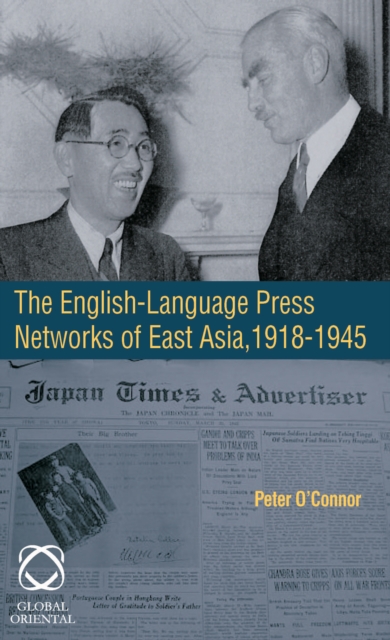
The English-language Press Networks of East Asia, 1918-1945
This study is the first to assess the combined significance of the English-language newspapers of China, Japan and Korea in the period 1918-45. It frames the English-language press networks in the international media history of East Asia, relating them to media developments in the 'British world' linking Fleet Street to the Empire and Dominions.
eBook

Losing Control
‘A free press is not a luxury. A free press is at the absolute core of equitable development’ according to World Bank President James Wolfensohn. A free press is also the key to transparency and good governance and is an indispensable feature of a democracy. So how does Asia rate? In Losing Control, leading journalists analyse the state of play in all the countries of North Asia and Southeast Asia. From the herd journalism of Japan to the Stalinist system of North Korea, Losing Control provides an inside look at journalism and freedom of the press in each country. One conclusion—a combination of new technology and greater democracy is breaking the shackles that once constrained the press in Asia. ‘Brings together Asia’s best and brightest observers of the press.’ Hamish McDonald, Foreign Editor, The Sydney Morning Herald ‘A rare insiders’ view exposing the real dynamics behind social and political change in Asia.’ Evan Williams, Foreign Correspondent, ABC TV ‘A timely and necessary contribution to the debate over the quality of freedom in Asia.’ Geoffrey Barker, The Australian Financial Review
eBook

Along the path of reform and reconstruction in Cambodia
In a speech given on September 21, 1995 before the Subcommittee on Asia and the Pacific of the House International Relations Committee, Assistant Secretary for East Asian and Pacific Affairs Winston Lord described the political and economic conditions in Cambodia. Developments in government reforms, and concerns about restriction of free speech and press, are examined. Support offered by the international community for Cambodia's democratization and development is described.
Journal Article

Mongolia's New Press Law Has Yet to Bring Real Change
\"As Mongolia struggles with newfound freedoms and the perils of an emerging market economy, the battle lines aren't clearly drawn...Many Mongolian journalists have seen the end of Soviet-style rule as an excuse to play fast and loose with the truth, endangering what liberties they now have.\" (FAR EASTERN ECONOMIC REVIEW) This article examines the challenges faced by Mongolian journalists and publishers unaccustomed to press freedom.
Magazine Article

Public Diplomacy in Ireland and Japan
Public diplomacy enables private citizens to be involved in international relations either through initiatives sponsored by governments or through direct people-to-people contacts in areas such as culture, business, education, tourism and sport. Public Diplomacy in Ireland and Japan traces the evolution of this growing branch of diplomacy and examines the role it has played in the foreign policies of Ireland and Japan, and in their bilateral relationship. It concludes that public diplomacy has contributed significantly to strengthening the links between the two countries.
eBook

Soldier Repatriation
Soldier repatriation from Afghanistan has impacted debate about the war. This study highlights this impact with particular focus on Britain, Denmark and Germany. All three countries deployed soldiers soon after the 9/11 attacks, yet their role in Afghanistan and the casualty rates suffered, have been vastly different. This book looks at how their casualties influenced the framing of the war by analysing the political discourse about the casualties, how the media covered the repatriation and the burials, and how the dead were officially recognised and commemorated. Explaining how bodies count is not done exclusively by focusing on the political leadership and the media in the three countries, the response from the men and women in Afghanistan to the official framing of the war is given particular weight. Martinsen contributes to our understanding of European strategic culture by showing how countries respond to the same security challenges.
eBook