
Catalogue Search | MBRL


Are you sure you want to remove the book from the shelf?

{{itemTitle}}
75
result(s) for
"Press and politics History 21st century."
Sort by:


The new censorship
Journalists are being imprisoned and killed in record numbers. Online surveillance is annihilating privacy, and the Internet can be brought under government control at any time. Joel Simon, the executive director of the Committee to Protect Journalists, warns that we can no longer assume that our global information ecosystem is stable, protected, and robust. Journalists are increasingly vulnerable to attack by authoritarian governments, militants, criminals, and terrorists, who all seek to use technology, political pressure, and violence to set the global information agenda. Reporting from Pakistan, Russia, Turkey, Egypt, and Mexico, among other hotspots, Simon finds journalists under threat from all sides. The result is a growing crisis in information—a shortage of the news we need to make sense of our globalized world and fight human rights abuses, manage conflict, and promote accountability. Drawing on his experience defending journalists on the front lines, he calls on \"global citizens,\" U.S. policy makers, international law advocates, and human rights groups to create a global freedom-of-expression agenda tied to trade, climate, and other major negotiations. He proposes ten key priorities, including combating the murder of journalists, ending censorship, and developing a global free-expression charter to challenge the criminal and corrupt forces that seek to manipulate the world's news.
eBook


Media, Social Mobilisation and Mass Protests in Post-colonial Hong Kong
Since 2003, Hong Kong has witnessed a series of large-scale protests which have constituted the core of a reinvigorated pro-democracy movement. What drove tens of thousands of citizens to the street on a yearly basis to protest? What were the social and organizational bases of the protest movement? How did media and public discourses affect the protests’ formation and mobilization? How did the protesters understand their own actions and the political environment? This book tackles such questions by using a wide range of methods, including population and protest onsite surveys, media content analysis, and in-depth interviews with activists, politicians, and protest participants. It provides an account of the \"self-mobilization processes\" behind the historic July 1, 2003 protest, and how the protest kick-started new political dynamics and discursive contestations in the public arena which not only turned a single protest into a series of collective actions constituting a movement, but also continually shaped the movement’s characteristics and influence. The book is highly pertinent to readers interested in political development in Hong Kong, and as a case study on \"the power of critical events,\" the book also has broad implications on the study of both media politics and social movements in general.
1. Introduction: From a Critical Event to Ritualistic Protests 2. Public Opinion on the Eve of Explosion 3. Organization, Communication, and Mobilization 4. The Reshaping of Public Discourse 5. Constructing the Call for Democracy 6. Contextual Changes and Strategic Responses 7. Development of the Movement Organization 8. The Social Bases of Continual Protests 9. Making Sense of Participation 10. The June 4 Connection
Francis L. F. Lee is Associate Professor at the School of Journalism and Communication, Chinese University of Hong Kong. Joseph M. Chan is Professor of Journalism and Communication at the Chinese University of Hong Kong. He also served as the Changjiang Chair Professor of Journalism at Fudan University, Shanghai.
The authors also co-edited Media and Politics in Post-handover Hong Kong (also published by Routledge, 2008).
eBook

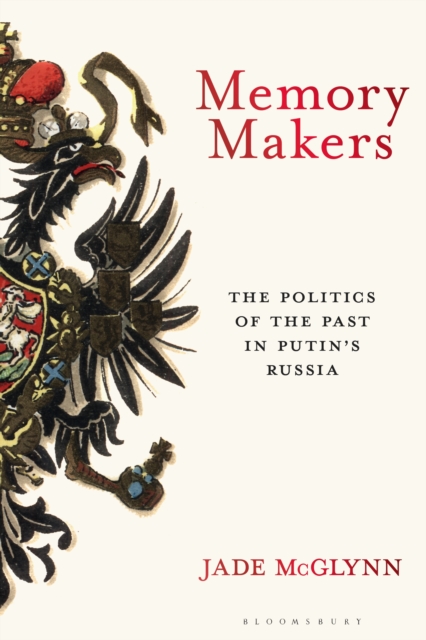
Memory makers : the politics of the past in Putin's Russia
Explores the Kremlin's use of Russian history and media to cement a particular patriotic history into everyday Russian life, using the past to justify its policies, legitimize its rule, and redefine what it means to be 'good' Russian.
eBook


The Egyptian press and coverage of local and international events
The Egyptian press has a large readership and potential influence on public opinion in Egypt and the Arab world. The Egyptian Press and Coverage of Local and International Events analyzes this understudied area. Written in Egypt, the book is formed of five chapters and analyzes in qualitative and quantitative methods close to 300 newspaper and magazine articles. It studies the Egyptian press and investigates the challenges it faces to be compatible with that in the west, and evaluates the renowned book Four Theories of the press and whether today's Egyptian press can fit in one of those theories. It also looks at the concepts of framing and discourse analysis adopted later. The author examines how the Egyptian press framed the Sudanese refugees' riot in Cairo in December 2005 by the top thirteen Egyptian national, independent, and party newspapers. It found that independent and party newspapers enjoy more freedom than national ones in criticizing government and the way police tackled the protest. However, independent newspapers were more vigorous in their criticism than party ones. The author observes that the weekly magazines tended to frame their coverage in a somewhat anti-government slant, accusing authorities and ferry owners of failure and corruption. Finally, the book compares coverage of the Israeli War in Lebanon in July 2006 by Egypt's giant semi-official daily newspaper Al-Ahram with that by two prominent, non-Egyptian pan-Arab dailies Al-Hayat and Asharq Al-Awsat. He finds that while Al-Hayat and Asharq Al-Awsat, which are owned by Saudi businessmen, portrayed Hizbullah in an unfavorable manner, Al-Ahram was somewhat favorable in its coverage of the Lebanese resistance group.
eBook


Journalism and Austerity
Using an original empirical study of the frame building process in the press, this book analyses the interplay between political economy and framing theories, focusing on what the frames found in the press can reveal about structural power struggles, and the contribution of journalism to democratic debate.
eBook