
Catalogue Search | MBRL


Are you sure you want to remove the book from the shelf?

{{itemTitle}}
34
result(s) for
"Preteen girls."
Sort by:


Developing an Evidence- and Theory-Informed Mother-Daughter mHealth Intervention Prototype Targeting Physical Activity in Preteen Girls of Low Socioeconomic Position: Multiphase Co-Design Study
Preteen girls of lower socioeconomic position are at increased risk of physical inactivity. Parental support, particularly from mothers, is positively correlated with girls' physical activity levels. Consequently, family-based interventions are recognized as a promising approach to improve young people's physical activity. However, the effects of these interventions on girls' physical activity are often inconsistent, with calls for more rigorous, theory-informed, and co-designed family-based interventions to promote physical activity in this cohort.
This study aimed to use co-design methods to develop an evidence- and theory-informed mother-daughter mobile health intervention prototype targeting physical activity in preteen girls.
The intervention prototype was developed in accordance with the United Kingdom Medical Research Council framework, the Behaviour Change Wheel, the Theoretical Domains Framework, and the Behaviour Change Techniques Ontology. The Behaviour Change Intervention Ontology was also used to annotate the intervention characteristics. The co-design process incorporated three phases: (1) behavioral analysis, (2) the selection of intervention components, and (3) refinement of the intervention prototype. Throughout these phases, workshops were conducted with preteen girls (n=10), mothers of preteen girls (n=9), and primary school teachers (n=6), with additional input from an academic advisory panel.
This 3-phase co-design process resulted in the development of a theory-informed intervention that targeted two behaviors: (1) mothers' engagement in a range of supportive behaviors for their daughters' physical activity and (2) daughters' physical activity behavior. Formative research identified 11 theoretical domains to be targeted as part of the intervention (eg, knowledge, skills, and beliefs about capabilities). These were to be targeted by 6 intervention functions (eg, education, persuasion, and modeling) and 27 behavior change techniques (eg, goal setting and self-monitoring). The co-design process resulted in a mobile app being chosen as the mode of delivery for the intervention.
This paper offers a comprehensive description and analysis of using co-design methods to develop a mother-daughter mobile health intervention prototype that is ready for feasibility and acceptability testing. The Behaviour Change Wheel, Theoretical Domains Framework, and Behaviour Change Techniques Ontology provided a systematic and transparent theoretical foundation for developing the prototype by enabling the identification of potential pathways for behavior change. Annotating the Behaviour Change Intervention Ontology entities represents the intervention characteristics in a detailed and structured way that supports improved communication, replication, and implementation of interventions.
Journal Article

Lizzy and the good luck girl
Twelve-year-old Lizzy Sherman believes there are signs everywhere that can help her keep her family safe, so when she begins helping a runaway girl her own age--a stranger to their small town in Maine--Lizzy hopes that she, too, can protect Lizzy's family.
Book
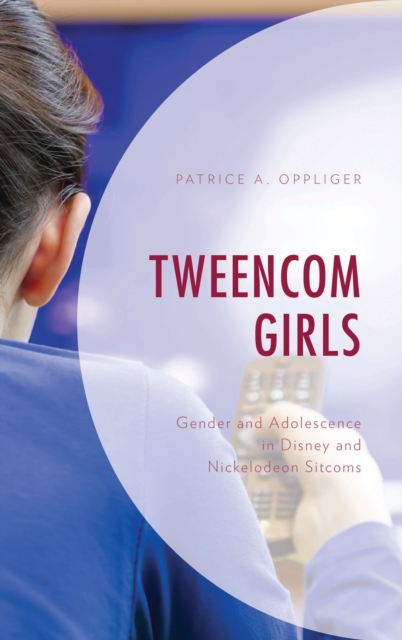
Tweencom Girls
Tweencom Girls analyzes the different ways character tropes are portrayed in media targeted at eight- to twelve-year-olds, particularly female characters, over the last twenty-five years.The book focuses particularly on sitcoms produced by the cable giants Disney Channel and Nickelodeon because of their popularity and ubiquity.
eBook

Gwendy's button box
There are three ways up to Castle View from the town of Castle Rock: Route 117, Pleasant Road, and the Suicide Stairs. Every day in the summer of 1974, twelve-year-old Gwendy Peterson has taken the stairs, which are held by strong, if time-rusted, iron bolts and zig-zag up the cliffside. Then one day when Gwendy gets to the top of Castle View, after catching her breath and hearing the shouts of kids on the playground below, a stranger calls to her. There on a bench in the shade sits a man in black jeans, a black coat, and a white shirt unbuttoned at the top. On his head is a small, neat black hat. The time will come when Gwendy has nightmares about that hat.
Book
Cold November
On the cusp of womanhood, 12-year-old Florence goes on her first deer hunt, a traditional rite-of-passage in her matriarchal family.
Streaming Video
Moon Girl and Devil Dinosaur
\"Lunella Lafayette is a preteen super genius who wants to change the world - but learned the hard way that it takes more than just big brains. Fearful of the monstrous inhuman genes inside her, life is turned upside down when a savage, red-scaled tyrant is teleported from prehistoric past to a far-flung future we call today. The pair are many things, and together the most amazing Marvel Team-Up. Marvel presents ... Moon Girl & Devil Dinosaur!\"--Publisher's website.
Book
Almost friends
Two pre-teen girls meet through a digital educational project in Israel. Samar's father comes from the Palestinian Occupied Territories. Linor's family was evacuated from a Jewish settlement. Only 67 kilometers apart, yet an idealogical gulf stands between them. What starts as innocent correspondence continues with face-to-face meetings as an immediate bond is struck. And then reality sets in.
Streaming Video

Preteen children’s health related quality of life in Sweden: changes over time and disparities between different sociodemographic groups
Background
Assessing disparities in health-related quality of Life (HRQoL) is important as a part of health-related disparities in the society. The aim of this study was to explore HRQoL among 12-year-olds in Sweden in terms of differences between years 2005 and 2009 and disparities related to sociodemographic background.
Methods
During the school years 2005 and 2009, a total of 18,325 sixth grade students in Sweden were invited to a celiac disease screening study; 13,279 agreed to participate. Jointly with the celiac screening, the children answered a questionnaire that included EuroQol 5 Dimensions-youth (EQ-5D-Y) and their parents responded to separate questionnaires about their own and their child’s country of birth, family structure, their employment status, occupation, and education. In total 11,009 child-parent questionnaires were collected. Logistic regression was used to study differences in HRQoL between 2005 and 2009, and between various sociodemographic subgroups.
Results
Compared with 2005, children in 2009 reported more pain (OR: 1.20, 95% CI: 1.1–1.3) and more mood problems (OR: 1.35, 95% CI: 1.2–1.5). In general, girls reported more pain and mood problems and had more disparities than boys. There were no significant differences based on parents’ occupation, however, children of parents with low or medium education levels reported less “mood problems” than those of parents with high education levels (OR: 0.65, 95% CI: 0.46–0.92) and (OR: 0.84, 95% CI: 0.73–0.96), respectively. A slight variation was seen in HRQoL between children with different migration background. Girls living in small municipalities reported more pain (OR: 1.51, 95% CI: 1.14–2.01), and problems performing usual activities (OR: 3.77, 95% CI: 2.08–6.84), compared to girls living in large municipalities. In addition, children living with two parents had less mood problems than children living in other family constellations.
Conclusion
More children reported pain and mood problems in 2009 compared with 2005. To study future trends, health outcomes among children in Sweden should continue to be reported periodically. More efforts should be invested to increase the awareness of health-related disparities as highlighted in this study especially for girls living in small municipalities and children of parents with high education level.
Journal Article

Intervention effects from a social marketing campaign to promote HPV vaccination in preteen boys
•We evaluated a social marketing intervention to stimulate HPV vaccination.•We modeled change in vaccination rates in 9–13 year old boys using NC registry data.•Probability of vaccination increased significantly in the intervention region.•HPV vaccination rates were highest in the 11–12 year old boys.•Social marketing can promote timely vaccination of preteen boys against HPV.
Adoption of human papillomavirus (HPV) vaccination in the US has been slow. In 2011, HPV vaccination of boys was recommended by CDC for routine use at ages 11–12. We conducted and evaluated a social marketing intervention with parents and providers to stimulate HPV vaccination among preteen boys.
We targeted parents and providers of 9–13 year old boys in a 13 county NC region. The 3-month intervention included distribution of HPV vaccination posters and brochures to all county health departments plus 194 enrolled providers; two radio PSAs; and an online CME training. A Cox proportional hazards model was fit using NC immunization registry data to examine whether vaccination rates in 9–13 year old boys increased during the intervention period in targeted counties compared to control counties (n=15) with similar demographics. To compare with other adolescent vaccines, similar models were fit for HPV vaccination in girls and meningococcal and Tdap vaccination of boys in the same age range. Moderating effects of age, race, and Vaccines for Children (VFC) eligibility on the intervention were considered.
The Cox model showed an intervention effect (β=0.29, HR=1.34, p=.0024), indicating that during the intervention the probability of vaccination increased by 34% in the intervention counties relative to the control counties. Comparisons with HPV vaccination in girls and Tdap and meningococcal vaccination in boys suggest a unique boost for HPV vaccination in boys during the intervention. Model covariates of age, race and VFC eligibility were all significantly associated with vaccination rates (p<.0001 for all). HPV vaccination rates were highest in the 11–12 year old boys. Overall, three of every four clinic visits for Tdap and meningococcal vaccines for preteen boys were missed opportunities to administer HPV vaccination simultaneously.
Social marketing techniques can encourage parents and health care providers to vaccinate preteen boys against HPV.
Journal Article