
Catalogue Search | MBRL


Are you sure you want to remove the book from the shelf?

{{itemTitle}}
10,053
result(s) for
"Primary and middle schools"
Sort by:

Supporting Primary Teaching and Learning
The book is aimed at all those studying on Foundation Degrees in supporting primary and early years teaching and learning, and particularly those working at levels 4 and 5. It is written in an accessible style with a focus on work-based professional development and encourages critical reflection throughout. It starts with a discussion of reflective practice, and includes helpful guidance on developing effective study skills. Each chapter then focuses on a key topic in education, learning and development, considers any relevant policies and legislation, examines educational theories in relation to professional practice and provides concise case studies to contextualise the learning. It provides up-to-date and relevant material on supporting the new national curriculum, safeguarding, SEN and inclusion issues, and schools as organisations. It also covers the competencies for Higher Level Teaching Assistants.
eBook

Ability-grouping in primary schools
The use of ability-grouping is currently increasing in primary schools. Teachers and teacher educators are placed in the unenviable position of having to marry research evidence suggesting that ability-grouping is ineffectual with current policy advocating this approach. This book links theory, policy and practice in a critical examination of ability-grouping practices and their implications in primary schools, with particular reference to primary mathematics. It provides an accessible text for teacher educators to support their students in engaging with the key debates and reflecting upon their practice. Key changes in structural approaches, such as the movement between streaming, setting or mixed-ability teaching arrangements, are explored in the light of political trends, bringing this up to date with a discussion of current policy and practice.
eBook

Classroom Observation
Building on recent changes and debates surrounding the use of observation, this fully updated second edition of Classroom Observation explores the role of lesson observation in the preparation, assessment and professional learning of teachers, lecturers and educators at all levels and across all educational organisations. Offering practical guidance and detailed insights on an aspect of training that is a source of anxiety for many teachers, this thought-provoking book offers a critical analysis of the place, role and nature of lesson observation in the lives of education professionals.
Updated to incorporate the latest research, policy and practical developments on observation, this new edition also includes greater coverage of research and developments in the field of observation beyond the UK. Enabling readers to use observation as a lens for understanding, informing and improving teaching and learning, and equipping them with structured frameworks for applying observation, this book includes sections on:
Teacher autonomy and professional identity
Performance management, professional standards and accountability
Peer observation, self-observation and critical reflection
Educational assessment and evaluation
Peer-based models of observation
Using digital technology to inform learning.
Written for all student and practising teachers as well as teacher educators and those engaged in educational research, Classroom Observation is an essential introduction to how we observe, why we observe, and how it can be best used to improve teaching and learning.
eBook

A modeling study on SARS-CoV-2 transmissions in primary and middle schools in Illinois
Background
The global pandemic caused by the SARS-CoV-2 virus led to a statewide lockdown in Illinois starting in March 2020. To ensure students’ and employees’ safety for school reopening, protective measures, such as a statewide mask mandate and weekly testing, were in place in Illinois from Spring 2021 to Spring 2022. The study objective is to 1) estimate the in-school and external transmission of SARS-CoV-2 in elementary and middle schools under mask mandate and weekly surveillance and 2) estimate the impacts of protective measures such as testing and mask proportion and testing frequency on SARS-CoV-2 transmission.
Methods
A stochastic compartmental model was built to simulate the SARS-CoV-2 transmission within and between the student and employee groups in primary and middle schools participating in the weekly testing program and to evaluate the effectiveness of these protective measures. This stochastic model was modified from a susceptible–infected–recovered framework and calibrated to SARS-CoV-2 surveillance data in 116 primary and middle school districts from Spring 2021 to March 2022. This model calibration was assessed using the surveillance data from the rest of the spring semester in 2022.
Results
Overall, the external transmission rates in students and employees were significantly greater than those within schools, and the external transmission rates in middle school students and school employees were greater than those in primary school students. Our sensitivity analysis showed that transmission rates within student groups could significantly influence overall infection rates in vaccinated and unvaccinated students in large school districts. Under the protective measures implemented in the studied period in Illinois, an increased proportion of students and employees participating in the weekly testing can decrease infections. However, community-level measures of self-reported mask adherence among adults were not significantly associated with the infections during the study period, when a universal mask policy was in place for the state.
Conclusions
Although increased testing proportion and/or frequency can reduce the SARS-CoV-2 infections, the costs of testing can increase with the testing volume. Further studies on the cost-effectiveness between the testing volume and cases reduction or learning disturbance can aid in policy development to reduce transmission effectively.
Journal Article

Spatial Pattern and Fairness Measurement of Educational Resources in Primary and Middle Schools: A Case Study of Chengdu–Chongqing Economic Circle
China’s education has developed rapidly in recent years, but the issue of educational equality still exists. Currently, there are few studies on educational resources, and their spatial pattern and fairness remain unclear. Thus, this study selected the point of interest data and spatial analysis methods to depict the spatial pattern of educational resources (containing the number of teachers, students, facilities, etc.). Then, we evaluated the equity of educational resources (including the number of schools and school teachers) in terms of geographic and population distribution by combining statistical yearbook data with two indices (the index of dissimilarity and agglomeration degree) to promote healthy urban development. The results show the following. (1) Educational resources have a multicenter spatial structure of “dual cores and multiple sub-centers”. The Moran index reflects a weak positive spatial correlation between educational resources. (2) The index of dissimilarity is between 0.02 and 0.21, which shows that the allocation of resources is relatively balanced. Regarding internal units, obvious differences exist in the agglomeration degree and equilibrium of educational resources.
Journal Article

Educating Children Outdoors
Educating Children Outdoors is
a resource for educators interested in spending extended periods of
time in nature with their students . Bringing over two
decades of experience working outdoors with teachers and students,
Amy Butler offers curricular guidance on nature-based lessons that
align with K-12 education standards and build on the innate
curiosity and wonder children have for the natural world.
This book will help the educator: - Learn successful routines
and practices to make learning outdoors safe and engaging -
Understand protocols for real and risky play - Draw inspiration
from real-life stories from other teachers about learning in nature
- Meet NGSS and Common Core standards outdoors with seasonal
lessons that are child-centered - Be part of the movement to
support children in becoming reconnected with the natural world and
the places they call home
With twenty-five lessons in five units of study spread out
across a seasonal school year and appendixes that offer templates
for learning, Educating Children Outdoors is essential for
educators looking to harvest the benefits of a nature-based
curriculum.
eBook

Transition and Continuity in School Literacy Development
This book addresses a significant gap in the research literature on transitions across the school years: the continuities and discontinuities in school literacy education and their implications for practice. Across different curriculum domains, and using social semiotic, ethnographic, and conversation-analytic approaches, the contributors investigate key transition points for individual students' literacy development, elements of literacy knowledge that are at stake at each of these points, and variability in students' experiences. Grounding its discussion in classroom voices, experiences and texts, this book reveals literacy-specific curriculum demands and considers how teachers and students experience and account for these evolving demands. The contributors include a number of established names (such as Freebody, Derewianka, Myhill, Rowsell, Moje and Lefstein), as well as emerging scholars gaining increasing recognition in the field. They draw out implications for how literacy development is theorized in school curriculum and practice, teacher education, further research and policy formation. In addition, each section of the book features a summary from an international scholar who draws together key ideas from the section and relates these to their current thinking. They deploy a range of different theoretical and methodological approaches in order to bring rich yet complementary perspectives to bear on the issue of literacy transition.
eBook

Innocence, Knowledge and the Construction of Childhood
Innocence, Knowledge and the Construction of Childhood provides a critical examination of the way we regulate children's access to certain knowledge and explores how this regulation contributes to the construction of childhood, to children's vulnerability and to the constitution of the 'good' future citizen in developed countries.
Through this controversial analysis, Kerry H. Robinson critically engages with the relationships between childhood, sexuality, innocence, moral panic, censorship and notions of citizenship. This book highlights how the strict regulation of children's knowledge, often in the name of protection or in the child's best interest, can ironically, increase children's prejudice around difference, increase their vulnerability to exploitation and abuse, and undermine their abilities to become competent adolescents and adults. Within her work Robinson draws upon empirical research to:
provide an overview of the regulation and governance of children's access to 'difficult knowledge', particularly knowledge of sexuality
explore and develop Foucault's work on the relationship between childhood and sexuality
identify the impact of these discourses on adults' understanding of childhood, and the tension that exists between their own perceptions of sexual knowledge, and the perceptions of children
reconceptualise children's education around sexuality.
Innocence, Knowledge and the Construction of Childhood is essential reading for both undergraduate and postgraduate students undertaking courses in education, particularly with a focus on early childhood or primary teaching, as well as in other disciplines such as sociology, gender and sexuality studies, and cultural studies.
eBook
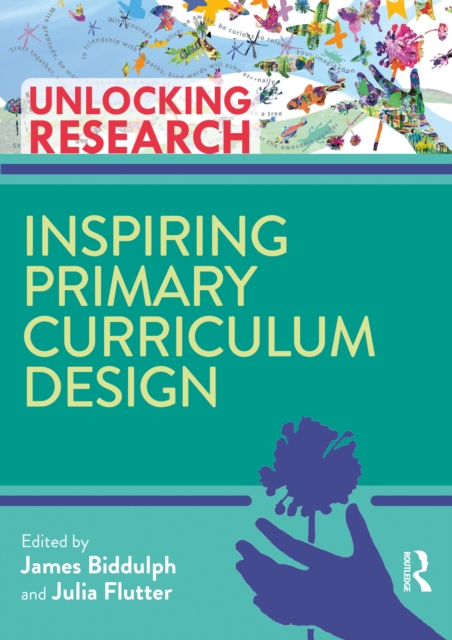
Inspiring Primary Curriculum Design
Inspiring Primary Curriculum Design offers support and ideas for teachers, school leaders, teaching assistants and student teachers to develop their knowledge of the research related to curriculum design, giving specific and practical ideas to apply research in primary school contexts. This first book in the brand-new series 'Unlocking Research' combines practitioner expertise with world class academic research and reflects cutting-edge educational thinking from the only university-run primary school in the UK.
Co-written by practising teachers and research academics and drawing from a wide and diverse theoretical and research base, each chapter includes examples of how schools approached designing their own curricula; providing a route map of ideas and questions for readers to explore in their own contexts. The aim is to empower educational professionals in reclaiming the processes of curriculum design from evidence-informed foundations and to identify opportunities to be bold, innovative and imaginative.
Packed with innovative ideas and practical suggestions, this book highlights the importance of using research evidence to develop teachers' practice in the realities of their own classrooms and schools. This will be a key read for teachers, school leaders, teaching assistants and student teachers, especially those who recognise the important role of research in developing excellence in their practice.
eBook
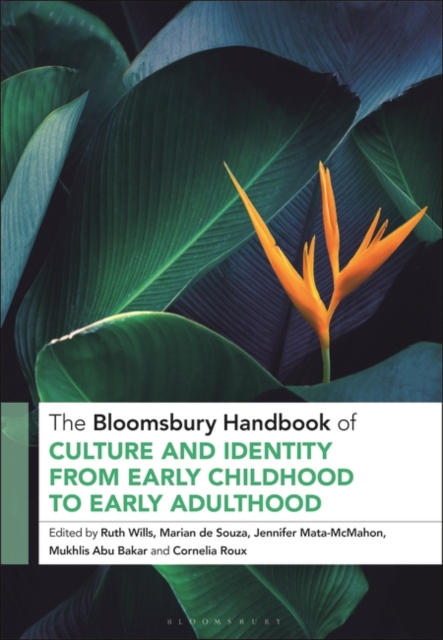
The Bloomsbury handbook of culture and identity from early childhood to early adulthood : perceptions and implications
How do children determine which identity becomes paramount as they grow into adolescence and early adulthood?Which identity results in patterns of behaviour as they develop?To whom or to which group do they feel a sense of belonging?.
eBook