
Catalogue Search | MBRL


Are you sure you want to remove the book from the shelf?

{{itemTitle}}
10,326
result(s) for
"Primary language"
Sort by:

English for primary teachers : a handbook of activities and classroom language
Accompanying CD contains ... \"examples of classroom language from real classrooms, plus pronunciation exercises.\"--Page 4 of cover.
Book

Living Languages
Living Languages comprises eight chapters and is structured around the integrated classroom, merging language learning with different aspects of the wider curriculum such as multimedia, performance, celebrations and festivals, creativity and alternative approaches to teaching languages. Downloadable resources are also included with the.
eBook

International handbook of research on children's literacy, learning and culture
This publication synthesises existing research literature and charts new theoretical, methodological and practical directions for primary and middle years literacy education.
Book

Identification of Specific Language Impairment in Bilingual Children: I. Assessment in English
Purpose: This study was designed to derive cut scores for English testing for use in identifying specific language impairment (SLI) in bilingual children who were learning English as a second language. Method: In a 1-gate design, 167 children received comprehensive language assessments in English and Spanish during their first-grade year. The reference standard was identification by a team of expert bilingual speech-language pathologists. Receiver operating curve (ROC) analyses were used to identify the optimal prediction model for SLI. Results: The original, English EpiSLI criteria (Tomblin, Records, & Zhang, 1996) yielded a sensitivity of 0.95 and a specificity of 0.45 (LR+ = 1.73, LR- = 0.11, and AUC = 0.79) for our bilinguals. Revised cutoff scores yielded a sensitivity of 0.86 and a specificity of 0.68 (LR+ = 2.67, LR- = 0.21, and AUC = 0.77). An optimal prediction model yielded a sensitivity of 0.81 and a specificity of 0.81 (LR+ = 4.37, LR- = 0.23 and AUC = 0.85). Conclusion: The results of English testing could be used to make a reasonably accurate diagnostic decision for bilingual children who had attended public school for at least 1 year and were using English at least 30% of the time.
Journal Article
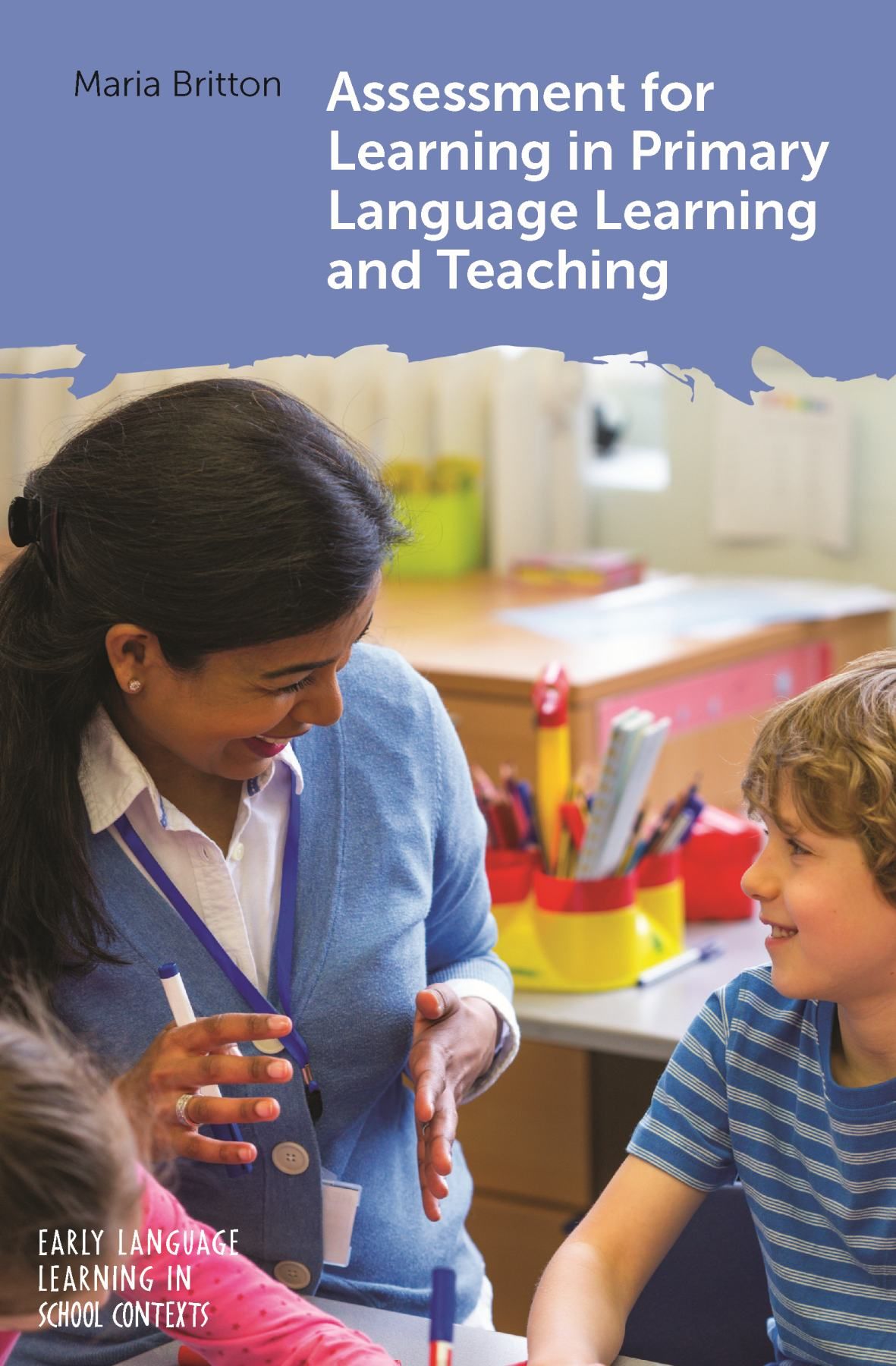
Assessment for Learning in Primary Language Learning and Teaching
This volume provides a detailed account of the practical use of
Assessment for Learning (AfL) in primary language classrooms. It
gives an in-depth account of the ways in which eight experienced
primary language teachers incorporated this type of assessment into
their practice and discusses the possible impact of AfL on primary
language learning. Key themes discussed in the volume include the
relationship between AfL and language learning in childhood, which
assessment methods are appropriate for primary-aged language
learners, which methods support learner agency and engagement in
the learning processes, and possible paths for future action, with
a focus on implementation and researching AfL in primary language
contexts. The findings of this book are relevant to global contexts
and it will be of interest to postgraduate students and researchers
in the fields of language education, language assessment and
teacher education, as well as to primary and language teachers and
school leaders.
eBook
Sensitivity and Specificity of French Language and Processing Measures for the Identification of Primary Language Impairment at Age 5
Purpose: Research on the diagnostic accuracy of different language measures has focused primarily on English. This study examined the sensitivity and specificity of a range of measures of language knowledge and language processing for the identification of primary language impairment (PLI) in French-speaking children. Because of the lack of well-documented language measures in French, it is difficult to accurately identify affected children, and thus research in this area is impeded. Method: The performance of 14 monolingual French-speaking children with confirmed, clinically identified PLI (M = 61.4 months of age, SD = 7.2 months) on a range of language and language processing measures was compared with the performance of 78 children with confirmed typical language development (M age = 58.9 months, SD = 5.7). These included evaluations of receptive vocabulary, receptive grammar, spontaneous language, narrative production, nonword repetition, sentence imitation, following directions, rapid automatized naming, and digit span. Sensitivity, specificity, and likelihood ratios were determined at 3 cutoff points: (a) -1 SD, (b) -1.28 SD, and (b) -2 SD below mean values. Receiver operator characteristic curves were used to identify the most accurate cutoff for each measure. Results: Significant differences between the PLI and typical language development groups were found for the majority of the language measures, with moderate to large effect sizes. The measures differed in their sensitivity and specificity, as well as in which cutoff point provided the most accurate decision. Ideal cutoff points were in most cases between the mean and -1 SD. Sentence imitation and following directions appeared to be the most accurate measures. Conclusions: This study provides evidence that standardized measures of language and language processing provide accurate identification of PLI in French. The results are strikingly similar to previous results for English, suggesting that in spite of structural differences between the languages, PLI in both languages involves a generalized language delay across linguistic domains, which can be identified in a similar way using existing standardized measures.
Journal Article
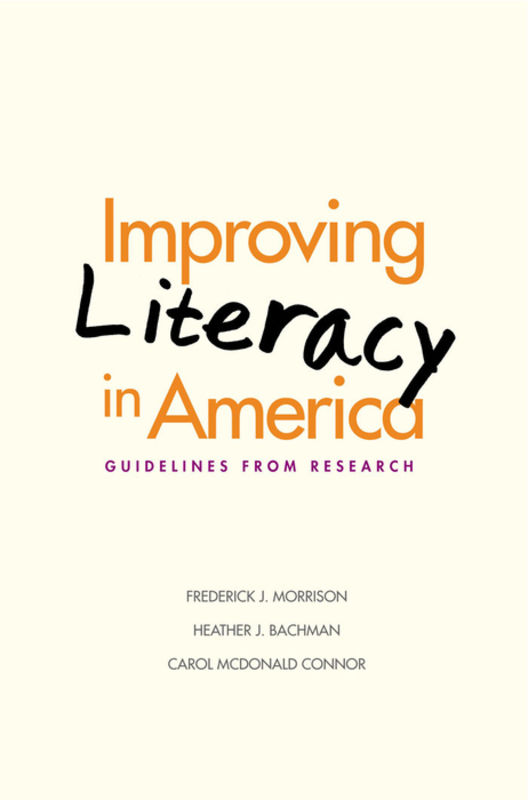
Improving literacy in America
An alarmingly high number of American students continue to lack proficiency in reading, math, and science. The various attempts to address this problem have all too often resulted in \"silver bullet\" solutions such as reducing class size or implementing voucher programs. But as the authors of this critically important book show, improving literacy also requires an understanding of complex and interrelated social issues that shape a child's learning. More than twenty years of research demonstrate that literacy success is determined by a combination of sociocultural forces including parenting, preschool, classroom instruction, and other factors that have a direct impact on a child's development.Here, Frederick J. Morrison, Heather J. Bachman, and Carol McDonald Connor present the most up-to-date research on the diverse factors that relate to a child's literacy development from preschool through early elementary school. Urging greater emphasis on the immediate sources of influence on children, the authors warn against simple, single solutions that ignore other pivotal aspects of the problem. In a concluding chapter, the authors propose seven specific recommendations for improving literacy-recommendations that can make a real difference in American education.
eBook