
Catalogue Search | MBRL


Are you sure you want to remove the book from the shelf?

{{itemTitle}}
159,227
result(s) for
"Princes."
Sort by:
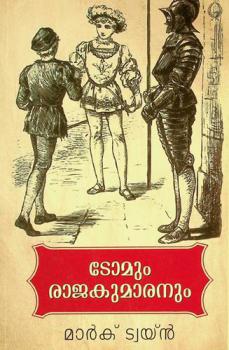
Ṭōmuṃ rājakumāranuṃ
On the poor boy and a prince exchange identities and lives while the villainous Captain of the Guard plots to take advantage of this; retold for children.

Ghosts of Slavery
While some scholars imply that only the struggle for freedom was legitimate, Jenny Sharpe complicates the linear narrative-from slavery to freedom and literacy-that emerged from the privileging of autobiographical accounts like that of Frederick Douglass. She challenges a paradigm that equates agency with resistance and self-determination, and introduces new ways to examine negotiations for power within the constraints of slavery.
eBook

King of thorns
The land burns with the fires of a hundred battles as lords and petty kings fight for the Broken Empire. The long road to avenge the slaughter of his mother and brother has shown Prince Honorous Jorg Ancrath the hidden hands behind this endless war. He saw the game and vowed to sweep the board. First though he must gather his own pieces, learn the rules of play, and discover how to break them. A six nation army, twenty thousand strong, marches toward Jorg's gates, led by a champion beloved of the people. Every decent man prays this shining hero will unite the empire and heal its wounds. Every omen says he will. Every good king knows to bend the knee in the face of overwhelming odds, if only to save their people and their lands. But King Jorg is not a good king. Faced by an enemy many times his strength Jorg knows that he cannot win a fair fight. But playing fair was never part of Jorg's game plan.
Book

Rural Protest on Prince Edward Island
Who has the more legitimate claim to land, settlers who occupy and improve it with their labour, or landlords who claim ownership on the basis of imperial grants? This question of property rights, and their construction, was at the heart of rural protest on Prince Edward Island for a century. Tenants resisted landlord claims by squatting and refusing to pay rent. They fought for their vision of a just rural order through petitions, meetings, rallies, electoral campaigns, and direct action. Landlords responded with their own collective action to protect their interests. In Rural Protest on Prince Edward Island Rusty Bittermann examines this conflict and the dynamic of rural protest on the Island from its establishment as a British colony in the 1760s to the early 1840s.
The focus of Bittermann's study is the remarkable mass movement known as the Escheat movement, which emerged in the 1830s in the context of growing popular challenges elsewhere in the Atlantic World. The Escheat movement aimed at resolving the land question in favour of tenants by having the state resume (escheat) the large grants of land that created landlordism on the Island. Although it ultimately gained control of the assembly in the late 1830s, the Escheat movement did not produce the land policies that tenants and their allies advocated. The movement did, however, synthesize years of rural protest and produce a persistent legacy of language and ideas concerning land, justice, and the rights of small producers that helped to make landlordism on the Island unsustainable in the long term. Rural Protest on Prince Edward Island is a comprehensive and fascinating examination of an important, but often overlooked, period in the history of Canada's smallest province.
eBook

The frog prince, continued
After the frog turns into a prince, he and the princess do not live happily ever after and the prince decides to look for a witch to help him remedy the situation.
Book

Brown's battleground
\"When the U.S. Supreme Court handed down its decision in Brown v. Board of Education in 1954, Prince Edward County, Virginia, home to one of the five cases combined by the Court under Brown, abolished its public school system rather than integrate. Jill Titus situates the crisis in Prince Edward County within the seismic changes brought by Brown and Virginia's decision to resist desegregation. While school districts across the South temporarily closed a building here or there to block a specific desegregation order, only in Prince Edward did local authorities abandon public education entirely--and with every intention of permanence. When the public schools finally reopened after five years of struggle--under direct order of the Supreme Court--county authorities employed every weapon in their arsenal to ensure that the newly reopened system remained segregated, impoverished, and academically substandard. Intertwining educational and children's history with the history of the black freedom struggle, Titus draws on little-known archival sources and new interviews to reveal the ways that ordinary people, black and white, battled, and continue to battle, over the role of public education in the United States.\" -- Provided by publisher.
eBook

The little prince : family storybook : the original masterpiece
An aviator whose plane is forced down in the Sahara Desert encounters a little prince from a small planet who relates his adventures in seeking the secret of what is important in life.
Book

A Question of Freedom
The story of the longest and most complex legal challenge
to slavery in American history For over seventy years and
five generations, the enslaved families of Prince George's County,
Maryland, filed hundreds of suits for their freedom against a
powerful circle of slaveholders, taking their cause all the way to
the Supreme Court. Between 1787 and 1861, these lawsuits challenged
the legitimacy of slavery in American law and put slavery on trial
in the nation's capital. Piecing together evidence once dismissed
in court and buried in the archives, William Thomas tells an
intricate and intensely human story of the enslaved families (the
Butlers, Queens, Mahoneys, and others), their lawyers (among them a
young Francis Scott Key), and the slaveholders who fought to defend
slavery, beginning with the Jesuit priests who held some of the
largest plantations in the nation and founded a college at
Georgetown. A Question of Freedom asks us to reckon with
the moral problem of slavery and its legacies in the present day.
eBook

The princess and the packet of frozen peas
Prince Henrik makes a plan to find a wife who is nothing like his royal brother's wife, who he thinks is too sensitive.
Book
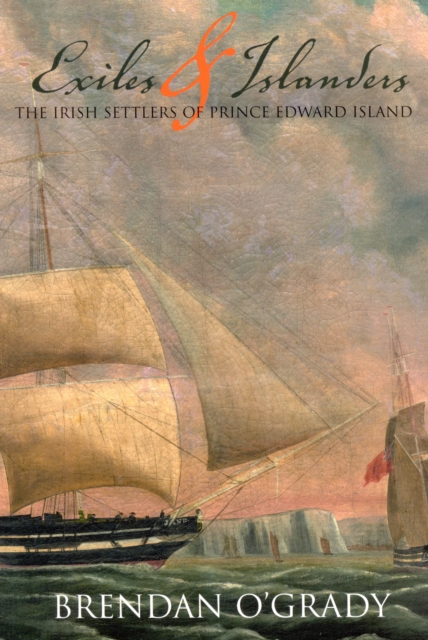
Exiles and Islanders
Over ten thousand Irish settled in PEI in the nineteenth century; by 1850 they comprised about a quarter of the Island's population. They were mainly pre-Famine immigrants and mostly Catholic. They came from all thirty-two counties of Ireland and settled in all sixty-seven townships of PEI. They took up farming, fishing, and rural occupations; raised large families; and retained their Irishness for several generations. Exiles and Islanders includes family names and places of origin that will be of particular interest to the Island's Irish descendants. An intriguing cultural history, the book provides new insight into the early settlers of Prince Edward Island.
eBook