
Catalogue Search | MBRL


Are you sure you want to remove the book from the shelf?

{{itemTitle}}
512
result(s) for
"Printed circuits Design and construction."
Sort by:

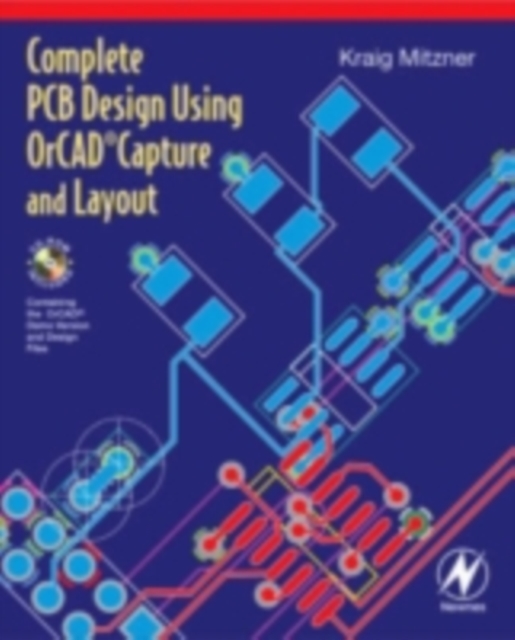
Complete PCB Design Using Orcad Capture and Layout
This book provides instruction on how to use the OrCAD design suite to design and manufacture printed circuit boards. The book is written for both students and practicing engineers who need a quick tutorial on how to use the software and who need in-depth knowledge of the capabilities and limitations of the software package. There are two goals the book aims to reach:The primary goal is to show the reader how to design a PCB using OrCAD Capture and OrCAD Layout. Capture is used to build the schematic diagram of the circuit, and Layout is used to design the circuit board so that it can be manufactured. The secondary goal is to show the reader how to add PSpice simulation capabilities to the design, and how to develop custom schematic parts, footprints and PSpice models. Often times separate designs are produced for documentation, simulation and board fabrication. This book shows how to perform all three functions from the same schematic design. This approach saves time and money and ensures continuity between the design and the manufactured product. · Information is presented in the exact order a circuit and PCB are designed · Straightforward, realistic examples present the how and why the designs work, providing a comprehensive toolset for understanding the OrCAD software · Introduction to the IPC, JEDEC, and IEEE standards relating to PCB design · Full-color interior and extensive illustrations allow readers to learn features of the product in the most realistic manner possible · Access to companion website containing the OrCAD demo version and design files
eBook
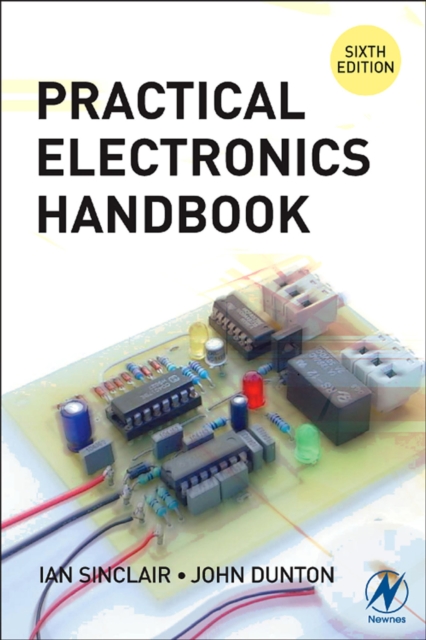
Practical electronics handbook
Ian Sinclair's Practical Electronics Handbook combines a wealth useful day-to-day electronics information, concise explanations and practical guidance in this essential companion to anyone involved in electronics design and construction. The compact collection of key data, fundamental principles and circuit design basics provides an ideal reference for a wide range of students, enthusiasts, technicians and practitioners of electronics who have progressed beyond the basics. The sixth edition is updated throughout with new material on microcontrollers and computer assistance, and a new chapter on digital signal processing · Invaluable handbook and reference for hobbyists, students and technicians· Essential day-to-day electronics information, clear explanations and practical guidance in one compact volume· Assumes some previous electronics knowledge but coverage to interest beginners and professionals alike
eBook

PCB Design Guide to Via and Trace Currents and Temperatures
A very important part of printed circuit board (PCB) design involves sizing traces and vias to carry the required current. This exciting new book will explore how hot traces and vias should be and what board, circuit, design, and environmental parameters are the most important. PCB materials (copper and dielectrics) and the role they play in the heating and cooling of traces are covered. The IPC curves found in IPC 2152, the equations that fit those curves and computer simulations that fit those curves and equations are detailed.Sensitivity analyses that show what happens when environments are varied, including adjacent traces and planes, changing trace lengths, and thermal gradients are presented. Via temperatures and what determines them are explored, along with fusing issues and what happens when traces are overloaded. Voltage drops across traces and vias, the thermal effects going around right-angle corners, and frequency effects are covered. Readers learn how to measure the thermal conductivity of dielectrics and how to measure the resistivity of copper traces and why many prior attempts to do so have been doomed to failure. Industrial CT Scanning, and whether or not they might replace microsections for measuring trace parameters are also considered.
eBook

High Speed Digital Design - Design of High Speed Interconnects and Signaling
This book discusses the major factors to consider in designing a high speed digital system and how design concepts affect the functionality of the system as a whole. It will help you understand why signals act so differently on a high speed digital system, identify the various problems that may occur in the design, and research solutions to minimize their impact and address their root causes. The authors offer a strong foundation that will help you get high speed digital system designs right the first time. Taking a systems design approach, this book offers a progression from fundamental to advanced concepts, starting with transmission line theory, covering core concepts as well as recent developments. It then covers the challenges of signal and power integrity, offers guidelines for channel modeling, and optimizing link circuits. Tying together concepts presented throughout the book, the authors present Intel processors and chipsets as real-world design examples.
eBook
High-Speed Circuit Board Signal Integrity
As circuit boards are increasingly required to transmit signals at higher and higher speeds, signal and power integrity become increasingly crucial. Rules of thumb that you have used over and over again to prevent signal loss no longer apply to these new, high-speed, high-density circuit designs. This leading-edge circuit design resource offers you the knowledge needed to quickly pinpoint transmission problems that can compromise your entire circuit design. Discussing both design and debug issues at gigabit per second data rates, the book serves as a practical reference for your projects involving high-speed serial signaling on printed wiring boards. Step-by-step, this book goes from reviewing the essentials of linear circuit theory, to examining practical issues of pulse propagation along lossless and lossy transmission lines. It provides detailed guidelines for crosstalk, attenuation, power supply decoupling, and layer stackup tradeoffs (including pad/antipad tradeoffs). Other key topics include the construction of etched conductors, analysis of return paths and split planes, microstrip and stripline characteristics, and SMT capacitors. Filled with on-the-job-proven examples, this hands-on reference is the book that you can turn to time and again to design out and troubleshoot circuit signal loss and impedance problems.
eBook
Power Systems-On-Chip
The book gathers the major issues involved in the practical design of Power Management solutions in wireless products as Internet-of-things.Presentation is not about state-of-the-art but about appropriation of validated recent technologies by practicing engineers.
eBook

Tree-Based Machine Learning Models with Optuna in Predicting Impedance Values for Circuit Analysis
The transmission characteristics of the printed circuit board (PCB) ensure signal integrity and support the entire circuit system, with impedance matching being critical in the design of high-speed PCB circuits. Because the factors affecting impedance are closely related to the PCB production process, circuit designers and manufacturers must work together to adjust the target impedance to maintain signal integrity. Five machine learning models, including decision tree (DT), random forest (RF), extreme gradient boosting (XGBoost), categorical boosting (CatBoost), and light gradient boosting machine (LightGBM), were used to forecast target impedance values. Furthermore, the Optuna algorithm is used to determine forecasting model hyperparameters. This study applied tree-based machine learning techniques with Optuna to predict impedance. The results revealed that five tree-based machine learning models with Optuna can generate satisfying forecasting accuracy in terms of three measurements, including mean absolute percentage error (MAPE), root mean square error (RMSE), and coefficient of determination (R2). Meanwhile, the LightGBM model with Optuna outperformed the other models. In addition, by using Optuna to tune the parameters of machine learning models, the accuracy of impedance matching can be increased. Thus, the results of this study suggest that the tree-based machine learning techniques with Optuna are a viable and promising alternative for predicting impedance values for circuit analysis.
Journal Article

Design and Performance Analysis of a Platform-Based Multi-Phase Interleaved Synchronous Buck Converter
This paper proposes a design for a platform-based Multi-phase Interleaved Synchronous Buck Converter (MISBC). A custom platform was developed to compare the theoretical performance of a MISBC circuit simulated with Multisim to a prototype that was built at Western Sydney University. The work disclosed in this manuscript describes some steps adopted during the selection of each component and technical considerations taken during the design of the Printed Circuit Board (PCB). The platform designed has a maximum power output of 260 Watts, with a buck reduction of the nominal voltage from 97 Volts to 24 Volts at a maximum switching frequency of 50 kHz. This switching frequency is achieved with an open-loop circuit configuration coupled with synchronized signal generators, used to validate the dead band required between the activation of each set of transistors implemented in a half-bridge configuration. A summary of the results based on the duty cycle required to achieve the buck voltage desired highlights the advantages of each operating mode of the MISBC circuit. Here the theoretical performance is compared against the data acquired during functional evaluations of the prototype, making possible future interpretations of the ideal control algorithm required to maximize the performance output of MISBC circuits.
Journal Article

Broadband Low-Cost Normal Magnetic Field Probe for PCB Near-Field Measurement
This paper presents a broadband near-field probe designed for measuring the normal magnetic field (Hz) in radio frequency (RF) circuits operating within a frequency range of 2–8 GHz. The proposed probe uses a cost-effective 4-layer printed circuit board (PCB) structure made with an FR-4 substrate. The probe primarily consists of an Hz detection unit, a broadband microstrip balun, and a coaxial-like output. The broadband balun facilitates the conversion from differential to single-ended signals, thereby enhancing the probe’s common-mode rejection capability. This design ensures that the probe achieves both cost efficiency and high broadband measurement performance. Additionally, this work investigates the feasibility of employing microstrip lines as calibration standards for the Hz probe. The probe’s structural parameters and magnetic field response were initially determined through simulations, and the calibration factor was subsequently verified by calibration experiments. In practical measurements, the field distributions above a microstrip line and a low-noise amplifier (LNA) were captured. The measured field distribution of the microstrip line was compared with simulation results to verify the probe’s performance. Meanwhile, the measured field distribution of the LNA was utilized to identify the radiating components within the amplifier.
Journal Article