
Catalogue Search | MBRL


Are you sure you want to remove the book from the shelf?

{{itemTitle}}
6,395
result(s) for
"Prison Official"
Sort by:

At Work in the Iron Cage
When most people think of prisons, they imagine chaos, violence, and fundamentally, an atmosphere of overwhelming brute masculinity. But real prisons rarely fit the Big House stereotype of popular film and literature. One fifth of all correctional officers are women, and the rate at which women are imprisoned is growing faster than that of men. Yet, despite increasing numbers of women prisoners and officers, ideas about prison life and prison work are sill dominated by an exaggerated image of men's prisons where inmates supposedly struggle for physical dominance.In a rare comparative analysis of men's and women's prisons, Dana Britton identifies the factors that influence the gendering of the American workplace, a process that often leaves women in lower-paying jobs with less prestige and responsibility.In interviews with dozens of male and female officers in five prisons, Britton explains how gender shapes their day-to-day work experiences. Combining criminology, penology, and feminist theory, she offers a radical new argument for the persistence of gender inequality in prisons and other organizations. At Work in the Iron Cage demonstrates the importance of the prison as a site of gender relations as well as social control.
eBook
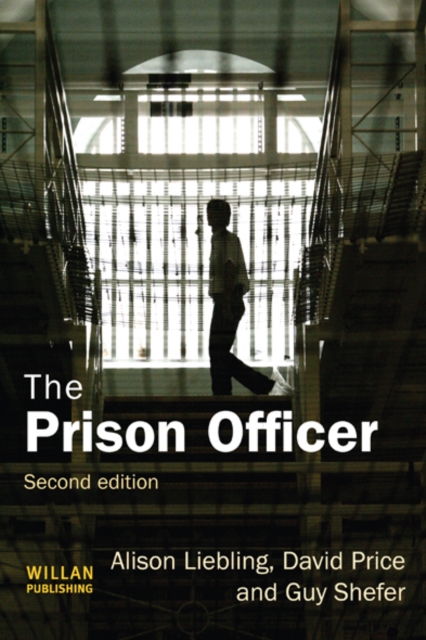
The Prison Officer
This book is a thoroughly updated version of the popular first edition of The Prison Officer . It incorporates the significant increase in knowledge about the work of prison officer since the first edition was published and provides a live account of prison work and ways of understanding the role of the prison officer in the late-modern context.
Few detailed narratives exist of prison work and the sort of role the prison officer occupies; this book addresses the gap. Using a range of quantitative and qualitative data and drawing on available theoretical literature it explores the role of the prison officer in an ‘appreciative’ way, taking into account the little-discussed issues of power and discretion.
It provides a single accessible guide to the world and work of the prison officer, looking in detail at the present role of the prison officer in Britain and demonstrating the centrality of staff-prisoner relationships to every operation carried out by officers.
This book will be of relevance to anyone with an interest in the work of a prison officer; students and others looking for an introductory survey of the literature and essential reading for any established and aspiring officers.
Alison Liebling is Professor of Criminology and Criminal Justice at the University of Cambridge and Director of the Prisons Research Centre; David Price worked as a research assistant and co-author on the first edition and now works in IT; Guy Shefer is a research assistant at the Institute of Psychiatry, London.
'...this book deserves to be considered a timeless classic.'
'The work is particularly distinguished by its ability to bring the emotional texture of prison work into the light. Prison officers are shown to be thinking, feeling agents, who experience joy, sadness, dejection, satisfaction, fear and excitement. This rounded and human portrait has been too rarely part of academic or popular representations. The affective nature of the work is also illuminated, showing how relationships, sensitivity and human interaction are all central. It is this connection with people and the intimacy of their lived experience where this book comes most vibrantly to life.' -Jamie Bennett, Governor, HMP Grendon and Springhill, in the Prison Service Journal no 200 Mar 2012
Comments on the first edition
'The most important book for the prison service of the past 30 years.' – Phil Wheatley, Director General of the Prison Service
'This outstanding book will be a constant source of reference.' – Martin Narey, Former Director General of the Prison Service
1. Introduction: Prison Officers at Their Best 2. Who is the Prison Officer? 3. Understanding Prison Officers and Their Role 4. The Complexities of Role 5. Staff–Prisoner Relationships: The Heart of Prison Work 6. The Centrality of Discretion in the Work of Prison Officers 7. Prison Officer Culture and Unionisation 8. The Prison Officer in a Modern Bureaucracy 9. Conclusions
eBook

Blantyre House Prison Affair
Tom Murtagh OBE was a governor at The Maze Prison and Armagh Prison, Northern Ireland before becoming Area Manager - one of the highest ranks in HM Prison Service - for Kent, Surrey and Sussex. Building on a fine record and long experience he set out to raise standards in all the prisons under his charge, only to be demonised by a Parliamentary Home Affairs Committee in 'The Blantyre House Prison Affair'. In this autobiographical account he tells his side of the story: the background, key facts, matters of intelligence that were confidential at the time, and about how the events led to his vilification as his strategically-informed messages and voice were ignored.
eBook

Walking George
George John Beto (1916-1991) is best known for his contributions to criminal justice, but his fame is not limited to this field. Walking George , authored by two of his former students, David M. Horton and George R. Nielsen, examines the entire life of Beto and his many achievements in the fields of both education and criminal justice—and how he wedded the two whenever possible. Beto initially studied to become a Lutheran pastor but instead was called to teach at Concordia Lutheran College in Austin, Texas. During his twenty years at that institution he became its president, expanded it into a junior college, racially integrated it, made it co-educational, and expanded its facilities. His successes convinced the administrators of the church to present him with a challenge to revitalize a seminary in Springfield, Illinois. He accepted the challenge in 1959, but after three years of progress, he left the seminary to become the head of the Texas Department of Corrections. Although Beto had no real academic training in corrections and had never served in any administrative position in corrections, he had learned incidentally. During his last six years in Austin, he had served on the Texas Prison Board, a volunteer board that supervised the entire prison system. As a board member he established one of the earliest General Education Development testing programs for prisoners. Fortuitously, his years on the board came during the time when reform of the Texas prisons was the watchword. During his ten-year term as the director of the Texas Department of Corrections, Beto continued the reform program. Most notable were his efforts at rehabilitation of the inmates and his attempt at refining a method of managing prisoners, called the Texas Control Model. He persuaded the Texas state legislature to enact a law requiring state agencies to purchase manufactured goods from state prisons, which tremendously expanded industry and training for inmates. In 1969, at Beto’s urging, the Windham school district for educating inmates became a reality, the first of its kind at any prison in the United States. Beto’s predilection to show up on foot in front of a given Texas prison, at all hours of the day and night, ready for an inspection and tour, earned him the nickname “Walking George.” After retiring as head of the Texas prison system in 1972, he became a professor at Sam Houston State University's College of Criminal Justice until 1991. His leadership and participation propelled it to become the most esteemed program in the country. Beto’s personal force and unique accomplishments defined him as one of the premier American penologists of the twentieth century. This is the first in-depth biography of the man and his contributions.
eBook

Dilemmas Behind Bars
Prison officers have been described as key determinants of the prison experience for prisoners, yet up until recently this occupational group was largely ignored in academic research.Although society often sees prison officers simply as 'keepers of the keys', the existing research has shown the job to be much more complex.
eBook

Chaplains to the Imprisoned
Chaplains to the Imprisoned begins to fill the information gap through its in-depth study of prison chaplains as seen by co-workers, inmates, and the chaplains themselves. They describe their roles, share difficulties which are encountered in their ministry, and personal methods for coping with these difficulties, especially those which may be internalized as stress. The author, a Roman Catholic priest with a doctorate in criminal justice, provides a fascinating look into the work of chaplains who serve in correctional institutions.
This new book sheds a much-needed light on the often hidden, yet significant, role played by chaplains within correctional facilities. Little is known of these chaplains and the work that they do. Though they are frequently depicted in television and film, many of these images are stereotypes from writers'imaginations. In this unique book, chaplains speak for themselves through the results of a survey questionnaire sent by the author to local- and state-level chaplains in New York State and to chaplains throughout the federal prison system.
Chaplains to the Imprisoned, the first non-denominational book on these clergy, explores:
the history of chaplaincy in this country, including the irony that chaplains have often been treated as unwanted intruders in penitentiaries--which were created originally by religious groups
chaplains as seen by other professionals in the field--sometimes positive, often negative, opinions of chaplains drawn from literature written by wardens, corrections officers, and others who deal with chaplains on a routine basis
chaplains as seen by inmates--published opinions by inmates who have recorded their impressions of facility chaplains
chaplains as seen by chaplains--their own descriptions of their work, frustrations, successes, and failures, along with suggestions for the betterment of the role of chaplains
This book is an eye-opening look into the world
eBook


In Their Own Words: Incorporating Graffiti into the Tourist Experience at the Adelaide Gaol
Tourist experiences at historical prisons are guided by a limited number of methods designed to enable engagement with the buildings and their ex-residents. Tours are occasionally supplemented with immersive experiences, such as trying on handcuffs or playing the part of an inmate. Narratives of certain prisoners are often emphasized, and the architecture and artefacts are highlighted, but for the most part stories are told through signs and guides and are largely based on official documents and a select few memoirs, diaries or correspondences; including those of prison officials who sometimes act as the guides themselves. This can lead to both biases and the narrative being subject to “whitewashing,” either through historical censorship or the belief that visitors should be protected from the gritty reality of life in prison. It may also create an environment where the visitor learns facts but fails to emotionally connect with the prison or its former residents.
Book Chapter

Perspectives on Torture in East Asia
Several international agreements (such as the United Nations International Covenant on Civil and Political Rights and the Universal Declaration of Human Rights) have banned the use of state-sponsored torture. Torture was also a major issue at the United Nation’s first Geneva Convention where they drafted the United Nations Convention against Torture and Other Cruel, Inhuman or Degrading Treatment or Punishment. Not only does the Convention against Torture require countries to make the use of torture illegal, but it also specifies that under no state of emergency, external threat, or orders from a superior officer or authority can a right to torture be justifiably invoked. As of June 1, 2011, 65 nations, including China and Japan, but not North and South Korea, had ratified the Convention against Torture.
Book Chapter

Epilogue
Following the Supreme Court’s ruling in Jones, substantive questions remained. Did the Court reach the correct conclusion in the Jones case; or did it use the oldest magic trick in the book: a slight of hand to focus our attention on the troubles associated with American prisons without recognizing the actual facts related to the North Carolina Prisoners’ Labor Union (NCPLU)? In popular vernacular, did the Court throw prison reform “under the bus” at the expense of judicial conservatism? Could it have helped prison reform by at least considering the possibility that prisons could actually serve as institutions for rehabilitation as opposed to solely doling out retributive punishment? And if yes, did overruling the district court’s decision in Jones forever alter the trajectory of the American punishment system, sending it spiraling downward to where it sits today: as one of the most internationally embarrassing institutions in the world? While we may never know if the Court was influenced by the social times, such as the rise of the Black Power Movement, the trials of Huey P. Newton, Angela Davis, Bobby Seale, or George Jackson, the shootout at Marin County, or the Attica prison rebellions. However, we cannot ignore that there was a significant social history buttressing the legal history leading up to the Jones case.
Book Chapter