
Catalogue Search | MBRL


Are you sure you want to remove the book from the shelf?

{{itemTitle}}
254
result(s) for
"Prisoners, Aboriginal Australian."
Sort by:

Black lives, white law : locked up and locked out in Australia
Indigenous Australians are the most incarcerated people on the planet. Indigenous men are fifteen times more likely to be locked up than their non-Indigenous counterparts; Indigenous women are twenty-one times more likely. Featuring vivid case studies and drawing on a deep sense of history, Black Lives, White Law explores Australia's deplorable record of locking up First Nations people. It examines Australia's system of criminal justice - the web of laws and courts and police and prisons - and how that system interacts with First Nations peoples and communities. How is it that so many are locked up? Why have imprisonment rates increased in recent years? Is this situation fair? Almost everyone agrees that it's not. And yet it keeps getting worse.
BOOK

Arresting incarceration : pathways out of indigenous imprisonment
Don Weatherburn has been the director of the NSW Bureau of Crime Statistics and Research since 1988. He was awarded a Public Service Medal in 1998 and made a fellow of the Academy of Social Sciences in Australia in 2006. He is the author of two books and more than 180 articles, book chapters, and reports on crime and criminal justice.
eBook

Aboriginal Convicts
Revealing the forgotten stories of Aboriginal convicts, this book describes how they lived, labored, were punished, and died. Profiling several of the 130 Aboriginal convicts who were transported to and within the Australian penal colonies, this collection features the journeys of Aboriginal warriors Bulldog and Musquito, Maori warrior Hohepa Te Umuroa, and Khoisan soldier Booy Piet.
eBook

Approaches to the design and provision of prison accommodation and facilities for Australian indigenous prisoners after the royal commission into aboriginal deaths in custody
The Royal Commission into Aboriginal Deaths in Custody (‘RCIADIC’) investigated the deaths of 99 Aboriginal people in police and prison custody. Each of the individual reports poignantly outlines someone’s life and the circumstances of their death in prison or police custody. Many of the custodial environments where the people were detained were unpleasant, inappropriate, unsafe or even inhumane.
Journal Article
Intergenerational incarceration in New South Wales: Characteristics of people in prison experiencing parental imprisonment
This study uses data from two state-wide surveys conducted in NSW prisons and youth justice centres in 2015 to examine the epidemiology of intergenerational incarceration. One in six (16.9%) adults in prison and over half (52.6%) of young people in youth justice centres reported that a parent had been imprisoned. For Aboriginal participants, 32.0 percent of adults and 66.4 percent of young people reported a previously incarcerated parent. Women were more than twice as likely as men to report that their mother had been in prison. Younger participants, those who had completed fewer years of schooling, and those previously in out-of-home care were more likely to report that a parent had been incarcerated. The high prevalence of intergenerational incarceration in NSW correctional settings, particularly among young people in youth justice centres and Aboriginal peoples in custody, highlights the need for interventions to support parents in prison and at-risk children whose parents are incarcerated.
Journal Article
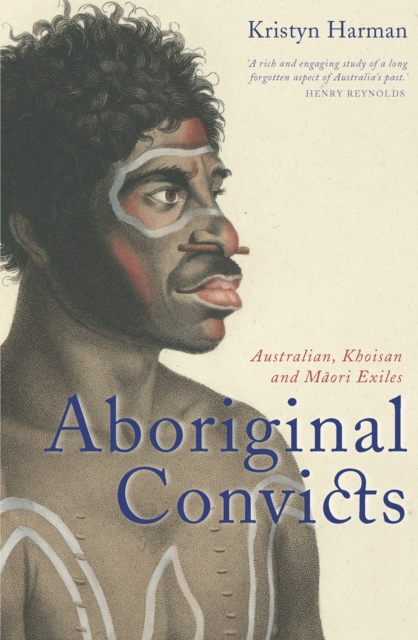
Aboriginal Convicts
Bulldog and Musquito, Aboriginal warriors from the Hawkesbury, were captured and sent to Norfolk Island following frontier skirmishes in New South Wales.Eventually, Bulldog seems to have made it home.Musquito was transported to Van Diemen's Land, where he laboured as a convict servant.He never returned.
eBook
Pre-sentence reports for Aboriginal and Torres Strait Islander people: An analysis of language and sentiment
Pre-sentence reports (PSRs) provide information to courts on an individual’s background, circumstances, risks, needs and plans. Research has found that PSRs focus heavily on risk of recidivism, while identification of prosocial cultural and community factors is limited. This study sought to describe the language and sentiment in these reports. We studied PSRs written for Aboriginal and/or Torres Strait Islander people sentenced by the mainstream County Court of Victoria and the Koori Court Division of the County Court of Victoria. Findings indicate that riskrelated words are more prevalent than words associated with strengths and culture in PSRs submitted to both courts. While the frequency of positive and negative sentiment was low in PSRs for both courts, those for the Koori Court were more positive in sentiment.
Journal Article
Racist, offensive, and degrading police behaviour against aboriginal people in New South Wales: Modern challenges to the findings of the royal commission into aboriginal deaths in custody
On 10 August 1987, then Prime Minister Bob Hawke called a Royal Commission which would ultimately investigate the deaths of 99 Aboriginal people in police custody from 1 January 1980 to 31 May 1989. The investigation that followed was extensive. In addition to their own research materials, the Royal Commission into Aboriginal Deaths in Custody ('RCIADIC') availed itself of the individual case files of the people who died, various exhibits and findings in relation to their deaths, coroners' reports, welfare and social security files, public submissions, and records of assisting counsel. The RCIADIC produced an Interim Report on 21 December 1988 and a National Report three years later, which concluded that an examination of the lives of the 99 people suggested that their 'Aboriginality played a significant and in most cases dominant role in their being in custody and dying in custody'. Most significantly, the RCIADIC produced 339 recommendations for the Commonwealth and state governments to address the 'social, cultural and legal factors' bearing on those deaths; 64 of those recommendations were directed at state police operations. This article focuses on one in particular: Recommendation 60, which sought to eliminate the use of racist, offensive, and degrading police behaviour towards Aboriginal people.
Journal Article

Towards an understanding of Indigenous arrest
This study examines the correlates of First Nations contact with the criminal justice system. Key risk factors include membership of the stolen generation, psychological distress, and having used illicit drugs and alcohol over the preceding 12 months. The latter increases the marginal risk of arrest by 14 percentage points. The strongest protective factors are completing school, having an income in the top four deciles, having a permanent home, being aged 51 or over and living in a remote area. Completing school is the strongest protective factor, reducing the risk of arrest by eight percentage points. Further research using a longitudinal dataset specifically designed to identify causal effects is required.
Journal Article