
Catalogue Search | MBRL


Are you sure you want to remove the book from the shelf?

{{itemTitle}}
189
result(s) for
"Prisoners of war Fiction."
Sort by:

The narrow road to the deep north
\"Moving deftly from a Japanese POW camp to present-day Australia, from the experiences of Dorrigo Evans and his fellow prisoners to that of the Japanese guards, this savagely beautiful novel tells a story of the many forms of love and death, of war and truth, as one man comes of age, prospers, only to discover all that he has lost.\" --Amazon.com.
Book
The trustus plays
The Trustus Plays collects three full-length, award-winning performance texts by American playwright Jon Tuttle. Each play was a winner of the national Trustus Playwrights Festival contest and was then produced by the Trustus Theatre in Columbia, South Carolina. The Hammerstone is a comedy about two professors aging gracelessly, Drift is a dark comedy about marriage and divorce, and Holy Ghost is the story of German POWs held in the camps in the American south. Jon Tuttle provides an introduction to the plays, and Trustus founder and artistic director, Jim Thigpen, offers a preface describing Tuttle's work within the context of the Trustus theatre's dedication to experimental, edgy social drama.
eBook

All the Little Hopes
\"Will break your heart, but Leah Weiss's beautiful writing will sew it back together again\" --Wiley Cash, New York Times bestselling author A Southern story of friendship forged by books and bees, when the timeless troubles of growing up meet the murky shadows of World War II.
eBook

Task Force Baum
\"Based on the true story of General Patton's clandestine unauthorized raid on a World War II POW camp. March, 1945. Allied forces are battle-worn but wearily optimistic. Russia's Red Army is advancing hard on Germany from the east, bolstering Allied troops moving in from the west and north. Soon, surely, Axis forces must accept defeat. Yet for Captain Jim Curtis, each day is a reminder of how unpredictable and uncertain warfare can be. Captured during the Battle of the Bulge after the Germans launched a devastating surprise attack, Curtis is imprisoned at a POW camp in Hammelburg, Bavaria. Conditions are grim. Inmates and guards alike are freezing and starving, with rations dwindling day by day. But whispers say General Patton's troops are on the way, and the camp may soon be liberated. Indeed, fifty miles away, a task force of three hundred men is preparing to cross into Germany. With camps up and down the line, what makes Hammelburg so special they don't know, but orders are orders. Yet their hopes of evading the enemy quickly evaporate. Wracked by poor judgment, insufficient arms, and bad luck, the raid unravels with shattering losses. The liberation inmates hoped for becomes a struggle for survival marked by a stark choice: stay, or risk escaping into danger -- while leaving some behind. For Curtis, the decision is an even more personal test of loyalty, friendship, and the values for which one will die or kill. It will be another twenty years before the unsanctioned mission's secret motivation becomes public knowledge, creating a controversy that will forever color Patton's legacy and linger on in the lives of those who made it home at last -- and the loved ones of those who did not.\" -- Provided by publisher.
Book

On Captivity
Normal0falsefalsefalseEN-USX-NONEX-NONEMicrosoftInternetExplorer4
On Captivity is the first translation into English of
Del Cautiverio , Manuel Ciges Aparicio’s account of
his imprisonment in the notorious La Cabaña fortress in
Havana during the Cuban War of Independence (1895–98).
Ciges enlisted in the Spanish army in 1893 at the age of twenty.
He served in Africa and then in Cuba, where he opposed Spanish
General Valeriano Weyler’s policies in Cuba as well as the
war itself. Ciges soon found himself imprisoned and facing
execution for treason as punishment for an article critical of
Weyler’s conducting of the war that was intercepted by
Spanish authorities before it could be published in the pro-Cuban
Parisian paper
L’Intransigeant . First published in book form in
1903, Ciges’s account includes detailed observations
concerning prison organization, perceptions of political events
and personalities of the time, as well as graphic descriptions of
the daily life of the men confined in the infamous prison. Ciges
is the only one of the so-called Generation of 1898—writers
considered to have been deeply marked by
el desastre (the loss of the colonies)—who was in
Cuba during the war years. His witness to events there, colored
by his stance as a freethinker and political skeptic, constitutes
a significant historical document. Following his release from
prison, Ciges returned to Spain where he resumed his career as an
activist journalist and also earned acclaim as a translator and
novelist. In time, his political allegiances shifted from
socialism to liberal republicanism. He was acting as provincial
governor of Avila when he was killed by unidentified assassins on
August 4, 1936—eighteen days after the Falangist uprising
against the Second Republic.
eBook

Louise's chance
\"Government girl Louise Pearlie has a new job inside the OSS--the Office of Strategic Services: recruiting German prisoners-of-war for a secret mission inside Nazi Germany. It's a big chance for her, and Louise hopes she can finally escape her filing and typing duties. With the job come two new colleagues: Alice Osborne, a propaganda expert, and Merle Ellison, a forger from Texas who just happens to speak fluent German. But when the three arrive at Fort Meade camp, to interview the first German POWs to arrive there, their mission is beset by complications. Only one of the prisoners speaks English, the army officer in charge of the camp is an alcoholic, and two prisoners disappeared on the ship bringing the Germans to the States. Were their deaths suicide? Officially, yes. But Louise can't help but have her doubts ...\"-- Amazon.com.
Book
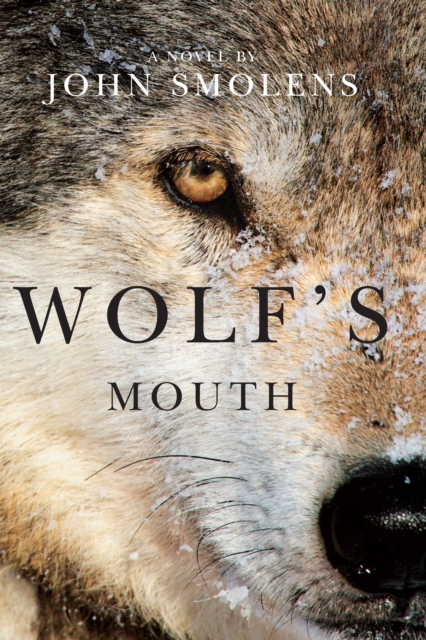
Wolf's mouth: a novel
In 1944 Italian officer Captain Francesco Verdi is captured by Allied forces in North Africa and shipped to a POW camp in Michigan's Upper Peninsula, where the senior POW, the ruthless Kommandant Vogel, demands that all prisoners adhere to his Nazi dictates. His life threatened, Verdi escapes from the camp and meets up with an American woman, Chiara Frangiapani, who helps him elude capture as they flee to the Lower Peninsula. By 1956 they have become Frank and Claire Green, a young married couple building a new life in postwar Detroit. When INS agent James Giannopoulos tracks them down, Frank learns that Vogel is executing men like Frank for their wartime transgressions. As a series of brutal murders rivets Detroit, Frank is caught between American justice and Nazi vengeance. In Wolf 's Mouth, the recollections of Francesco Verdi/Frank Green give voice to the hopes, fears, and hard choices of a survivor as he strives to escape the ghosts of history.
eBook

Rose under fire
When young American pilot Rose Justice is captured by Nazis and sent to Ravensbrèuck, the notorious women's concentration camp, she finds hope in the impossible through the loyalty, bravery, and friendship of her fellow prisoners.
Book

The Detainee's Two Bodies: Intellectual Property and Fugitivity at Guantánamo Bay
In August 2012, a curious website \"opened its doors to the public\" with a startling declaration: that the prison island of Guantánamo had been closed in 2010 and subsequently turned into \"The Guantánamo Bay Museum of Art and History.\" Its creator, Ian Allan Paul, professes to present a \"mobile collectivity of artists, theorists, and other members of the public,\" one that is only partially real. Promising revolving exhibitions of protest art and theory at the facility, the museum also hosts the equally virtual Jumah al-Dossari Center for Critical Studies, with articles of political theory by scholars like Judith Butler and Martin Puchner. The exhibits are housed in museums and art venues located in different parts of the world, but the Guantánamo Bay Museum itself is an elaborate fiction premised upon the lie of the detention center's closure. In other words, the museum is a conceptual reality but a spatial hoax. The premise of this floating institution is that it displaces the once-prison into a rotating, global artistic and intellectual community. While the museum's digital coordinates certainly appear on Google Maps, its counterfactual presence-the prison was not closed in 2012 and remains open to this day-makes a sardonic joke about the \"Global War on Terror\": the closing of Guantanamo Bay as an extralegal detainment center is unimaginable in the prevailing geopolitical climate.The counterfactually closed prison-museum acknowledges a definitive and universal human rights paradigm that remains out of reach for the detainees at the prison.3 Moreover, the museum looks to do the impossible by turning the space of detention into one of critical inquiry through both artistic and political contemplation. And yet, while Paul's ironic \"museum\" may not exist, it forces us to contend with an institutionalized aesthetic practice integral to both US and international prisons, that of a prison art program. Like prisoner artists in the United States, detained artists at Guantanamo engage in creative labor-sanctioned, clandestine, and defiant-from within a fully operational prison site. Around 2009, the Obama administration instituted an art program for prisoners at Guantanamo as mental stimulation as well as temporary relief from its extreme conditions. Driven by a liberal-humanitarian impulse, it allowed, until a November 2017 Department of Justice order, the production of paintings and art models under heavy military supervision. For about eight years, the prison authorities championed art made under incarceration as a palliative to the extreme isolation and bodily vulnerability endured by the detainees, before the Department of Defense abruptly changed policy to all but eliminate the program.4If the virtual, counterfactual museum imagines the end of extralegal detention as the blossoming of artistic critique, then how might current and former detainees at Guantanamo imagine their condition as both artistic expression and a testimony to their imprisonment in a global incarceration network? Taking seriously that the representational strategies of art and literature generate specific political positions, how might an aesthetics of detainment allow us, as a non-incarcerated audience, to understand Guantanamo Bay Prison's exceptional status (as outside the national legal, territorial, and sovereign infrastructure of the United States) in ways that cut against the liberalhumanitarian rhetoric of the art program? Bringing both questions together, what implications might detainee cultural production have in understanding Guantanamo as an unexceptional US prison? An examination of post-9/11 art produced under captivity helps us understand the stark political predicament and dislocation faced by transnational Muslim prisoners. This essay argues that cultural production by detainees-paintings and life-narratives, in particular-questions the securitized justifications of extralegal detention when put in conversation with paradigms of US slavery, discourses of fugitivity, and the nineteenth-century penitentiary.5 If slavery and incarceration created the indefinite category of fugitivity, that is, the continuing status of the fugitive slave as an escaped form of borderless, retrievable property, then post-9/11 detainment reframes discourse around so-called global terrorism by deploying a parallel formal conceit of the terroristas-fugitive, that is, calling attention to a new kind of geopolitical captive who hovers uncertainly in the US political spectrum between enslaved person and prisoner of war. I examine paintings from a detainee art exhibition \"Ode to the Sea\" and Mohamedou Ould Slahi's Guantánamo Diary (2015/2017) to show that detainee cultural production refuses the exceptionality of Guantanamo Bay. Instead, these works present a critique of extralegal detainment practices in ways that illuminate a totalizing regime of US captivity that is not just a post-9/11 phenomenon but a feature of US incarceration within and without. In other words, US extralegal detainment relies on a suspension of the rule of law, but in doing so, it takes recourse to the very foundations of domestic US slavery and incarceration that afford the state to exercise complex legal maneuvers in the production of fugitivity. By invoking international copyright, this essay shows that detainee cultural production bypasses Guantánamo's elaborate exceptionality paradigm. A consideration of the intellectual property rights of detainees, what I call detainee copyright, makes apparent the demand for the US state to recognize otherwise fugitive works of art, a demand, as I note later, that is made by detainee counsel in a bid to visibilize the vexed question of detainee rights. The question of detainee rights activates a key analogy between post-9/11 detainment and the long history of US carcerality and slavery. Detainee copyright calls attention to artistic and narrative objects as owned property, made apparent through Department of Justice policy or systematized through military protocols of censorship, and thereby subverts the strategic feints of Guantánamo's extraordinary territoriality. The vexed question of art ownership removes the screen around the carefully managed legal limbo occupied by its producers. While the US government is at pains to hold its prisoners as unlawful combatants without stripping them legally of their international citizenship, its simultaneous claim of ownership over detainee cultural production effectively converts transnational Muslim subjects, by proxy, into the property of the United States. Detainee copyright thus showcases the suspension and erosion of postcolonial citizenship by the US security state, where the basic rights of non-American citizens are effectively made obsolete in a way that renders them entirely dependent upon US power.
Journal Article