
Catalogue Search | MBRL


Are you sure you want to remove the book from the shelf?

{{itemTitle}}
8
result(s) for
"Prisoners of war United States History 18th century."
Sort by:

Captives of liberty : prisoners of war and the politics of vengeance in the American Revolution
\"This book is a history of prisoners of war during the American Revolutionary War. The treatment of POWs led to the war's being very violent\"-- Provided by publisher.
Book
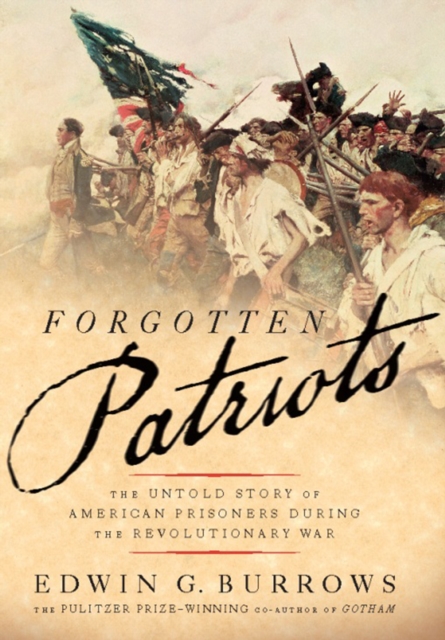
Forgotten Patriots
Between 1775 and 1783, some 200,000 Americans took up arms against the British Crown. Just over 6,800 of those men died in battle. About 25,000 became prisoners of war, most of them confined in New York City under conditions so atrocious that they perished by the thousands. Evidence suggests that at least 17,500 Americans may have died in these prisons-more than twice the number to die on the battlefield. It was in New York, not Boston or Philadelphia, where most Americans gave their lives for the cause of independence.New York City became the jailhouse of the American Revolution because it was the principal base of the Crown's military operations. Beginning with the bumper crop of American captives taken during the 1776 invasion of New York, captured Americans were stuffed into a hastily assembled collection of public buildings, sugar houses, and prison ships. The prisoners were shockingly overcrowded and chronically underfed-those who escaped alive told of comrades so hungry they ate their own clothes and shoes.Despite the extraordinary number of lives lost,Forgotten Patriotsis the first-ever account of what took place in these hell-holes. The result is a unique perspective on the Revolutionary War as well as a sobering commentary on how Americans have remembered our struggle for independence-and how much we have forgotten.
eBook


Hodges' Scout : a lost patrol of the French and Indian War
A gritty look at the French and Indian War through the lens of the bloody skirmish of Hodges' Scout, the heretofore untold story of a lost patrol. In September 1756, fifty American soldiers set off on a routine reconnaissance near Lake George, determined to safeguard the upper reaches of the New York colony. Caught in a devastating ambush by French and native warriors, only a handful of colonials made it back alive. Toward the end of the French and Indian War, another group of survivors, long feared dead, returned home, having endured years of grim captivity among the native and French inhabitants of Canada. Pieced together from archival records, period correspondence, and official reports, Hodges' Scout relates the riveting tale of young colonists who were tragically caught up in a war they barely understood. Len Travers brings history to life by describing the variety of motives that led men to enlist in the campaign and the methods and means they used to do battle. He also reveals what the soldiers wore, the illnesses they experienced, the terror and confusion of combat, and the bitter hardships of captivity in alien lands. His remarkable research brings human experiences alive, giving us a rare, full-color view of the French and Indian War—the first true world war.
eBook

Dangerous Guests
InDangerous Guests, Ken Miller reveals how wartime pressures nurtured a budding patriotism in the ethnically diverse revolutionary community of Lancaster, Pennsylvania. During the War for Independence, American revolutionaries held more than thirteen thousand prisoners-both British regulars and their so-called Hessian auxiliaries-in makeshift detention camps far from the fighting. As the Americans' principal site for incarcerating enemy prisoners of war, Lancaster stood at the nexus of two vastly different revolutionary worlds: one national, the other intensely local. Captives came under the control of local officials loosely supervised by state and national authorities. Concentrating the prisoners in the heart of their communities brought the revolutionaries' enemies to their doorstep, with residents now facing a daily war at home.
Many prisoners openly defied their hosts, fleeing, plotting, and rebelling, often with the clandestine support of local loyalists. By early 1779, General George Washington, furious over the captives' ongoing attempts to subvert the American war effort, branded them \"dangerous guests in the bowels of our Country.\" The challenge of creating an autonomous national identity in the newly emerging United States was nowhere more evident than in Lancaster, where the establishment of a detention camp served as a flashpoint for new conflict in a community already unsettled by stark ethnic, linguistic, and religious differences. Many Lancaster residents soon sympathized with the Hessians detained in their town while the loyalist population considered the British detainees to be the true patriots of the war. Miller demonstrates that in Lancaster, the notably local character of the war reinforced not only preoccupations with internal security but also novel commitments to cause and country.
eBook
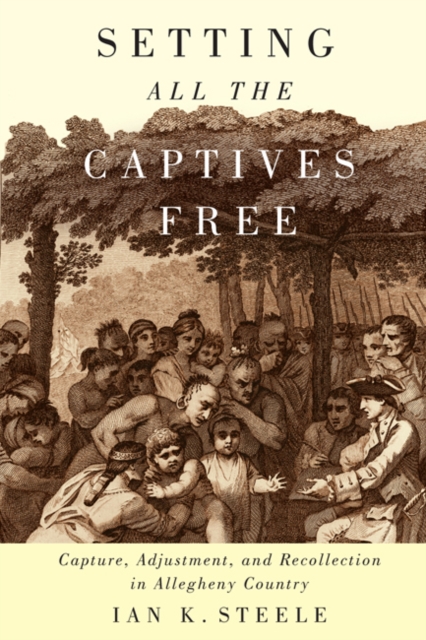
Setting All the Captives Free
Among the many upheavals in North America caused by the French and Indian War was a commonplace practice that affected the lives of thousands of men, women, and children: being taken captive by rival forces. Most previous studies of captivity in early America are content to generalize from a small selection of sources, often centuries apart. In Setting All the Captives Free, Ian Steele presents, from a mountain of data, the differences rather than generalities as well as how these differences show the variety of circumstances that affected captives’ experiences. The product of a herculean effort to identify and analyze the captives taken on the Allegheny frontier during the era of the French and Indian War, Setting All the Captives Free is the most complete study of this topic. Steele explores genuine, doctored, and fictitious accounts in an innovative challenge to many prevailing assumptions and arguments, revealing that Indians demonstrated humanity and compassion by continuing to take numerous captives when their opponents took none, by adopting and converting captives into kin during the war, and by returning captives even though doing so was a humiliating act that betrayed their societies' values. A fascinating and comprehensive work by an acclaimed scholar, Setting All the Captives Free takes the study of the French and Indian War in America to an exciting new level.
eBook

In the Hands of the British: The Treatment of American POWs during the War of Independence
The treatment of American prisoners of war, by the British, during the American Revolution was horrific. In 1779, for example, when Americans transported about 136 men redeemed in a prisoner exchange, 16 died during the short trip, another 60 were scarcely able to move, and the rest were greatly emaciated and enfeebled.
Journal Article
