
Catalogue Search | MBRL


Are you sure you want to remove the book from the shelf?

{{itemTitle}}
179
result(s) for
"Prisons England History."
Sort by:

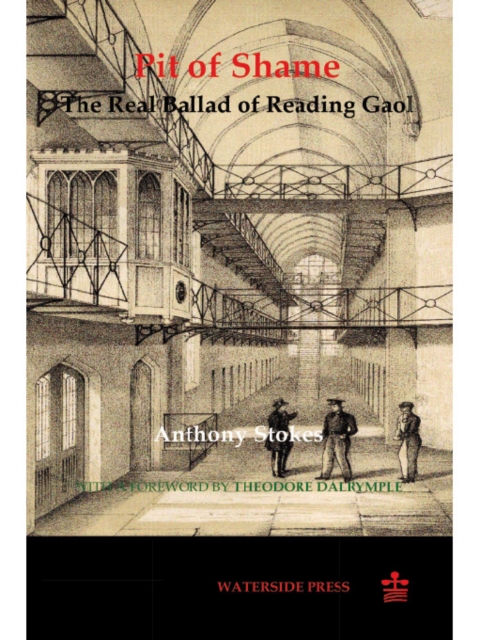
Pit of Shame
Gives a unique account of the life and times of one of the 1st's most famous prisons - a fame that flows directly from an account of the execution of Trooper Charles Thomas Wooldridge (CTW) as written by Reading Gaol's best-known prisoner, C.3.3, the pseudonym of Oscar Wilde.
eBook

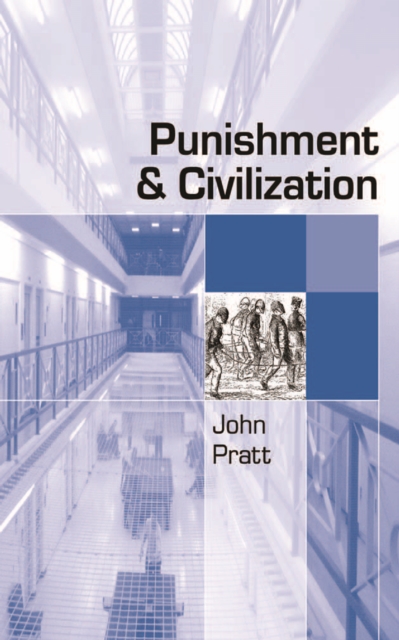
Punishment and civilization : penal tolerance and intolerance in modern society
This book examines how a framework of punishment that suited the values of the civilized world came to be set in place from around 1800 to the late 20th century. John Pratt draws on research about prison architecture, clothing, diet, hygienic arrangements and changes in penal language to establish this.
eBook

‘The god of criminals is their belly’: diet, prisoner health, and prison medical officers in mid-nineteenth-century English and Irish prisons
Existing scholarship on prison diets has emphasised the role of food and its restriction as a key aspect of the deterrent system of prison discipline introduced in the 1860s. Here we suggest that a strong emphasis was placed on dietary regulation after the establishment of the reformist, but also ‘testing’, separate system of confinement in the mid-nineteenth century. While the impact of diet on the physical health of prisoners was a major concern, we argue that the psychological impact of food was also stressed, and some prison administrators and doctors argued that diet had an important protective function in preserving inmates’ mental wellbeing. Drawing on a wide range of prison archives and official reports, this article explores the crucial role of prison medical officers in England and Ireland in implementing prison dietaries. It highlights the importance and high level of individual adaptations to dietary scales laid down centrally, as a means of utilising diet as a tool of discipline or as an intervention to improve prisoners’ health. It examines the forays of some prison doctors into dietary experiments, as they investigated the impact of different dietaries or made more quotidian adjustments to food intake, based on local conditions and food supplies. The article concludes that, despite central policies geared to establishing uniformity and interest in new scientific discourses on nutrition, a wide range of practices were pursued in individual prisons, mostly shaped by practical rather than scientific factors, with many prison medical officers asserting their autonomy in making dietary adjustments.
Journal Article

Prisoners of War in the Hundred Years War
The status of prisoners of war was firmly rooted in the practice of ransoming in the Middle Ages. By the opening stages of the Hundred Years War, ransoming had become widespread among the knightly community, and the crown had already begun to exercise tighter control over the practice of war. This led to tensions between public and private interests over ransoms and prisoners of war. Historians have long emphasised the significance of the French and English crowns' interference in the issue of prisoners of war, but this original and stimulating study questions whether they have been too influenced by the state-centred nature of most surviving sources. Based on extensive archival research, this book tests customs, laws and theory against the individual experiences of captors and prisoners during the Hundred Years War, to evoke their world in all its complexity.
eBook

The Connecticut Prison Association and the Search for Reformatory Justice
The Connecticut Prison Association and the Search for Reformatory Justice looks at the role the Connecticut Prison Association played in the formation of the state’s criminal justice system. Now organized under the name Community Partners in Action (CPA), the Connecticut Prison Association was formed to ameliorate the conditions of criminal defendants and people in prison, improve the discipline and administration of local jails and state prisons, and furnish assistance and encouragement to people returning to their communities after incarceration. The organization took a leading role in prison reform in the state and was instrumental in a number of criminal justice innovations. Gordon S. Bates, former Connecticut Prison Association volunteer and executive director (1980–1998), offers a detailed history of this and similar voluntary associations and their role in fostering a rehabilitative, rather than a retributive, approach to criminal justice. First convened in 1875 as the Friends of Partners of Prisoners Society, then evolving into the Connecticut Prison Association and CPA, the organization has consistently advocated for a humane, rehabilitative approach to prisoner treatment.
eBook

“He Must Die or Go Mad in This Place”: Prisoners, Insanity, and the Pentonville Model Prison Experiment, 1842–52
The relationship between prisons and mental illness has preoccupied prison administrators, physicians, and reformers from the establishment of the modern prison service in the nineteenth century to the current day. Here we take the case of Pentonville Model Prison, established in 1842 with the aim of reforming convicts through religious exhortation, rigorous discipline and training, and the imposition of separate confinement in its most extreme form. Our article demonstrates how following the introduction of separate confinement, the prison chaplains rather than the medical officers took a lead role in managing the minds of convicts. However, instead of reforming and improving prisoners' minds, Pentonville became associated with high rates of mental disorder, challenging the institution's regime and reputation. We explore the role of chaplains, doctors, and other prison officers in debating, disputing, and managing cases of mental breakdown and the dismantling of separate confinement in the face of mounting criticism.
Journal Article