
Catalogue Search | MBRL


Are you sure you want to remove the book from the shelf?

{{itemTitle}}
37
result(s) for
"Prisons Wales History."
Sort by:


‘From Defensive Paranoia to …Openness to Outside Scrutiny’: Prison Medical Officers in England and Wales, 1979–86
This article examines how a branch of medicine based within the criminal justice system responded to a society which by the 1970s and 1980s was increasingly critical of the prison system and medical authority. The Prison Medical Service, responsible for the health care of prisoners in England and Wales, was criticised by prison campaigners and doctors alike for being unethical, isolated, secretive, and beholden to the interests of the Home Office rather than those of their patients. While prison doctors responded defensively to criticisms in the 1970s and 1980s, comparing their own standards of practice favourably with those found in the NHS, and arguing that doctors from outside would struggle to cope in the prison environment, by 1985 their attitudes had changed. Giving evidence to a House of Commons committee, prison doctors displayed a much greater willingness to discuss how the prison system made their work more difficult, and expressed a pronounced desire to engage openly with the rest of the profession to address these problems. The change of attitude partly reflects a desire by the Home Secretary William Whitelaw to make the Prison Service more open, and an acceptance of a need for greater accountability in medicine generally. Most important, however, was a greater interest in prison health care and appreciation of the difficulties of prison practice among the wider medical profession, encouraging prison doctors to speak out. This provides a case study of how a professional group could engage openly with criticisms of their work under favourable circumstances.
Journal Article

Freedom on the Fatal Shore
Freedom on the Fatal Shore brings together John Hirst's two books on the early history of New South Wales. Both are classic accounts which have had a profound effect on the understanding of our history. This combined edition includes a new foreword by the author. Convicts with their \"own time\", convicts with legal rights, convicts making money, convicts getting drunk - what sort of prison was this? Hirst describes how the convict colony actually worked and how Australian democracy came into being, despite the opposition of the most powerful. He writes: \"This was not a society that had to become free; its freedoms were well established from the earliest times.\" \"Colonial Australia was a more 'normal' place than one might imagine from the folkloric picture of society governed by the lash and the triangle, composed of groaning white slaves tyrannised by ruthless masters. The book that best conveys this and has rightly become a landmark in recent studies of the System is J.B. Hirst's Convict Society and Its Enemies.\" -Robert Hughes, The Fatal Shore \"Anyone with an interest in Australian political culture will find The Strange Birth of Colonial Democracy invaluable.\" -Professor Colin Hughes, former Electoral Commissioner for the Commonwealth John Hirst was a member of the History Department at La Trobe University from 1968 to 2007. He has written many books on Australian history, including Convict Society and Its Enemies, The Strange Birth of Colonial Democracy, The Sentimental Nation, Sense and Nonsense in Australian History and The Shortest History of Europe.
eBook

The Luck of the Irish
The author of the bestselling Cargo of Women and Australia's Birthstain tracks the lives of Irish convicts who arrived in Australia the mid-1800s, uncovering a long-lasting influence of the Irish convicts on our national character.
eBook
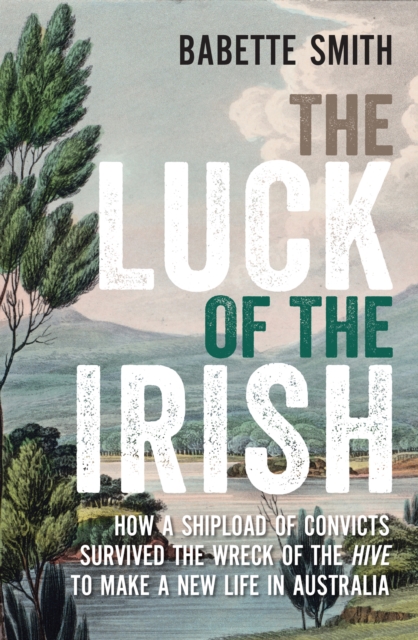
The luck of the Irish: how a shipload of convicts survived the wreck of the Hive to a new life in Australia
Babette Smith tracks the lives of 250 shipwrecked Irish convicts who arrived in Australia the mid-1800s, and uncovers the longlasting influence of the Irish convicts on the Australian national character.
eBook

Deterioration and the long term prisoner: a descriptive analysis of Myra Hindley
Purpose – The purpose of this paper is to explore supposed inevitable personal decline for long-term prisoners, particularly those serving a sentence of life without parole. Design/methodology/approach – Using the prison records of a life without parole sentenced prisoner. Findings – Findings suggest that prisoner deterioration is not inevitable in a whole life prison sentence. Research limitations/implications – Findings are based on one account, of a female prisoner. Practical implications – Distinct services and support are required for those with a natural life prison sentence. Originality/value – To date, there is limited research of prisoners serving life without parole, particularly the mental health implications of denying a prisoner future parole.
Journal Article

Penal policy and political culture in England and Wales : four essays on policy and process
A refreshing critical perspective on criminal justice: Mick Ryan's analysis and disentangling of the major forces behind postwar criminal justice policy - plus a blunt, modern-day challenge to its 'Hampstead liberals'. For many years making penal policy in England and Wales was in the hands of a small, male metropolitan elite made up of Ministers, liberal lobby groups like the Howard League and the Prison Reform Trust, and senior civil servants. Even Parliament was kept at a respectful distance, and public opinion on important penal questions like capital punishment was taken to be something that had to be managed and circumvented rather than acted upon. Penal Policy and Political Culture in England and Wales looks at challenges to this cosy, elite policy making world, first from below as prisoners groups such as PROP and victims groups like Women Against Rape demanded their say in the 1970s and 1980s, and then later, as the New Right deliberately mobilised public opinion around penal questions as a mechanism to support its harsh social and economic policies in the 1980s and 1990s. Mick Ryan's conclusion is that the penal populism generated by this shift may make the liberal elite feel uncomfortable, but it will not go away. And it is no good blaming it all on opportunistic politicians, though they must take some share of the blame. Rather, the author's argument is that we live in an age where political deference is in rapid retreat, and that the public voice will have an increasing role to play in determining how we respond to a whole range of sensitive social issues, including penal issues, for example, how we deal with paedophiles. His blunt footnote to the liberal elite is that its members need to spend far less of their time 'cosying up' to government Ministers and civil servants and talking amongst themselves at precious, inward looking
Whitehall seminars but spend far more time and resources reaching out to engage the public. For Mick Ryan - Professor of Penal Politics in the School of Humanities at the University of Greenwich, London - this is the only way to secure a progressive penal politics, whereas 'backstairs deals' which ignore the public are increasingly difficult to sustain.
eBook

War and welfare
During the Second World War, some 250,000 British servicemen were taken captive by either the Axis powers or the Japanese. As a result of this, their wives and families became completely dependent on the military and civil authorities. This book examines the experiences of the millions of service dependents created by total war. The book then focuses on the most disadvantaged elements of this group - the wives, children and dependents of men taken prisoner- and the changes brought about by the exigencies of total war. Further chapters reflect on how these families organised to lobby government and the strategies they adopted to circumvent apparent bureaucratic ineptitude and misinformation. This book is essential reading for both academic and general readers interested in the British Home Front during the Second World War.
eBook

The city's outback
This honest and compelling book follows the fraught, exciting and painful process of getting to know 'others', in this case Australian Aborigines in the suburbs who are already 'known' through shocking images and worrying statistics.
eBook