
Catalogue Search | MBRL


Are you sure you want to remove the book from the shelf?

{{itemTitle}}
200
result(s) for
"Private libraries Ireland"
Sort by:
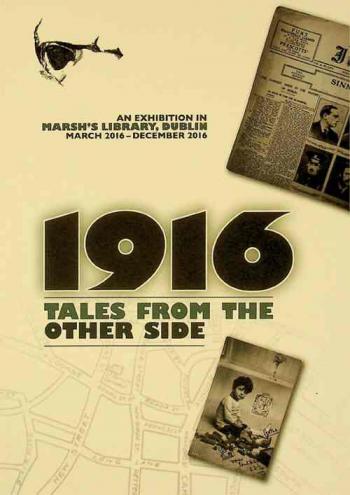
1916 : tales from the other side : an exhibition in Marsh's Library, Dublin March 2016-December 2016
1916 : Tales from the Other Side uses a unique archive of books, manuscripts and artefacts to trace how minority communities responded to the tumultuous events of the Irish revolution. Discover the Rising through the diaries of a middle-class teenager who travelled into Dublin on Easter Week. Follow a scholar as he crosses a city at war, and meet a student librarian, Richard FitzPatrick, as he joins the British Army in the aftermath of rebellion. The exhibition introduces artists, librarians, cleaners and former revolutionaries, each negotiating aspects of their identity, and whose lives intersected with Marsh's Library at a defining moment. The exhibition focuses especially on stories from Irish Protestant and Jewish communities.
Book

Region-specific guidelines to encourage SMEs to use high performance computing
Purpose>This paper aims to explore high performance computing (HPC) in the context of the South East region of Ireland, which hosts a publicly available HPC infrastructure, by identifying whether companies, especially small and medium enterprises (SMEs), are using, or are prepared to use, HPC to improve their business processes, expansion and sustainability. The result of the analysis provides region-specific guidelines that are meant to improve the HPC landscape in the region. The lessons learned from this research may apply to other similar, and developing, European regions.Design/methodology/approach>This paper explores the use of HPC in the context of the South East region of Ireland and examines whether companies, especially SMEs, are benefiting from the use of publicly available HPC infrastructure in the region. This paper also provides a set of recommendations, of a policy nature, and required actions to increase HPC usage, based on the reality of the region. Therefore, the first step in the process was to understand the HPC landscape in the South East region of Ireland. Interviews were conducted with higher education institute (HEI) staff who were knowledgeable about the HPC infrastructure of their institutes and also about whether collaboration between the HEIs and businesses from the same region exists. The interview findings allowed the proposal of region-specific guidelines to improve the HPC landscape and collaboration in the region. The guidelines were analysed and refined in a focus group with key regional stakeholders from academia, industry and government, who have experience and expertise in high-technology transfer processes happening in the region.Findings>The findings of the current study strongly suggest that HPC usage by SMEs in the South East region of Ireland is still incipient; and that HPC knowledge is currently inadequately transferred from the HEI hosting the HPC infrastructure to public and private sector organisations based in the region. The findings also demonstrate that there are no courses or training programmes available dedicated to HPC and that the level of collaboration between the HEI hosting the HPC infrastructure and industry in the region is minimal as regards HPC usage and projects. Therefore, there is a need to put specific targeted policies and actions, both from a regional government and HEI perspectives, in place to encourage SMEs to optimise their processes by using HPC.Originality/value>This research is unique as it provides customised region-specific recommendations (RSR) and feasible actions to encourage industry, especially SMEs, to use HPC and collaborate around it. The literature review identified that there is a lack of studies that can inform policymakers to include HPC in their innovation agenda. Previous research studies specifically focussing on HPC policies are even more scarce. Most of the existing research pertaining to HPC focusses on the technical aspect of HPC; therefore, this research and paper bring a new dimension to existing HPC research. Even though this research was focussed on the South East of Ireland region, the model that generated the RSRs can be extrapolated and applied to other regions that need to develop their HPC landscape and the use of HPC among SMEs in their respective regions.
Journal Article

Do Library Schools Adequately Prepare Students for Cataloguing in Irish Law Libraries: an Investigation
In 2008, BIALL held a pre-conference workshop in Dublin entitled “Back to Basics: Cataloguing and Classification”. The workshop raised some interesting questions about the quality of cataloguing training provided by library schools and law libraries. Although cataloguing in British law libraries has been the subject of research, no study has yet explored cataloguing in Irish law libraries. This study by Clare O'Dwyer redresses this lack of information by focusing exclusively on the Irish context. The perceptions and expectations of cataloguers are examined using a multiple case study design combining interviews and questionnaires. The libraries selected for case study are representative of the three main types of law libraries in Ireland: a professional society law library, a government law library and a law firm library. Following analysis and discussion of the research findings, the study concludes with a series of recommendations regarding the curriculum for Continuing Professional Development (CPD) and further training of cataloguers in Irish law libraries.
Journal Article

People-centred management policies: a new approach in the Irish public service
Recent literature on management underscores how new people-centred management policies help to deal with new uncertainties. This article reviews recent findings which advocate wider support for post-bureaucratic entrepreneurial management environments, focusing on respect for the dignity of individuals and for proactively developing individual skills and self esteem. A new moral contract among employees and their organization is shown to be essential for fundamental change, which can be fostered in an organization where there is a genuine belief in the ability of the individual, rather than in the organization per se. New relationships based on strong emotional commitments can release enormous entrepreneurial potential. Older bureaucratic styles of management exerting excessive control over individuals cannot cope with the increasing pace of unpredictable and ever-changing demands. Psychological pacts between management and frontline staff, founded on trust and intra-organizational relationships, result in greater organizational commitment from all staff.
Journal Article

Private Libraries in Eighteenth-Century Ireland
Of the many private libraries of eighteenth-century Ireland, records of at least 198 survive. This study focuses on two aspects of these libraries: (1) profession and social class of the library owners, (2) books in the libraries by eight major authors of the time. These libraries were owned primarily by clergymen, landed proprietors, and lawyers, many of considerable distinction, but a few owners were from such fields as arts and letters, government, medicine, commerce, and the military. There were no library owners from the lower classes. This fact probably reflects an educational rather than an economic variable, since the Roman Catholic priests for the most part shared the poverty of the majority of their parishioners. Although the size of the libraries varied from 50 titles to more than 6,000, most of the libraries were in the 500-1,000 range and included the traditional disciplines. The library owners bought the works of the major contemporary writers, and there is some evidence that they also read the books of these authors. Of works by the eight authors, they preferred the highly varied and extensive writings of Samuel Johnson, Oliver Goldsmith, and Tobias Smollett. Whether they were prominent jurists or humble Roman Catholic clergymen, the library owners were primarily interested in works of discursive prose, such as histories, essays, lexicography, and biography, rather than fiction, verse, or drama. In their professions and literary tastes the library owners were similar to library owners and users in England and France.
Journal Article
An Irish Library and a European Tour, 1815-1817
The manuscript catalog for the library of Quinville Abbey, County Clare, Ireland, is bound with the manuscript travel journal kept by John Singleton (ca. 1793-1877) of his European tour, 1815-17. In Singleton's journal are at least 85 quotations or citations from 52 titles and 40 authors listed in the Quinville Abbey library catalog of 621 titles. Works from the library by Byron, John Chetwode Eustace, Milton, Rousseau, Madame de Staël, Virgil, and four Oxford poets were important in shaping both the tour itself and the record preserved of it in the journal. Singleton's library catalog and his travel journal are unique in two ways. Of the 199 private libraries in Ireland whose catalogs survive from the period 1750-1850, detailed evidence of use exists only for Singleton. Of the many European tours from the period for which journals survive, Singleton's is the only one directly reflecting an identified library catalog.
Journal Article
