
Catalogue Search | MBRL


Are you sure you want to remove the book from the shelf?

{{itemTitle}}
1,041
result(s) for
"Privatization China."
Sort by:


In Search of Paradise
A new revolution in homeownership and living has been sweeping the booming cities of China. This time the main actors on the social stage are not peasants, migrants, or working-class proletariats but middle-class professionals and entrepreneurs in search of a private paradise in a society now dominated by consumerism. No longer seeking happiness and fulfillment through collective sacrifice and socialist ideals, they hope to find material comfort and social distinction in newly constructed gated communities. This quest for the good life is profoundly transforming the physical and social landscapes of urban China.
Li Zhang, who is from Kunming, the capital of Yunnan province, turns a keen ethnographic eye on her hometown. She combines her analysis of larger political and social issues with fine-grained details about the profound spatial, cultural, and political effects of the shift in the way Chinese urban residents live their lives and think about themselves.In Search of Paradiseis a deeply informed account of how the rise of private homeownership is reconfiguring urban space, class subjects, gender selfhood, and ways of life in the reform era.
New, seemingly individualistic lifestyles mark a dramatic move away from yearning for a social utopia under Maoist socialism. Yet the privatization of property and urban living have engendered a simultaneous movement of public engagement among homeowners as they confront the encroaching power of the developers. This double movement of privatized living and public sphere activism, Zhang finds, is a distinctive feature of the cultural politics of the middle classes in contemporary China. Theoretically sophisticated and highly accessible, Zhang's account will appeal not only to those interested in China but also to anyone interested in spatial politics, middle-class culture, and postsocialist governing in a globalizing world.
eBook

Decentralized authoritarianism in China : the Communist Party's control of local elites in the post-Mao era
China, like many authoritarian regimes, struggles with the tension between the need to foster economic development by empowering local officials and the regime's imperative to control them politically. Landry explores how the Chinese Communist Party manages local officials in order to meet these goals.
Book
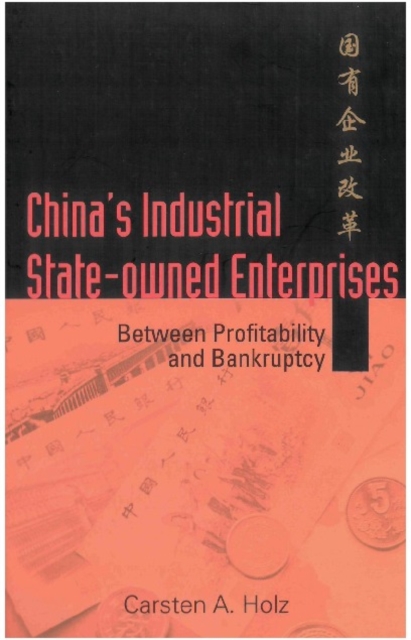
China's industrial state-owned enterprises
After decades of declining profitability, China's industrial state-owned enterprises appear to be obsolete. This book utilizes extensive data and qualitative as well as quantitative analyses to examine the reasons for the decline in the profitability of these industrial state-owned enterprises, to determine their current profitability patterns across various dimensions, and to account for profitability gaps between these enterprises and those managed under other ownership forms. China's recent enterprise reform measures are also evaluated. A differentiated picture emerges that clarifies past developments and illuminates future prospects of the reform of industrial state-owned enterprises in China.
eBook

Under new ownership
Although China's centrally planned economy is a little more than a shadow of its former self, the closely inter-linked reforms of the enterprise and banking sectors are still incomplete. The relative size of the state-owned enterprise sector has been much reduced, however, the sector remains the dominant borrower from the banking system and is responsible for the majority of bank non-performing assets. Thus in the interests of financial stability it is crucial to implement the remaining reform agenda. The accession to the WTO has also made it more urgent for China's most-dynamic state-owned en
Book
Private Business and Economic Reform in China
Based on Party and state documents, Chinese newspaper reports and surveys, the Chinese and Western scholarly literature and the author's own fieldwork, this important study examines the private sector as a case study of the mechanics of reform in China, emphasizing the relationships among local officials, private businesses, and central policy. The book traces the growth of private business in China since 1978 and focuses on the interaction between private sector policy and other reforms and examines how this has affected China's political economy.
eBook
Under new ownership : privatizing China's state-owned enterprises
Although China’s centrally planned economy is a little more than a shadow of its former self, the closely inter-linked reforms of the enterprise and banking sectors are still incomplete. The relative size of the state-owned enterprise sector has been much reduced, however, the sector remains the dominant borrower from the banking system and is responsible for the majority of bank non-performing assets. Thus in the interests of financial stability it is crucial to implement the remaining reform agenda. The accession to the WTO has also made it more urgent for China’s most-dynamic state-owned enterprises and her banking industry to compete through innovation, continuing process upgrades, and active pursuit of strategies aimed at succeeding in global markets. In order to do so, not only do large state-owned industrial enterprises need to be privatized, but the government also needs to create the conditions that will result in market determined consolidation of small and medium size firms into entities with a core strength. Under New Ownership explores the effects of ownership reform in China on the performance of reformed industrial state-owned enterprises, and proposes privatization as a course of action to truly transform these enterprises into world class firms which compete on the basis of sound strategy, effective organization, and innovation. It draws upon newly collected firm level survey data to assess changes in the ownership structure of state enterprises on management, governance, innovation, and performance relative to other types of firms in China. This title provides researchers, students, and policymakers interested in the Chinese economy with in depth information and analysis on key issues related to the reform of state-owned enterprises.
eBook
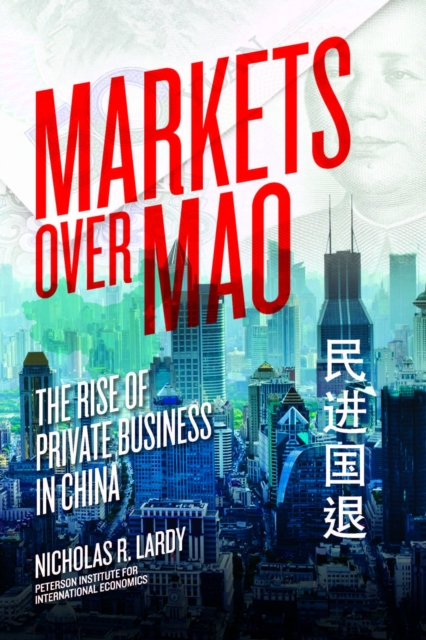
Markets over Mao : the rise of private business in China
China's transition to a market economy has propelled its remarkable economic growth since the late 1970s. In this book, Nicholas R. Lardy, one of the world's foremost experts on the Chinese economy, traces the increasing role of market forces and refutes the widely advanced argument that Chinese economic progress rests on the government's control of the economy's \"commanding heights.\" In another challenge to conventional wisdom, Lardy finds little evidence that the decade of the leadership of former President Hu Jintao and Premier Wen Jiabao (2003-13) dramatically increased the role and importance of state-owned firms, as many people argue. This book offers powerfully persuasive evidence that the major sources of China's growth in the future will be similarly market rather than state-driven, with private firms providing the major source of economic growth, the sole source of job creation, and the major contributor to China's still growing role as a global trader. Lardy does, however, call on China to deregulate and increase competition in those portions of the economy where state firms remain protected, especially in energy and finance.
eBook

Privatizing China
Everyday life in China is increasingly shaped by a novel mix of neoliberal and socialist elements, of individual choices and state objectives. This combination of self-determination and socialism from afar has incited profound changes in the ways individuals think and act in different spheres of society. Covering a vast range of daily life-from homeowner organizations and the users of Internet cafes to self-directed professionals and informed consumers-the essays inPrivatizing Chinacreate a compelling picture of the burgeoning awareness of self-governing within the postsocialist context.
The introduction by Aihwa Ong and Li Zhang presents assemblage as a concept for studying China as a unique postsocialist society created through interactions with global forms. The authors conduct their ethnographic fieldwork in a spectrum of domains-family, community, real estate, business, taxation, politics, labor, health, professions, religion, and consumption-that are infiltrated by new techniques of the self and yet also regulated by broader socialist norms.Privatizing Chinagives readers a grounded, fine-grained intimacy with the variety and complexity of everyday conduct in China's turbulent transformation.
eBook
Challenges for China's Development
The pace of reform for China’s enterprises of all kinds has quickened as they seek to cope with the challenges of self-determination in a rapidly evolving context of difficult social and welfare changes, and the realities of increasing global competition. This book explores these challenges from the perspective of the enterprise. It includes discussion of current and likely future overall trends, reports on new research findings on the true extent of governance and accounting reforms within enterprises, and considers the impact of increasing global competition on strategy, business relationships and management culture in a range of different kinds of enterprises.
David H. Brown is Senior Lecturer and was previously Head of the Department of Systems and Information Management at Lancaster University. His research interests are in the field of systems and strategy. In recent years he has taken a special interest in the Far East and particularly in China, where he has worked since 1986. Alasdair MacBean is a Professor Emeritus and Director of the Lancaster Centre for Management in China at Lancaster University, He has previously been head of the Economic Department, a College Principal and a Prov-Vice Chancellor. His research is mainly in international trade and economic development, the economy of China, and transitional economies, and he has authored or edited eight books.
1. Introduction David H. Brown and Alasdair MacBean 2. Challenges for China and Europe Fan Gang and Lord Powell 3. Does the class of shareholdings affect performance in Chinese publicly listed companies? Guy S. Liu and Sandy Pei Sun 4. Corporatisation of China's SOEs and Corporate Governance Jean Jinghan Chen 5. Governance of Chinese State Owned Enterprises Cheng Wei-Qui and Philip Lawton 6. Insights into strategy development in China's TVEs David H. Brown , Yong Zhang and Hantang Qi 7. Value Creation in Chinese and European Business Relationships Kevin Yeoh and Ian Wilkinson 8. Guanxi, Relationship Marketing and Business Strategy Yunyan Li , Martin F. Parnell and Nick Hawkins 9. Cultural and institutional context for management control in mainland China and the UK Dermot Williamson 10. Chinese style of business as seen from a regional perspective Tony Fang
eBook