
Catalogue Search | MBRL


Are you sure you want to remove the book from the shelf?

{{itemTitle}}
59,975
result(s) for
"Pro life movements"
Sort by:

Abortion after Roe
Abortion is - and always has been - an arena for contesting power relations between women and men. When in 1973 the Supreme Court made the procedure legal throughout the United States, it seemed that women were at last able to make decisions about their own bodies. In the four decades that followed, however, abortion became ever more politicized and stigmatized. Abortion after Roe chronicles and analyzes what the new legal status and changing political environment have meant for abortion providers and their patients. Johanna Schoen sheds light on the little-studied experience of performing and receiving abortion care from the 1970s - a period of optimism - to the rise of the antiabortion movement and the escalation of antiabortion tactics in the 1980s to the 1990s and beyond, when violent attacks on clinics and abortion providers led to a new articulation of abortion care as moral work. As Schoen demonstrates, more than four decades after the legalization of abortion, the abortion provider community has powerfully asserted that abortion care is a moral good.
eBook

Moral foundations of pro-choice and pro-life women
Opinions on abortion are more polarized than opinions on most other moral issues. Why are some people pro-choice and some pro-life? Religious and political preferences play a role here, but pro-choice and pro-life people may also differ in other aspects. In the current preregistered study (
N
= 479), we investigated how pro-choice women differ in their moral foundations from pro-life women. When the Moral Foundations Questionnaire (MFQ) was applied (i.e., when declared moral principles were measured), pro-life women scored higher than pro-choice women in loyalty, authority, and purity. However, when women were asked about moral judgments indirectly via more real-life problems from the Moral Foundations Vignettes (MFV), pro-choice women scored higher than pro-life women in emotional and physical care and liberty but lower in loyalty. When we additionally controlled for religious practice and political views, we found no differences between groups in declaring moral foundations (MFQ). However, in the case of real-life moral judgments (MFV), we observed higher care, fairness, and liberty among pro-choice and higher authority and purity among pro-life. Our results show intriguing nuances between women pro-choice and pro-life as we found a different pattern of moral foundations in those groups depending on whether we measured their declared abstract moral principles or moral judgment about real-life situations. We also showed how religious practice and political views might play a role in such differences. We conclude that attitudes to abortion “go beyond” abstract moral principles, and the real-life context matters in moral judgments.
Graphical abstract
Journal Article

The making of pro-life activists
How do people become activists for causes they care deeply about? Many people with similar backgrounds, for instance, fervently believe that abortion should be illegal, but only some of them join the pro-life movement. By delving into the lives and beliefs of activists and nonactivists alike, Ziad W. Munson is able to lucidly examine the differences between them. Through extensive interviews and detailed studies of pro-life organizations across the nation, Munson makes the startling discovery that many activists join up before they develop strong beliefs about abortion—in fact, some are even pro-choice prior to their mobilization. Therefore, Munson concludes, commitment to an issue is often a consequence rather than a cause of activism. The Making of Pro-life Activists provides a compelling new model of how people become activists while also offering a penetrating analysis of the complex relationship between religion, politics, and the pro-life movement. Policy makers, activists on both sides of the issue, and anyone seeking to understand how social movements take shape will find this book essential.
eBook

If These Walls Could Talk, What Would They Say about Reproductive Justice Today?
This article critically examines the lives of the three women in the television film If These Walls Could Talk (Cher & Savoca, 1996). The three protagonists, all White American women, live in the same house and are all faced with the decision of whether to terminate their unplanned, unwanted pregnancies in 1952, 1974, and 1996. Notably, three Black women were included as minor characters in the film. These foundational questions guide this film analysis: (1) What were the societal norms for US women who considered either abortion or giving birth in 1952, 1974, and 1996? (2) What barriers did women face who considered either abortion or giving birth in 1952, 1974, and 1996? and (3) In what ways does this film highlight or fail to highlight the realities that Black women faced in 1952, 1974, and 1996? This analysis not only examines the social norms and barriers experienced by these fictional White and Black women but also the potential consequences women will face today because of the Supreme Court's overturning of Roe v. Wade (1973) on June 24, 2022.
Journal Article

Schrödinger’s Fetus and Relational Ontology: Reconciling Three Contradictory Intuitions in Abortion Debates
Pro-life and pro-choice advocates battle for rational dominance in abortion debates. Yet, public polling (and general legal opinion) demonstrates the public’s preference for the middle ground: that abortions are acceptable in certain circumstances and during early pregnancy. Implicit in this, are two contradictory intuitions: (1) that we were all early fetuses, and (2) abortion kills no one. To hold these positions together, Harman and Räsänen have argued for the Actual Future Principle (AFP) which distinguishes between fetuses that will develop into persons and those that will never develop into persons. However intellectually ingenious their solutions are, they fail to account for a third intuition: that the death of a wanted fetus – e.g. through termination or miscarriage – is of moral significance. Not only is this practically important, but it is also supported by public opinion. The authors of this paper argue that relational ontology can modify the AFP to better account for all three intuitions. Furthermore, it further emphasizes the pivotal role of the pregnant person who relates to their own fetus in either personal or impersonal ways. Addressing the fundamental challenges of relational ontology, the authors defend the position that human personal identity is ultimately relational.
Journal Article

Plea for an Emic Approach Towards ‘Ugly Movements’: Lessons from the Divisions within the Italian Pro-Life Movement
Studies of the pro-life movement have invariably been undertaken in relation to the pro-choice movement. The stress on comparison has tended to homogenize the two sides, thus understating their internal differences. This article extends beyond an analysis bounded by a movement―countermovement dichotomy. Based on ethnographic data and on the Italian case, it considers several questions that arise from revealing the intramovement divisions at various levels. First, there are tensions relating to the relationship between orthodoxy and institutionalized politics: how far, if at all, should there be doctrinal compromises in exchange for influence over public policy? Secondly, the conflicts over modes of action. In this respect, should protests be visible in public spaces, and if so how? These two issues govern the tense relationship between the Movimento per la Vita and more radical groups. Thirdly, the issue that divides the Movimento itself; the ongoing dialogue over the attitude to be taken towards contraception, and thus sexuality. At the heart of these intramovement struggles is the definition of what a ‘real’ pro-life movement is, and how a ‘real’ pro-life movement should mobilize. This article reveals a complex and highly fragmented image of the pro-life movement that, like every social movement of a certain size, is heterogeneous in its demographic composition, objectives and strategies. To show this complexity, the article adopts an emic approach that does not limit itself to a reading of conservative movements through the eyes of progressive movements.
Journal Article

Pro-choice and Pro-life Are Not Enough: An Investigation of Abortion Attitudes as a Function of Abortion Prototypes
Attitudes toward abortion were investigated as being comprised of two dimensions: attitudes toward abortion as a procedure and attitudes toward choice. By separating the two dimensions as conceptually distinct, attitudinal groups expand beyond the traditional “pro-choice” and “pro-life” absolutist categories to include dilemma and regulated groups. Dilemma people are those who are negative toward abortion but positive toward choice. Regulated individuals are those who are not negative toward abortion but believe that abortion should be strictly controlled rather than an individual choice. People in these situationist positional groupings were hypothesized to hold different abortion attitudes and exhibit different individual difference profiles relative to those endorsing the absolutist perspectives regarding abortion. Using a sample of university student participants, the study results partially supported the existence of the dilemma and regulated attitudinal groups. As expected, those endorsing pro-choice and pro-life positions regarding abortion were different from each other on abortion attitudes as well as on a number of sexuality-related, gender-role attitude, and conservatism individual difference measures. Of note were the findings that the situationists (i.e., dilemma and regulated groups) tended to fall in between the two absolutist groups in relation to abortion attitudes and differed on the personality measures. It is insufficient to dichotomize attitudes toward abortion as either pro-life or pro-choice; this research suggests that, at minimum, there is a substantial intermediate group of situationists. By identifying and understanding this middle group, the issue of abortion may become less polarized and divisive. The situationists are a large proportion of attitude holders; this group may have a substantial impact on laws, regulations, human rights, and research surrounding abortion issues.
Journal Article

Shaping abortion discourses: democracy and the public sphere in Germany and the United States
Using controversy over abortion as a lens through which to compare the political process and role of the media in these two very different democracies, this book examines the contest over meaning that is being waged by social movements, political parties, churches and other social actors. Abortion is a critical battleground for debates over social values in both countries, but the constitutional premises on which arguments rest differ, as do the strategies that movements and parties adopt and the opportunities for influence that are open to them. By examining how these debates are conducted and by whom in light of the normative claims made by democratic theorists, the book also offers a means of judging how well either country lives up to the ideals of democratic debate in practice.
eBook
McCarthy: 'The right to life has been vindicated'
Minority Leader Kevin McCarthy (R-Calif.) and members of the House GOP lauded the Supreme Court’s decision overturning Roe v. Wade on June 24.
Streaming Video
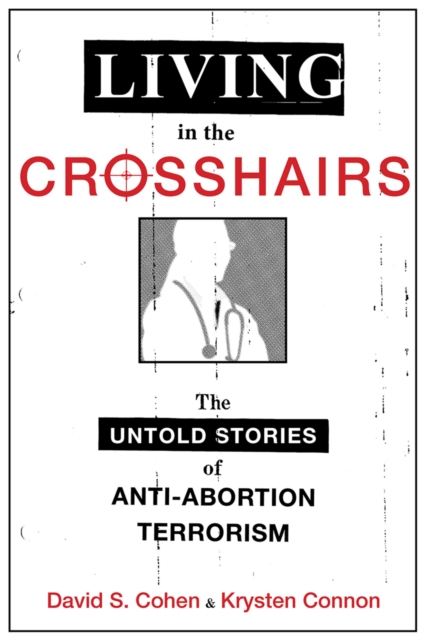
Living in the Crosshairs
Abortion is a legal, common, and safe medical procedure that one in three American women will undergo. Yet ever since Roe v. Wade was decided in 1973, anti-abortion forces have tried nearly every tactic to eliminate it. Legislative and judicial developments dominate the news, but a troubling and all-too-common phenomenon-targeted vigilante action against individual abortion providers-is missing from the national discussion, only cropping up when a dramatic story like the murder of an abortion provider pushes it to the forefront. Every day, men and women who are associated with abortion care are harassed, threatened, stalked, picketed, sent hate mail, and otherwise terrorized. Those who seek help from the law are sometimes successful, but not always, either because there are insufficient protections built into the law, or because law enforcement officials fail to respond. In Living in the Crosshairs, the voices of these providers are heard for the first time, through extensive interviews that David S. Cohen and Krysten Connon conducted across the country. Abortion providers are targeted at home, at work, or in community spaces; they can be harassed in person or online. Abortion opponents target not only the providers themselves but also may go after their families, neighbors, and others close to them. This kind of targeting happens anywhere in the country, not just in more conservative areas, and can victimize all providers, not just high-profile doctors. For some, being the victim of targeted harassment inspires significant fear and leads to changes in behavior; for others, it has become a normal part of life; and for yet others, it actively strengthens their resolve. The response of law enforcement at the federal, state, and local levels is spotty-though there are some strong laws on the books, especially at the federal level, abortion providers have had mixed experiences when it comes to legal recourse, and effectiveness varies. Drawing on ideas from the interviews, the authors propose several legal and societal reforms that could improve the lives of providers, foremost among them redefining targeted harassment as terrorism rather than protest. Living in the Crosshairs is a rich and humane portrait of women's health professionals who persist in their work despite harassment because they believe in what they are doing. These providers' voices have not been heard in recent debates, leaving the public with a deficient understanding of exactly how abortion is limited in this country, yet their experiences illuminate the truth of the issue and offer us a path to a better policy.
eBook