
Catalogue Search | MBRL


Are you sure you want to remove the book from the shelf?

{{itemTitle}}
483
result(s) for
"Pro-life movement -- United States"
Sort by:


Abortion after Roe
Abortion is and always has been an arena for contesting power relations between women and men. When in 1973 the Supreme Court made the procedure legal throughout the United States, it seemed that women were at last able to make decisions about their own bodies. In the four decades that followed, however, abortion became ever more politicized and stigmatized. Abortion after Roe chronicles and analyzes what the new legal status and changing political environment have meant for abortion providers and their patients. Johanna Schoen sheds light on the little-studied experience of performing and receiving abortion care from the 1970s a period of optimism to the rise of the antiabortion movement and the escalation of antiabortion tactics in the 1980s to the 1990s and beyond, when violent attacks on clinics and abortion providers led to a new articulation of abortion care as moral work. As Schoen demonstrates, more than four decades after the legalization of abortion, the abortion provider community has powerfully asserted that abortion care is a moral good.
eBook

Defenders of the unborn : the pro-life movement before Roe v. Wade
\"Abortion is the most divisive issue in America's culture wars, seemingly creating a clear division between conservative members of the Religious Right and people who align themselves with socially and politically liberal causes. In Defenders of the Unborn, historian Daniel K. Williams complicates the history of abortion debates in the United States by offering a detailed, engagingly written narrative of the pro-life movement's mid-twentieth-century origins. He explains that the movement began long before Roe v. Wade, and traces its fifty-year history to explain how and why abortion politics have continued to polarize the nation up to the present day\"-- Provided by publisher.
Book

Opposition and intimidation
The abortion fight has long been a crucible of political tactics, with both sides employing strategies ranging from litigation to civil disobedience to outright violence. Anti-abortion activists have arguably been more tactically innovative than their pro-choice peers. Opposition and Intimidation looks at how their use of political harassment fits—or doesn't—with more conventional political efforts in the struggle over abortion. Alesha Doan's insightful interviews and observations powerfully portray anti-abortion activists' relationship to the objects of their protest. Her portrait is augmented by thorough quantitative analysis of harassment's role within the movement's multitiered strategy—a strategy that Doan shows has forced a decline in the availability and popularity of abortions. Using her unique study of the anti-abortion movement as a model, Doan extends her findings to propose a novel and valuable theory of the new politics of harassment.
eBook

Abortion and the politics of motherhood
In this important study of the abortion controversy in the United States, Kristin Luker examines the issues, people, and beliefs on both sides of the abortion conflict. She draws data from twenty years of public documents and newspaper accounts, as well as over two hundred interviews with both pro-life and pro-choice activists. She argues that moral positions on abortion are intimately tied to views on sexual behavior, the care of children, family life, technology, and the importance of the individual.
eBook
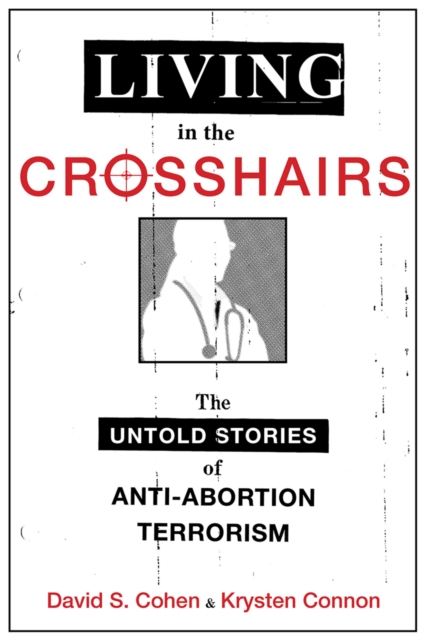
Living in the Crosshairs
Abortion is a legal, common, and safe medical procedure that one in three American women will undergo. Yet ever since Roe v. Wade was decided in 1973, anti-abortion forces have tried nearly every tactic to eliminate it. Legislative and judicial developments dominate the news, but a troubling and all-too-common phenomenon-targeted vigilante action against individual abortion providers-is missing from the national discussion, only cropping up when a dramatic story like the murder of an abortion provider pushes it to the forefront. Every day, men and women who are associated with abortion care are harassed, threatened, stalked, picketed, sent hate mail, and otherwise terrorized. Those who seek help from the law are sometimes successful, but not always, either because there are insufficient protections built into the law, or because law enforcement officials fail to respond. In Living in the Crosshairs, the voices of these providers are heard for the first time, through extensive interviews that David S. Cohen and Krysten Connon conducted across the country. Abortion providers are targeted at home, at work, or in community spaces; they can be harassed in person or online. Abortion opponents target not only the providers themselves but also may go after their families, neighbors, and others close to them. This kind of targeting happens anywhere in the country, not just in more conservative areas, and can victimize all providers, not just high-profile doctors. For some, being the victim of targeted harassment inspires significant fear and leads to changes in behavior; for others, it has become a normal part of life; and for yet others, it actively strengthens their resolve. The response of law enforcement at the federal, state, and local levels is spotty-though there are some strong laws on the books, especially at the federal level, abortion providers have had mixed experiences when it comes to legal recourse, and effectiveness varies. Drawing on ideas from the interviews, the authors propose several legal and societal reforms that could improve the lives of providers, foremost among them redefining targeted harassment as terrorism rather than protest. Living in the Crosshairs is a rich and humane portrait of women's health professionals who persist in their work despite harassment because they believe in what they are doing. These providers' voices have not been heard in recent debates, leaving the public with a deficient understanding of exactly how abortion is limited in this country, yet their experiences illuminate the truth of the issue and offer us a path to a better policy.
eBook

Shaping abortion discourses: democracy and the public sphere in Germany and the United States
Using controversy over abortion as a lens through which to compare the political process and role of the media in these two very different democracies, this book examines the contest over meaning that is being waged by social movements, political parties, churches and other social actors. Abortion is a critical battleground for debates over social values in both countries, but the constitutional premises on which arguments rest differ, as do the strategies that movements and parties adopt and the opportunities for influence that are open to them. By examining how these debates are conducted and by whom in light of the normative claims made by democratic theorists, the book also offers a means of judging how well either country lives up to the ideals of democratic debate in practice.
eBook
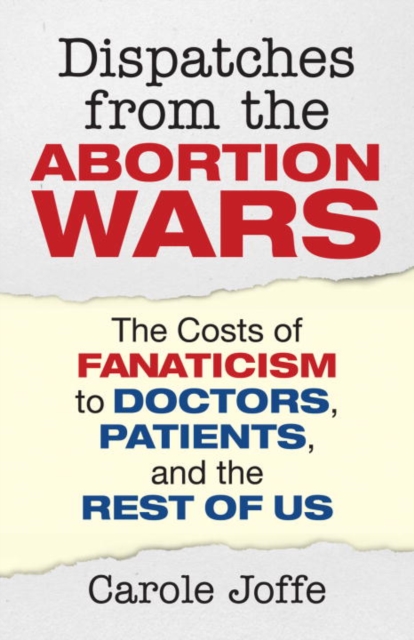
Dispatches from the Abortion Wars
Surprising firsthand accounts from the front lines of abortion provision reveal the persistent cultural, political, and economic hurdles to access More than thirty-five years after women won the right to legal abortion, most people do not realize how inaccessible it has become.
eBook

Shaping Abortion Discourse
Using controversy over abortion as a lens through which to compare the political process and role of the media in these two very different democracies, this book examines the contest over meaning that is being waged by social movements, political parties, churches and other social actors. Abortion is a critical battleground for debates over social values in both countries, but the constitutional premises on which arguments rest differ, as do the strategies that movements and parties adopt and the opportunities for influence that are open to them. By examining how these debates are conducted and by whom in light of the normative claims made by democratic theorists, the book also offers a means of judging how well either country lives up to the ideals of democratic debate in practice.
eBook
