
Catalogue Search | MBRL


Are you sure you want to remove the book from the shelf?

{{itemTitle}}
18
result(s) for
"Probabilities Popular works."
Sort by:

Do dice play God? : the mathematics of uncertainty
Bestselling author Professor Ian Stewart explores the history and mathematics of uncertainty. Touching on gambling, probability, statistics, financial and weather forecasts, censuses, medical studies, chaos, quantum physics, and climate, he makes one thing clear: a reasonable probability is the only certainty.
Book
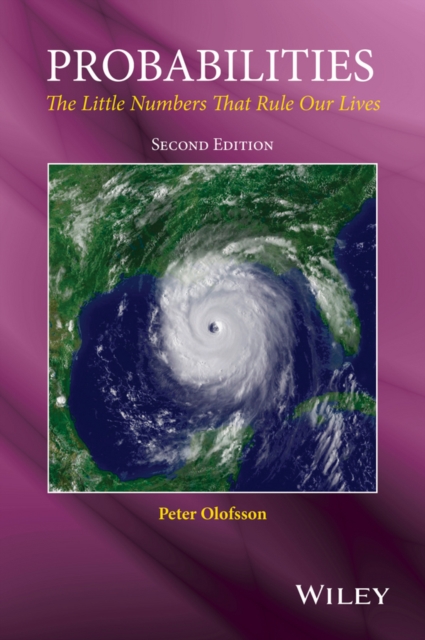
Probabilities
Praise for the First Edition \"If there is anything you want to know, or remind yourself, about probabilities, then look no further than this comprehensive, yet wittily written and enjoyable, compendium of how to apply probability calculations in real-world situations.\" - Keith Devlin, Stanford University, National Public Radio's \"Math Guy\" and.
eBook

Randomness
From the ancients' first readings of the innards of birds to your
neighbor's last bout with the state lottery, humankind has put
itself into the hands of chance. Today life itself may be at stake
when probability comes into play-in the chance of a false negative
in a medical test, in the reliability of DNA findings as legal
evidence, or in the likelihood of passing on a deadly congenital
disease-yet as few people as ever understand the odds. This book is
aimed at the trouble with trying to learn about probability. A
story of the misconceptions and difficulties civilization overcame
in progressing toward probabilistic thinking, Randomness
is also a skillful account of what makes the science of probability
so daunting in our own day. To acquire a (correct) intuition of
chance is not easy to begin with, and moving from an intuitive
sense to a formal notion of probability presents further problems.
Author Deborah Bennett traces the path this
process takes in an individual trying to come to grips with
concepts of uncertainty and fairness, and also charts the parallel
path by which societies have developed ideas about chance. Why,
from ancient to modern times, have people resorted to chance in
making decisions? Is a decision made by random choice \"fair\"? What
role has gambling played in our understanding of chance? Why do
some individuals and societies refuse to accept randomness at all?
If understanding randomness is so important to probabilistic
thinking, why do the experts disagree about what it really is? And
why are our intuitions about chance almost always dead wrong?
Anyone who has puzzled over a probability conundrum is struck by
the paradoxes and counterintuitive results that occur at a
relatively simple level. Why this should be, and how it has been
the case through the ages, for bumblers and brilliant
mathematicians alike, is the entertaining and enlightening lesson
of Randomness .
eBook
Probabilities : the little numbers that rule our lives
Praise for the First Edition \"If there is anything you want to know, or remind yourself, about probabilities, then look no further than this comprehensive, yet wittily written and enjoyable, compendium of how to apply probability calculations in real-world situations.\" - Keith Devlin, Stanford University, National Public Radio's \"Math Guy\" and author of The Math Gene and The Unfinished Game From probable improbabilities to regular irregularities, Probabilities: The Little Numbers That Rule Our Lives, Second Edition investigates the often surprising effects of risk and chance in our lives. Featuring a timely update, the Second Edition continues to be the go-to guidebook for an entertaining presentation on the mathematics of chance and uncertainty. The new edition develops the fundamental mathematics of probability in a unique, clear, and informal way so readers with various levels of experience with probability can understand the little numbers found in everyday life. Illustrating the concepts of probability through relevant and engaging real-world applications, the Second Edition features numerous examples on weather forecasts, DNA evidence, games and gambling, and medical testing. The revised edition also includes: * The application of probability in finance, such as option pricing * The introduction of branching processes and the extinction of family names * An extended discussion on opinion polls and Nate Silver's election predictions Probabilities: The Little Numbers That Rule Our Lives, Second Edition is an ideal reference for anyone who would like to obtain a better understanding of the mathematics of chance, as well as a useful supplementary textbook for students in any course dealing with probability.
eBook
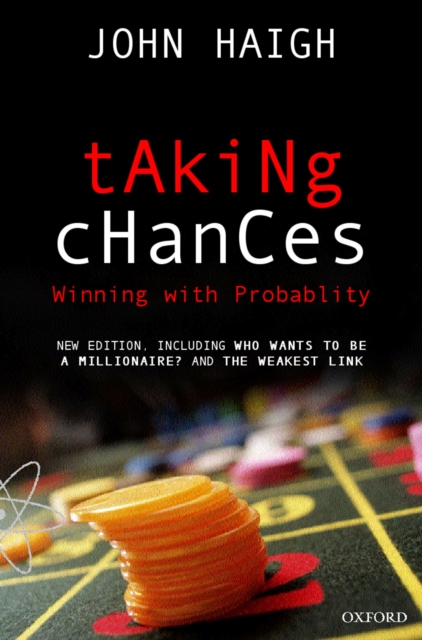
Taking chances : winning with probability
What are the odds against winning the Lottery, making money in a casino, or backing the right horse? Every day, people make judgements on these matters and face other decisions that rest on their understanding of probability: buying insurance, following medical advice, carrying an umbrella. Yet many of us have a frightening ignorance of how probability works. Taking Chances presents an entertaining and fascinating exploration of probability, revealing traps and fallacies in the field. It describes and analyses a remarkable variety of situations where chance plays a role, including football pools, the Lottery, TV games, sport, cards, roulette, coins, and dice. The book guides the reader round common pitfalls, demonstrates how to make better informed decisions, and shows where the odds can be unexpectedly in your favour. This new edition has been fully updated, and includes information on \"Who Wants to be a Millionaire?\" and \"The Weakest Link\", plus a new chapter on Probability for Lawyers.
eBook
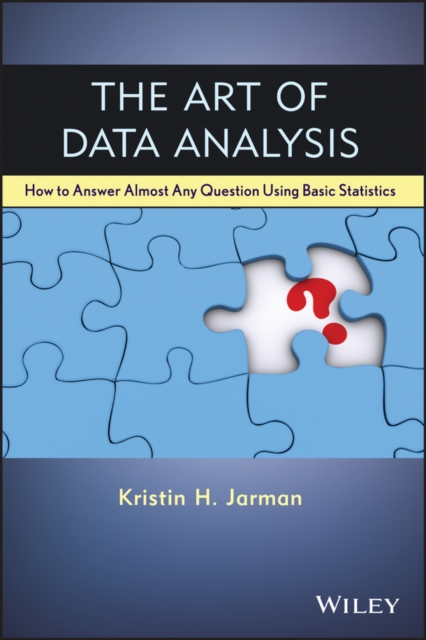
The art of data analysis
A friendly and accessible approach to applying statistics in the real world
With an emphasis on critical thinking, The Art of Data Analysis: How to Answer Almost Any Question Using Basic Statistics presents fun and unique examples, guides readers through the entire data collection and analysis process, and introduces basic statistical concepts along the way.
Leaving proofs and complicated mathematics behind, the author portrays the more engaging side of statistics and emphasizes its role as a problem-solving tool. In addition, light-hearted case studies illustrate the application of statistics to real data analyses, highlighting the strengths and weaknesses of commonly used techniques. Written for the growing academic and industrial population that uses statistics in everyday life, The Art of Data Analysis: How to Answer Almost Any Question Using Basic Statistics highlights important issues that often arise when collecting and sifting through data. Featured concepts include: • Descriptive statistics
• Analysis of variance
• Probability and sample distributions
• Confidence intervals
• Hypothesis tests
• Regression
• Statistical correlation
• Data collection
• Statistical analysis with graphs Fun and inviting from beginning to end, The Art of Data Analysis is an ideal book for students as well as managers and researchers in industry, medicine, or government who face statistical questions and are in need of an intuitive understanding of basic statistical reasoning.
eBook
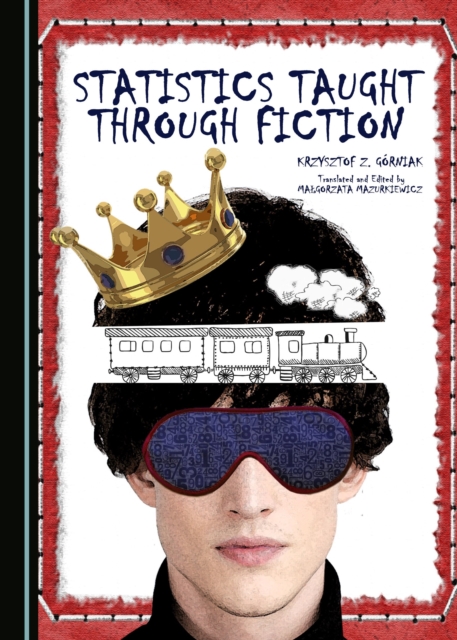
Statistics taught through fiction
Statistics is present in our lives, whether we like it or not, as we are constantly surrounded by statistical data. Statistics takes several shapes, beginning with ordinary numbers and ending with different types of schemes, diagrams and tables, but its form, of course, doesn't appeal to everyone, which is how the idea of this book arose, to bring the reader closer to the area of statistical issues. With the text's plot and use of everyday language, it introduces heroes and a science-fiction world to present an easy-to-follow account of formulas, numbers and statistical symbols.
eBook

Math For Real Life For Dummies
The easy way to brush up on the math skills you need in real life Not everyone retains the math they learned in school. Like any skill, your ability to speak \"math\" can deteriorate if left unused. From adding and subtracting money in a bank account to figuring out the number of shingles to put on a roof, math in all of its forms factors into daily life. Math For Real Life For Dummies provides you with the simple formulas and theorems that you're likely to encounter in the workplace, the kitchen, and even when playing games. You can turn to Math For Real Life For Dummies to brush up on your math skills or to handle everyday encounters, like calculating restaurant tips, understanding interest rates, and figuring out percentages and odds. Packed with real-world examples that make sense, Math For Real Life For Dummies takes the stress out of your daily calculation encounters. Provides tips for understanding and using basic mathematical concepts Shows you how math helps the mind to reason and organize complicated situations or problems into clear, simple, and logical steps Covers all of the math skills you're likely to need in everyday situations If you're looking for a practical, plain-English guide to mastering everyday math skills, Math For Real Life For Dummies has you covered.
eBook
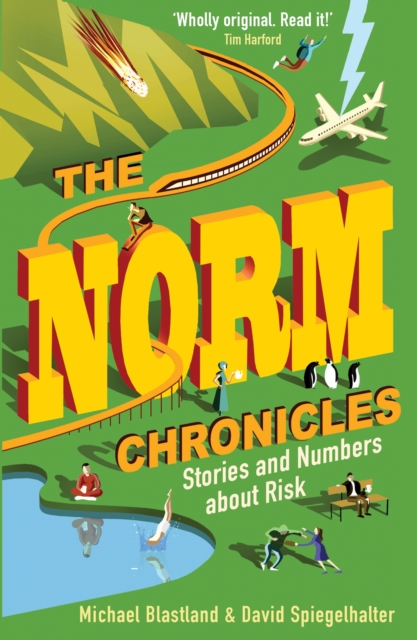
Norm Chronicles
Meet Norm. He's 31, 5'9\", just over 13 stone, and works a 39 hour week. He likes a drink, doesn't do enough exercise and occasionally treats himself to a bar of chocolate (milk). He's a pretty average kind of guy. In fact, he is the average guy in this clever and unusual take on statistical risk, chance, and how these two factors affect our everyday choices. Watch as Norm (who, like all average specimens, feels himself to be uniquely special), and his friends careful Prudence and reckless Kelvin, turns to statistics to help him in life's endless series of choices - should I fly or take the train? Have a baby? Another drink? Or another sausage? Do a charity skydive or get a lift on a motorbike? Because chance and risk aren't just about numbers - it's about what we believe, who we trust and how we feel about the world around us. From a world expert in risk and the bestselling author of The Tiger That Isn't (and creator of BBC Radio 4's More or Less), this is a commonsense (and wildly entertaining) guide to personal risk and decoding the statistics that represent it.
eBook
Beyond Basic Statistics
Features basic statistical concepts as a tool for thinking critically, wading through large quantities of information, and answering practical, everyday questions Written in an engaging and inviting manner, Beyond Basic Statistics: Tips, Tricks, and Techniques Every Data Analyst Should Know presents the more subjective side of statistics—the art of data analytics. Each chapter explores a different question using fun, common sense examples that illustrate the concepts, methods, and applications of statistical techniques. Without going into the specifics of theorems, propositions, or formulas, the book effectively demonstrates statistics as a useful problem-solving tool. In addition, the author demonstrates how statistics is a tool for thinking critically, wading through large volumes of information, and answering life's important questions. Beyond Basic Statistics: Tips, Tricks, and Techniques Every Data Analyst Should Know also features: * Plentiful examples throughout aimed to strengthen readers' understanding of the statistical concepts and methods * A step-by-step approach to elementary statistical topics such as sampling, hypothesis tests, outlier detection, normality tests, robust statistics, and multiple regression * A case study in each chapter that illustrates the use of the presented techniques * Highlights of well-known shortcomings that can lead to false conclusions * An introduction to advanced techniques such as validation and bootstrapping Featuring examples that are engaging and non-application specific, the book appeals to a broad audience of students and professionals alike, specifically students of undergraduate statistics, managers, medical professionals, and anyone who has to make decisions based on raw data or compiled results.
eBook