
Catalogue Search | MBRL


Are you sure you want to remove the book from the shelf?

{{itemTitle}}
26
result(s) for
"Problem youth -- United States -- History -- 20th century"
Sort by:
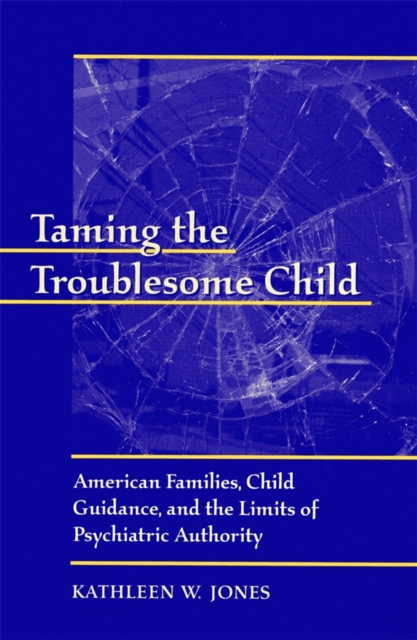
Taming the troublesome child
When our children act up--whether they're just moody and rebellious
or taking drugs and committing crimes--our solution, so often now,
is to send them to a psychiatrist or developmental psychologist for
help. What makes us think this will work? How did we come to rely
on psychological explanations--and corrections--for juvenile
misconduct? In Taming the Troublesome Child , these
questions lead to the complex history of \"child guidance,\" a
specialized psychological service developed early in the twentieth
century. Kathleen Jones puts this professional history into the
context of the larger culture of age, class, and gender conflict.
Using the records of Boston's Judge Baker Guidance Center from 1920
to 1945, she looks at the relationships among the social activists,
doctors, psychologists, social workers, parents, and young people
who met in the child guidance clinic, then follows the clinicians
as they adapt delinquency work to the problems of nondelinquent
children--an adaptation that often entailed a harsh critique of
American mothers. Her book reveals the uses to which professionals
and patients have put this interpretation of juvenile misbehavior,
and the conditions that mother-blaming has imposed on social policy
and private child rearing to this day.
eBook

Engaging Communities in Youth Violence Prevention: Introduction and Contents
Youth violence (YV) is a major public health problem in the United States that has substantial short- and long-term negative impacts on youths, their families, and communities. Homicide was the third leading cause of death among youths aged 10 to 24years in 2019, with 90.3% of these homicides being firearm related.1 Each day, approximately 1163 youths are treated in emergency departments for nonfatal assault-related injuries, totaling 424374 youths in 2019.1 Data from the 2019 Youth Risk Behavior Survey show that, in the 12 months before the survey, 7.4% of high-school students reported being threatened or injured with a weapon at school and 4.4% reported carrying a gun for nonrecreational purposes.2 Approximately 9% of students reported not going to school at least once in the past 30 days because they felt unsafe, either at school or on their way to or from school.2 In addition, in 2019, about one in five students reported being bullied at school and being in a physical fight at least once in the past year.2Exposure to violence during childhood is an adverse experience that can have lasting negative impacts on health and development as a victim, perpetrator, or witness and can increase the likelihood of future violence perpetration and victimization, physical and mental health problems, chronic diseases, substance abuse, academic challenges, and suicide (http://bit.ly/38bbydS). YV is connected to other forms of violence and shares several risk and protective factors with child abuse and neglect, adolescent dating violence, sexual violence, suicide, and adult intimate partner violence (http://bit.ly/38gAYH0).Violence was recognized in 1985 by US Surgeon General C. Everett Koop as a public health problem (http://bit.ly/ 3sS9WgL), and, in 2001, US Surgeon General David Satcher released the first Surgeon General's report on YV in the United States. This report described the public health approach to YV prevention and called for rigorous research on prevention strategies.
Journal Article

A Reassessment of the Association Between Social Disorganization and Youth Violence in Rural Areas
Objective. To study the association between social disorganization and youth violence rates in rural communities. Method. We employed rural Missouri counties (N = 106) as units of analysis, measured serious violent victimization data via hospital records, and the same measures of social disorganization as Osgood and Chambers (2000). Controlling for spatial autocorrelation, the negative binomial estimator was used to estimate the effects of social disorganization on youth violence rates. Results. Unlike Osgood and Chambers, we found only one of five social disorganization measures, the proportion of female-headed households, to be associated with rural youth violent victimization rates. Conclusion. Although most research on social disorganization theory has been undertaken on urban areas, a highly cited Osgood and Chambers (2000) study appeared to extend the generalizeability of social disorganization as an explanation of the distribution of youth violence to rural areas. Our results suggest otherwise. We provide several methodological and theoretical reasons why it may be too early to draw strong conclusions about the generalizeability of social disorganization to crime rates in rural communities.
Journal Article

School Discipline and Disruptive Classroom Behavior: The Moderating Effects of Student Perceptions
This study examines the relationship between school discipline and student classroom behavior. A traditional deterrence framework predicts that more severe discipline will reduce misbehavior. In contrast, normative perspectives suggest that compliance depends upon commitment to rules and authority, including perceptions of fairness and legitimacy. Using school and individual-level data from the National Education Longitudinal Study of 1988 and multilevel regression modeling, the author finds support for the normative perspective. Students who perceive school authority as legitimate and teacher-student relations as positive are rated as less disruptive. While perceptions of fairness also predict lower disruptions, the effects are mediated by positive teacher-student relations. Contrary to the deterrence framework, more school rules and higher perceived strictness predicts more, not less, disruptive behavior. In addition, a significant interaction effect suggests that attending schools with more severe punishments may have the unintended consequence of generating defiance among certain youth.
Journal Article

Does Food Insecurity Affect Parental Characteristics and Child Behavior? Testing Mediation Effects
Using two waves of data from the Child Development Supplement in the Panel Study of Income Dynamics, this study investigates whether parental characteristics (parenting stress, parental warmth, psychological distress, and parent’s self-esteem) mediate household food insecurity’s relations with child behavior problems. Fixed-effects analyses examine data from a low-income sample of 416 children from 249 households. This study finds that parenting stress mediates the effects of food insecurity on child behavior problems. However, two robustness tests produce different results from those of the fixed-effects models. This inconsistency suggests that household food insecurity’s relations to the two types of child behavior problems need to be investigated further with a different methodology and other measures.
Journal Article


Who Was Deborah Kallikak?
\"The Kallikak Family\" was, along with \"The Jukes: A Study in Crime, Pauperism, Disease, and Heredity\", one of the most visible eugenic family narratives published in the early 20th century. Published in 1912 and authored by psychologist Henry Herbert Goddard, director of the psychological laboratory at the Vineland Training School for Feebleminded Children in Vineland, New Jersey, \"The Kallikak Family\" told the tale of a supposedly \"degenerate\" family from rural New Jersey, beginning with Deborah, one of the inmates at the Training School. Like most publications in the genre, this pseudoscientific treatise described generations of illiterate, poor, and purportedly immoral Kallikak family members who were chronically unemployed, supposedly feebleminded, criminal, and, in general, perceived as threats to \"racial hygiene.\" Presented as a \"natural experiment\" in human heredity, this text served to support eugenic activities through much of the first half of the 20th century. This article reviews the story of Deborah Kallikak, including her true identity, and provides evidence that Goddard's treatise was incorrect.
Journal Article

The black panther party and transformative pedagogy
The Black Panther Party and Transformative Pedagogy: Place-Based Education in Philadelphia, by Omari L. Dyson, is the first scholarly text to detail the social relief efforts of the Philadelphia, Pennsylvania Branch of the Black Panther Party. Through a postcolonial lens, this story captures the lived resistances, highlights the socio-historical context, and examines the discourse of former members of the Black Panther Party and local residents of Philadelphia from 1968-1974. Overall, this book provides insight from a multiplicity of sources to better capture the identity(-ies) and complexity of the organization. Not only does this text resolve a dearth in the literature that highlights the multiple facets of the Black Panther Party (especially at the local level), but it serves as a template on effective strategies for researchers, educators, and policymakers to implement on their quest for social and educational transformation.
eBook
Nonresident Fathers’ Parenting, Family Processes, and Children’s Development in Urban, Poor, Single-Mother Families
With dramatic growth in nonrmarital births, an increasing number of children are growing up in single-mother families. This study examines the relationships among nonresident fathers' parenting and children's behavioral and cognitive development in low-income, single-mother families. It also considers the personal characteristics of the children's single mothers as well as family processes and economic circumstances. Analyses use the first three waves of longitudinal data from a subsample of single and noncohabiting mothers in the Fragile Families and Child Wellbeing Study. Results suggest that nonresident fathers' parenting is indirectly associated with children's behavior problems and cognitive development. The findings further suggest that those estimated associations are transmitted through mothers' parenting. The study also discusses the policy and practice implications of its findings.
Journal Article

The contradictions of juvenile crime & punishment
The doctrine allows - even mandates -juvenile courts to protect children from themselves : from their associations with antisocial peers, from poor decision-making with respect to crime, and from harms to their physical and mental health to which they expose themselves.3 As a result, we incarcerate children because their homes are too dangerous or criminogenic ; because they are both delinquent and mentally ill or addicted to intoxicants and there are no other appropriate placements; because they need therapies that are unavailable elsewhere, even though they pose no security risks; because they are homeless; because they are sexually active at young ages; or because we think they may commit some crime in the near future.4 The resulting landscape of juvenile incarceration has been, not surprisingly, complex and shifting since the 1970s, the decade when adult incarceration trends began their robust increase. [...] juvenile incarceration, and juvenile justice itself, has been situated in a space bounded by the transcendent nineteenthcentury child-saving movement, the procedural rights movement of the 1960s, and the raw emotional politics of violent crime and punishment in the past three decades. [...] new behavioral and biological research about maturity and criminal culpability, largely focused on emotional regulation, impulsivity, decision-making, and other behavioral functioning closely linked to brain development and the social psychological skills that it controls, suggests that children remain immature and therefore less culpable well into late adolescence.78 Second, adolescents who are tried and punished as adults are rearrested and incarcerated more often, more quickly, and for more serious crimes.79 They are more likely to suffer mental health problems, including traumatic stress reactions, and are less likely to receive effective services to overcome their developmental or other behavioral deficits.
Journal Article