
Catalogue Search | MBRL


Are you sure you want to remove the book from the shelf?

{{itemTitle}}
1,607
result(s) for
"Proceedings Paper"
Sort by:

World Textile
Selected peer-reviewed full text papers from the 20th AUTEX World Textile ConferenceSelected peer-reviewed full text papers from the 20th AUTEX World Textile Conference (AUTEX 2021), September 5-9, 2021, Portugal (online).
eBook

The Constitutionalization of European Budgetary Constraints
The recently enacted Treaty on the Stability, Coordination and Governance of the Economic and Monetary Union (generally referred to as the Fiscal Compact) has introduced a ‘golden rule’, which is a detailed obligation that government budgets be balanced. Moreover, it required the 25 members of the EU which signed the Treaty in March 2012, to incorporate this ‘golden rule’ within their national Constitutions. This requirement represents a major and unprecedented development, raising formidable challenges to the nature and legitimacy of national Constitutions as well as to the future of the European integration project. This book analyses the new constitutional architecture of the European Economic and Monetary Union (EMU), examines in a comparative perspective the constitutionalization of budgetary rules in the legal systems of the Member States, and discusses the implications of these constitutional changes for the future of democracy and integration in the EU. By combining insights from law and economics, comparative institutional analysis and legal theory, the book offers a comprehensive survey of the constitutional incorporation of new fiscal and budgetary rules across Europe and a systematic normative discussion of the legitimacy issues at play. It thus contributes to a better understanding of the Euro-crisis, of the future of the EU, and the reforms needed towards a deeper and genuine EMU.
eBook
Globalisation, Criminal Law and Criminal Justice
The book consists of the keynote papers delivered at the 2012 WG Hart Workshop on Globalisation, Criminal Law and Criminal Justice organised by the Queen Mary Criminal Justice Centre. The volume addresses from a cross-disciplinary perspective the multifarious relationship between globalisation on the one hand, and criminal law and justice on the other hand. At a time when economic, political and cultural systems across different jurisdictions are increasingly becoming or are perceived to be parts of a coherent global whole, it appears that the study of crime and criminal justice policies and practices can no longer be restricted within the boundaries of individual nation-states or even particular transnational regions. But in which specific fields, to what extent, and in what ways does globalisation influence crime and criminal justice in disparate jurisdictions? Which are the factors that facilitate or prevent such influence at a domestic and/or regional level? And how does or should scholarly inquiry explore these themes? These are all key questions which are addressed by the contributors to the volume. In addition to contributions focusing on theoretical and comparative dimensions of globalisation in criminal law and justice, the volume includes sections focusing on the role of evidence in the development of criminal justice policy, the development of European criminal law and its relationship with national and transnational legal orders, and the influence of globalisation on the interplay between criminal and administrative law.
eBook
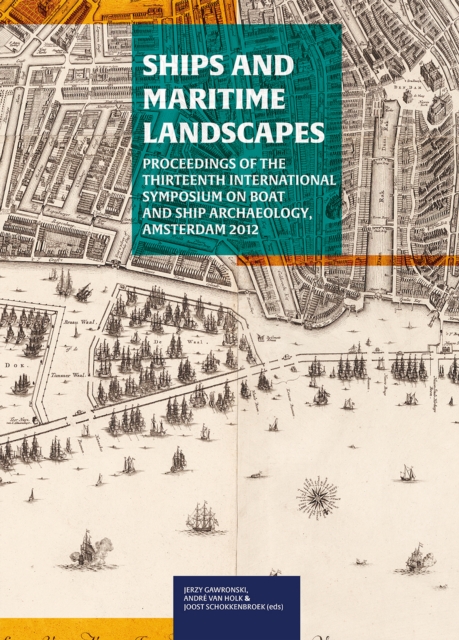
Ships And Maritime Landscapes
This volume gathers 88 contributions related to the theme ‘Ships and Maritime Landscapes’ of the Thirteenth International Symposium on Boat and Ship Archaeology (ISBSA 13) held in Amsterdam on the 7th to 12th October 2012. The articles include both papers and poster presentations by experts in the field of nautical archaeology, history of ships and shipbuilding, and naval architecture. The contributions deal not only with the theme of maritime landscapes but also with a variety of ship related subjects, like regional watercraft, construction and typology, material applications and design, outfitting, reconstruction and current research.
eBook

Sustainability & historic preservation
Sustainability and Historic Preservation: Towards a Holistic View broadens the horizons of the mushrooming drive to correlate the objectives of these two spheres. To date, discussions of the relationship between historic preservation and sustainability have generally focused on the energy consumption of buildings. The nine chapters in this book show how that agenda can and should be expanded by examining many other facets of the environment, including agricultural lands, urban waterworks, irrigation systems, natural settings, an arboretum, and post-World War II suburbs. Written by specialists from a variety of disciplines—anthropology, architecture, landscape architecture, and urban history among them—the contents explore new realms in which historic preservation and sustainability can have common purpose. This book addresses subjects of concern to many persons engaged in both fields and argues the case for creating a greater spectrum of common ground between them.
eBook
Ancient Egyptian and Afroasiatic
By challenging assumptions regarding the proximity between
Egyptian and Semitic Languages, Ancient Egyptian and
Afroasiatic provides a fresh approach to the relationships and
similarities between Ancient Egyptian, Semitic, and Afroasiatic
languages. This in-depth analysis includes a re-examination of the
methodologies deployed in historical linguistics and comparative
grammar, a morphological study of Ancient Egyptian, and critical
comparisons between Ancient Egyptian and Semitic, as well as
careful considerations of environmental factors and archaeological
evidence. These contributions offer a reassessment of the
Afroasiatic phylum, which is based on the relations between Ancient
Egyptian and the other Afroasiatic branches. This volume
illustrates the advantages of viewing Ancient Egyptian in its
African context.
In addition to the editors, the contributors to this collection
include Shiferaw Assefa, Michael Avina, Vit Bubenik, Leo Depuydt,
Christopher Ehret, Zygmunt Frajzyngier, J. Lafayette Gaston,
Tiffany Gleason, John Huehnergard, Andrew Kitchen, Elsa Oréal,
Chelsea Sanker, Lameen Souag, Andréas Stauder, Deven N. Vyas, Aren
Wilson-Wright, and Jean Winand.
eBook

Resilience definitions, theory, and challenges: interdisciplinary perspectives
In this paper, inspired by the plenary panel at the 2013 meeting of the International Society for Traumatic Stress Studies, Dr. Steven Southwick (chair) and multidisciplinary panelists Drs. George Bonanno, Ann Masten, Catherine Panter-Brick, and Rachel Yehuda tackle some of the most pressing current questions in the field of resilience research including: (1) how do we define resilience, (2) what are the most important determinants of resilience, (3) how are new technologies informing the science of resilience, and (4) what are the most effective ways to enhance resilience? These multidisciplinary experts provide insight into these difficult questions, and although each of the panelists had a slightly different definition of resilience, most of the proposed definitions included a concept of healthy, adaptive, or integrated positive functioning over the passage of time in the aftermath of adversity. The panelists agreed that resilience is a complex construct and it may be defined differently in the context of individuals, families, organizations, societies, and cultures. With regard to the determinants of resilience, there was a consensus that the empirical study of this construct needs to be approached from a multiple level of analysis perspective that includes genetic, epigenetic, developmental, demographic, cultural, economic, and social variables. The empirical study of determinates of resilience will inform efforts made at fostering resilience, with the recognition that resilience may be enhanced on numerous levels (e.g., individual, family, community, culture).
Journal Article
Construction Grammar across Borders
In this volume, five chapters derived from the plenary talks at the 9th International Conference on Construction Grammar provide a sample of the bridges the insistence and effort of construction grammarians have built in the past three decades. Originally published as special issue of Constructions and Frames 12:1 (2020).
eBook
The complexity of social-cultural emergence : biosemiotics, semiotics and translation studies
The volume, which presents a selection of papers read at a conference in 2022 with the same title as the book, engages the systems of matter-energy, biology, and significance from which and in relation to which society-culture emerges.
eBook