
Catalogue Search | MBRL


Are you sure you want to remove the book from the shelf?

{{itemTitle}}
5,041
result(s) for
"Product design Data processing."
Sort by:

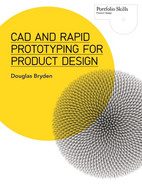
CAD and rapid prototyping for product design
Computer-aided design (CAD) and rapid prototyping (RP) are now a fundamental part of the professional practice of product design and are therefore essential skills for product design undergraduate students. This book provides students with all the tools needed to get to grips with the range of both CAD software and RP processes used in the industry. Presented in a visually engaging format, this book is packed with case study examples from contemporary product designers, as well as screen shots, CAD models, and images of rapid prototypes highlighting the design process. This book shows how CAD and RP software is used in product design and explains, in clear language, the similarities and differences between the different software packages and processes.
eBook


Enhancing Product Design through AI-Driven Sentiment Analysis of Amazon Reviews Using BERT
Understanding customer emotions and preferences is paramount for success in the dynamic product design landscape. This paper presents a study to develop a prediction pipeline to detect the aspect and perform sentiment analysis on review data. The pre-trained Bidirectional Encoder Representation from Transformers (BERT) model and the Text-to-Text Transfer Transformer (T5) are deployed to predict customer emotions. These models were trained on synthetically generated and manually labeled datasets to detect the specific features from review data, then sentiment analysis was performed to classify the data into positive, negative, and neutral reviews concerning their aspects. This research focused on eco-friendly products to analyze the customer emotions in this category. The BERT and T5 models were finely tuned for the aspect detection job and achieved 92% and 91% accuracy, respectively. The best-performing model will be selected, calculating the evaluation metrics precision, recall, F1-score, and computational efficiency. In these calculations, the BERT model outperforms T5 and is chosen as a classifier for the prediction pipeline to predict the aspect. By detecting aspects and sentiments of input data using the pre-trained BERT model, our study demonstrates its capability to comprehend and analyze customer reviews effectively. These findings can empower product designers and research developers with data-driven insights to shape exceptional products that resonate with customer expectations.
Journal Article

Quantum-inspired computational imaging
Traditional imaging techniques involve peering down a lens and collecting as much light from the target scene as possible. That requirement can set limits on what can be seen. Altmann et al. review some of the most recent developments in the field of computational imaging, including full three-dimensional imaging of scenes that are hidden from direct view (e.g., around a corner or behind an obstacle). High-resolution imaging can be achieved with a single-pixel detector at wavelengths for which no cameras currently exist. Such advances will lead to the development of cameras that can see through fog or inside the human body. Science , this issue p. eaat2298 Computational imaging combines measurement and computational methods with the aim of forming images even when the measurement conditions are weak, few in number, or highly indirect. The recent surge in quantum-inspired imaging sensors, together with a new wave of algorithms allowing on-chip, scalable and robust data processing, has induced an increase of activity with notable results in the domain of low-light flux imaging and sensing. We provide an overview of the major challenges encountered in low-illumination (e.g., ultrafast) imaging and how these problems have recently been addressed for imaging applications in extreme conditions. These methods provide examples of the future imaging solutions to be developed, for which the best results are expected to arise from an efficient codesign of the sensors and data analysis tools.
Journal Article

Big Data and AI-Driven Product Design: A Survey
As living standards improve, modern products need to meet increasingly diversified and personalized user requirements. Traditional product design methods fall short due to their strong subjectivity, limited survey scope, lack of real-time data, and poor visual display. However, recent progress in big data and artificial intelligence (AI) are bringing a transformative big data and AI-driven product design methodology with a significant impact on many industries. Big data in the product lifecycle contains valuable information, such as customer preferences, market demands, product evaluation, and visual display: online product reviews reflect customer evaluations and requirements, while product images contain shape, color, and texture information that can inspire designers to quickly generate initial design schemes or even new product images. This survey provides a comprehensive review of big data and AI-driven product design, focusing on how big data of various modalities can be processed, analyzed, and exploited to aid product design using AI algorithms. It identifies the limitations of traditional product design methods and shows how textual, image, audio, and video data in product design cycles can be utilized to achieve much more intelligent product design. We finally discuss the major deficiencies of existing data-driven product design studies and outline promising future research directions and opportunities, aiming to draw increasing attention to modern AI-driven product design.
Journal Article

Uncovering Sustainability Insights from Amazon’s Eco-Friendly Product Reviews for Design Optimization
This research investigates consumer reviews of eco-friendly products on Amazon to uncover valuable sustainability insights that can inform design optimization. Using natural language processing (NLP) techniques, including sentiment analysis, key terms extraction, and topic modeling, this research reveals diverse perspectives related to sustainability aspects in eco-friendly products. Innovatively, we integrate the NLP approach with correspondence analysis (CA) to understand consumer sentiments and preferences related to sustainability aspects. Leveraging CA, we visualize the interplay between eco-friendly product features and consumer sentiments, revealing underlying relationships and patterns. The CA biplot showcases the alignment of specific sustainability attributes with consumer satisfaction, highlighting which sustainability aspects hold greater influence over overall product ratings. As sustainability becomes an increasingly crucial aspect of consumer choices, our paper emphasizes the significance of a multidimensional approach that embraces both qualitative and quantitative insights. By blending CA with consumer reviews, we equip designers and stakeholders with an innovative and comprehensive toolkit to enhance sustainable design practices, paving the way for more informed and effective product development strategies in the realm of eco-friendliness.
Journal Article

An application framework of digital twin and its case study
With the rapid development of virtual technology and data acquisition technology, digital twin (DT) technology was proposed and gradually become one of the key research directions of intelligent manufacturing. However, the research of DT for product life cycle management is still in the theoretical stage, the application framework and application methods are not clear, and the lack of referable application cases is also a problem. In this paper, the related research and application of DT technology are systematically studied. Then the concept and characteristics of DT are interpreted from both broad sense and narrow sense. On this basis, an application framework of DT for product lifecycle management is proposed. In physical space, the total-elements information perception technology of production is discussed in detail. In the information processing layer, three main function modules, including data storage, data processing and data mapping, are constructed. In virtual space, this paper describes the implementation process of full parametric virtual modeling and the construction idea for DT application subsystems. At last, a DT case of a welding production line is built and studied. Meanwhile, the implementation scheme, application process and effect of this case are detail described to provide reference for enterprises.
Journal Article

A review of AI-based product shape generation technologies: trends, challenges, and future directions
The rapid development of information technology has significantly propelled the integration and evolution of product design technologies and their related algorithms. This review systematically investigates the pivotal role of AI-driven product form generation technologies in promoting industrial design innovation and sustainable development. By employing bibliometric tools (Citespace) combined with visualization analysis, we propose a seven-stage technical framework encompassing \"identification-extraction-analysis-generation-data mapping-decision-making-optimization.\" The study traces the historical evolution, current research trends, and future development of product form generation design technologies. It highlights that artificial intelligence, as the core driving force, has substantially enhanced automated modeling and multi-objective optimization capabilities. However, challenges remain in areas such as data standardization deficits, limited dynamic adaptability, and insufficient cross-disciplinary collaboration. Future priorities should include: (1) strengthening algorithmic robustness to manage complex design scenarios; (2) integrating multimodal user feedback mechanisms to elevate interactive experiences; (3) constructing interpretable generative models to ensure design credibility; and (4) exploring green design-oriented intelligent algorithm deployment strategies with embedded ethical considerations.
Journal Article

Field Experiment on the Profit Implications of Merchants’ Discretionary Power to Override Data-Driven Decision-Making Tools
Data-driven decision-making (DDD) is rapidly transforming modern operations. The availability of big data, advances in data analytics tools, and rapid gains in processing power enable firms to make decisions based on data rather than intuition. Yet, most firms still allow managers to override decisions from DDD tools, as managers might possess private information not present in the DDD tool. We report on a field-experiment conducted by an automobile replacement parts retailer that examines the profit implications of providing discretionary power to merchants. We find that merchants’ overrides of the DDD tool reduce profitability by 5.77%. However, our analysis over product life cycle (PLC) reveals that merchants increase (decrease) profitability for growth- (mature- & decline-) stage products.
This paper was accepted by Charles Corbett, operations management.
Journal Article