
Catalogue Search | MBRL


Are you sure you want to remove the book from the shelf?

{{itemTitle}}
39
result(s) for
"Production engineering Germany History."
Sort by:


Climate variability and Germanic settlement dynamics in the Middle Danube region during the Roman Period (1st–4th Century CE)
Climatic variability inevitably impacted past societies and acted as a driver of change. The combined analyses of the archaeological record and written documentary sources, together with high-resolution climate reconstructions, remain rare. In this work, we compare evidence of change at the Germanic settlements (residential areas) of Iron Age Germanic societies in the Middle Danube region (the region of Moravia in the Czech Republic, Lower Austria and the Záhorie region in Slovakia) and reconstruct the effect of agroclimatic conditions during the first four centuries CE. Based on data from 773 residential areas with temporal identification, we demonstrate a coherent relationship between spatiotemporal changes in Germanic settlement structures and agroclimatic conditions. A nearly exponential increase in settlement structure during the 1st and half of the 2nd century CE coincided with improved agroclimatic conditions, whereas the subsequent settlement structure decline during the Late Roman Period temporally overlapped with agroclimatic deteriorations. Documented peak in cessations of residential areas in the late 2nd century CE appears unrelated to regional agroclimatic conditions and was instead caused by the Marcomannic Wars. We argue that separating periods of agroclimatic importance and insignificance is the first step towards identifying possible causal environmental drivers of settlement dynamics and societal change in the Middle Danube region.
Journal Article

German Film after Germany
What is the work of film in the age of transnational production? To answer that question, Randall Halle focuses on the film industry of Germany, one of Europe's largest film markets and one of the world's largest film-producing nations. In the 1990s Germany experienced an extreme transition from a state-subsidized mode of film production that was free of anxious concerns about profit and audience entertainment to a mode dominated by private interest and big capital. At the same time, the European Union began actively drawing together the national markets of Germany and other European nations, sublating their individual significances into a synergistic whole. This book studies these changes broadly, but also focuses on the transformations in their particular national context. It balances film politics and film aesthetics, tracing transformations in financing along with analyses of particular films to describe the effects on the film object itself. Halle concludes that we witness currently the emergence of a new transnational aesthetic, a fundamental shift in cultural production with ramifications for communal identifications, state cohesion, and national economies.
eBook

Genetically Engineered Foods and Moral Absolutism: A Representative Study from Germany
There is an ongoing debate about genetic engineering (GE) in food production. Supporters argue that it makes crops more resilient to stresses, such as drought or pests, and should be considered by researchers as a technology to address issues of global food security, whereas opponents put forward that GE crops serve only the economic interests of transnational agrifood-firms and have not yet delivered on their promises to address food shortage and nutrient supply. To address discourse failure regarding the GE debate, research needs to understand better what drives the divergent positions and which moral attitudes fuel the mental models of GE supporters and opponents. Hence, this study investigates moral attitudes regarding GE opposition and support in Germany. Results show that GE opponents are significantly more absolutist than supporters and significantly less likely to hold outcome-based views. Furthermore, GE opponents are more willing to donate for preventing GE admission than supporters are willing to donate for promoting GE admission. Our results shed light on why the divide between opponents and supporters in the German GE debate could remain stark and stable for so long.
Journal Article

Strategic framing of genome editing in agriculture: an analysis of the debate in Germany in the run-up to the European Court of Justice ruling
New techniques in genome editing have led to a controversial debate about the opportunities and uncertainties they present for agricultural food production and consumption. In July 2018, the Court of Justice of the European Union defined genome editing as a new process of mutagenesis, which implies that the resulting organisms count as genetically modified and are subject, in principle, to the obligations of EU Directive 2001/18/EG. This paper examines how key protagonists from academia, politics, and the economy strategically framed the debate around genome editing in agriculture in Germany prior to its legal classification by the Court of Justice. It is based on an analysis of 96 official statements, including position papers, press releases, and information brochures. Our study reveals eight strategic frames used in the discourse on genome editing and uncovers the strategies used to disconnect from or connect with the previous discourse on green genetic engineering in the 1970s, 1980s and 1990s. Building on competitive framing theory, the study provides explanations for the use and emergence of counter-framing strategies and their success or failure in the debate around genome editing.
Journal Article

Learning About the History of Landscape Use for the Future: Consequences for Ecological and Social Systems in Swedish Bergslagen
Barriers and bridges to implement policies about sustainable development and sustainability commonly depend on the past development of social–ecological systems. Production of metals required integration of use of ore, streams for energy, and wood for bioenergy and construction, as well as of multiple societal actors. Focusing on the Swedish Bergslagen region as a case study we (1) describe the phases of natural resource use triggered by metallurgy, (2) the location and spatial extent of 22 definitions of Bergslagen divided into four zones as a proxy of cumulative pressure on landscapes, and (3) analyze the consequences for natural capital and society. We found clear gradients in industrial activity, stream alteration, and amount of natural forest from the core to the periphery of Bergslagen. Additionally, the legacy of top-down governance is linked to today's poorly diversified business sector and thus municipal vulnerability. Comparing the Bergslagen case study with other similar regions in Russia and Germany, we discuss the usefulness of multiple case studies.
Journal Article
Behind the scenes of a learning agri-food value chain: lessons from action research
The development of sustainable agri-food systems requires not only new academic knowledge, but also concrete social and organizational change in practice. This article reflects on the action research process that supported and explored the learning process in an emerging agri-food value chain in the Berlin-Brandenburg region in eastern Germany. The action research study involved value chain actors, academic researchers, and process facilitators in a learning network. By framing the network’s learning and problem solving processes in concepts of organizational learning, lessons were drawn for researchers and value chain developers. The results underline the importance of process facilitation in a learning value chain to create a social space, in which the actors in the value chain can interact and find a common basis for collaboration. In the learning process, facilitators used an iterative design to consistently align learning activities with the needs of practitioners to ensure practical relevance. To establish new practices and partnerships, value chain actors challenged existing routines and developed new ideas and visions, while at the same time improving established practices within their organizations and along the entire value chain.
Journal Article

Science Production in Germany, France, Belgium, and Luxembourg
Charting significant growth in science production over the 20th century in four European Union member states, this neo-institutional analysis describes the development and current state of universities and research institutes that bolster Europe's position as a key region in global science. On-going internationalization and Europeanization of higher education and science has been accompanied by increasing competition as well as collaboration. Despite the policy goals to foster innovation and further expand research capacity, in cross-national and historical comparison neither the level of R&D investments nor country size accounts completely for the differential growth of scientific productivity. Based on a comprehensive historical database from 1900 to 2010, this analysis uncovers both stable and dynamic patterns of production and productivity in Germany, France, Belgium, and Luxembourg. Measured in peer-reviewed research articles collected in Thomson Reuters' Science Citation Index Expanded, which includes journals in the fields of Science, Technology, Engineering, Mathematics, and Health, we show the varying contributions of different organizational forms, especially research universities and research institutes. Comparing the institutionalization pathways that created the conditions necessary for continuous and strong growth in scientific productivity in the European center of global science emphasizes that the research university is the key organizational form across countries. (HRK / Abstract übernommen).
Journal Article
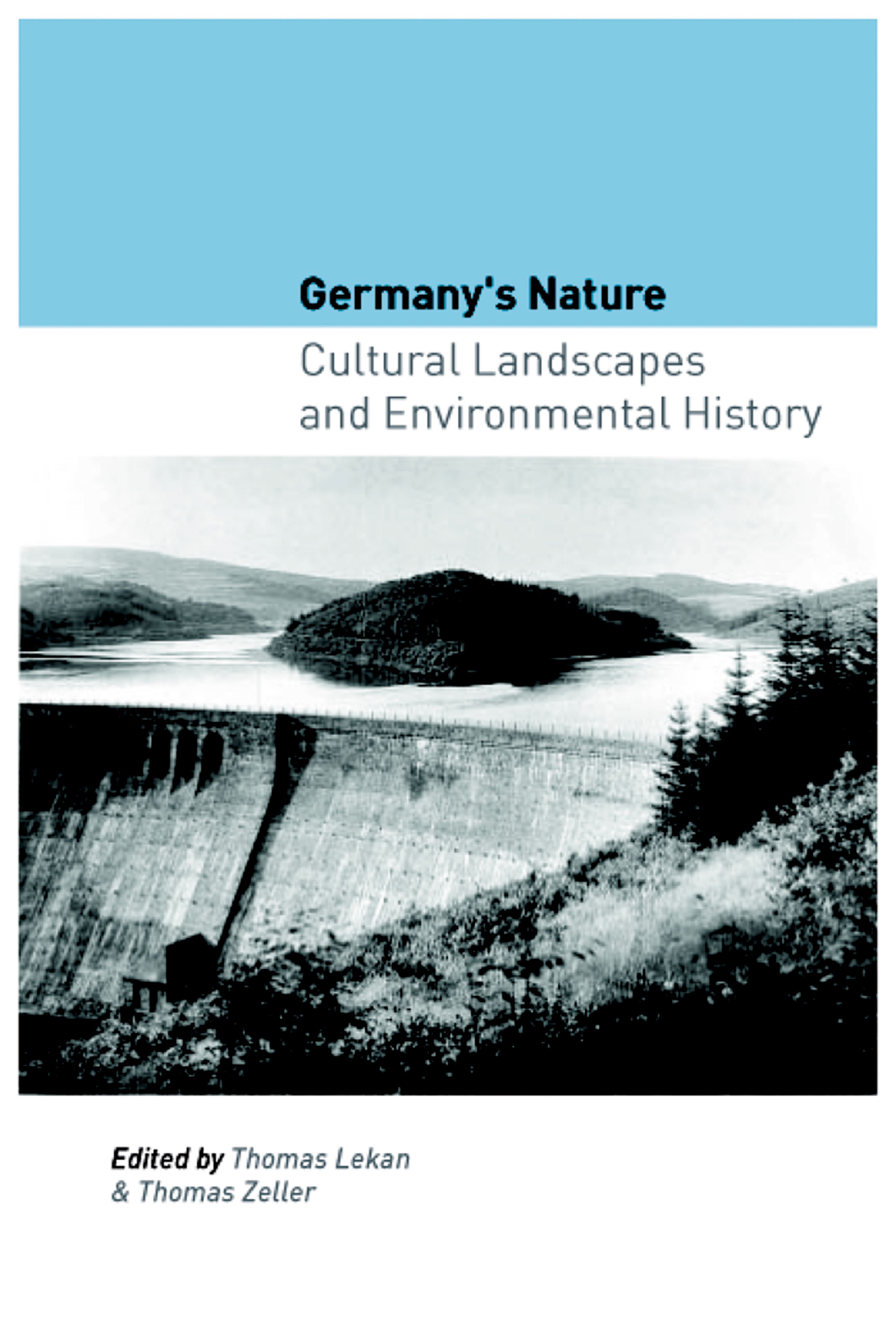
Germany's Nature
Germany boasts one of the strongest environmental records in the world. The Rhine River is cleaner than it has been in decades, recycling is considered a civic duty, and German manufacturers of pollution-control technology export their products around the globe. Yet, little has been written about the country's remarkable environmental history, and even less of that research is available in English.Now for the first time, a survey of the country's natural and cultural landscapes is available in one volume. Essays by leading scholars of history, geography, and the social sciences move beyond the Green movement to uncover the enduring yet ever-changing cultural patterns, social institutions, and geographic factors that have sustained Germany's relationship to its land.Unlike the American environmental movement, which is still dominated by debates about wilderness conservation and the retention of untouched spaces, discussions of the German landscape have long recognized human impact as part of the \"natural order.\" Drawing on a variety of sites as examples, including forests, waterways, the Autobahn, and natural history museums, the essays demonstrate how environmental debates in Germany have generally centered on the best ways to harmonize human priorities and organic order, rather than on attempts to reify wilderness as a place to escape from industrial society.Germany's Natureis essential reading for students and professionals working in the fields of environmental studies, European history, and the history of science and technology.
eBook
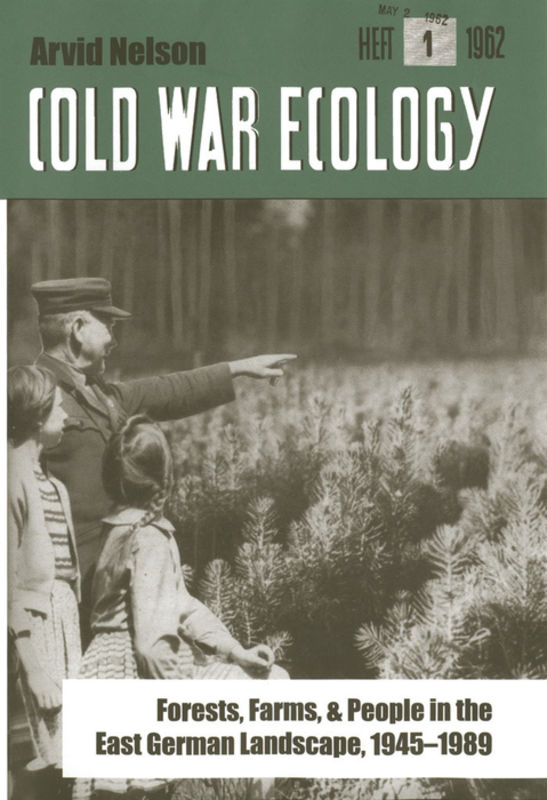
Cold War Ecology
East Germany, its economy, and its society were in decline long before the country's political collapse in the late 1980s. The clues were there in the natural landscape, Arvid Nelson argues in this groundbreaking book, but policy analysts were blind to them. Had they noted the record of the leadership's values and goals manifest in the landscape, they wouldn't have hailed East Germany as a Marxist-Leninist success story. Nelson sets East German history within the context of the landscape history of two centuries to underscore how forest and ecosystem change offered a reliable barometer to the health and stability of the political system that governed them.Cold War Ecology records how East German leaders' indifference to human rights and their disregard for the landscape affected the rural economy, forests, and population. This lesson from history suggests new ways of thinking about the health of ecosystems and landscapes, Nelson shows, and he proposes assessing the stability of modern political systems based on the environment's system qualities rather than on political leaders' goals and beliefs.
eBook