
Catalogue Search | MBRL


Are you sure you want to remove the book from the shelf?

{{itemTitle}}
5,666
result(s) for
"Professional sports United States."
Sort by:


The Big Leagues Go to Washington
Between 1951 and 1989, Congress held a series of hearings to investigate the antitrust aspects of professional sports leagues. Among the concerns: ownership control of players, restrictions on new franchises, territorial protection, and other cartel-like behaviors. In The Big Leagues Go to Washington , David Surdam chronicles the key issues that arose during the hearings and the ways opposing sides used economic data and theory to define what was right, what was feasible, and what was advantageous to one party or another. As Surdam shows, the hearings affected matters as fundamental to the modern game as broadcasting rights, player drafts and unions, league mergers, and the dominance of the New York Yankees. He also charts how lawmakers from the West and South pressed for the relocation of ailing franchises to their states and the ways savvy owners dodged congressional interference when they could and adapted to it when necessary.
eBook


15 sports myths and why they're wrong
In 15 Sports Myths and Why They're Wrong, authors Rodney Fort and Jason Winfree apply sharp economic analysis to bust some of the most widespread urban legends about college and professional athletics.
Each chapter takes apart a common misconception, showing how the assumptions behind it fail to add up. Fort and Winfree reveal how these myths perpetuate themselves and, ultimately, how they serve a handful of powerful parties—such as franchise owners, reporters, and players—at the expense of the larger community of sports fans. From the idea that team owners and managers are inept to the notion that revenue-generating college sports pay for athletics that don't attract fans (and their cash), 15 Sports Myths and Why They're Wrong strips down pervasive accounts of how our favorite games function, allowing us to look at them in a new, more informed way.
Fort and Winfree argue that substituting the intuitive appeal of emotionally charged myths with rigorous, informed explanations weakens the power of these tall tales and their tight hold on the sports we love. Readers will emerge with a clearer picture of the forces at work within the sports world and a better understanding of why these myths matter—and are worthy of a takedown.
eBook

Out of left field
In 1957, inspired by what she is learning about civil rights and armed with knowledge of female ball players, ten-year-old Katy Gordon fights to be allowed to play Little League baseball.
Book

The wages of wins : taking measure of the many myths in modern sport
The Wages of Wins is a proper analysis of the data generated by professional sports; it tells many tales that are inconsistent with the myths put forward by the media, industry, and consumers of professional sport.
eBook
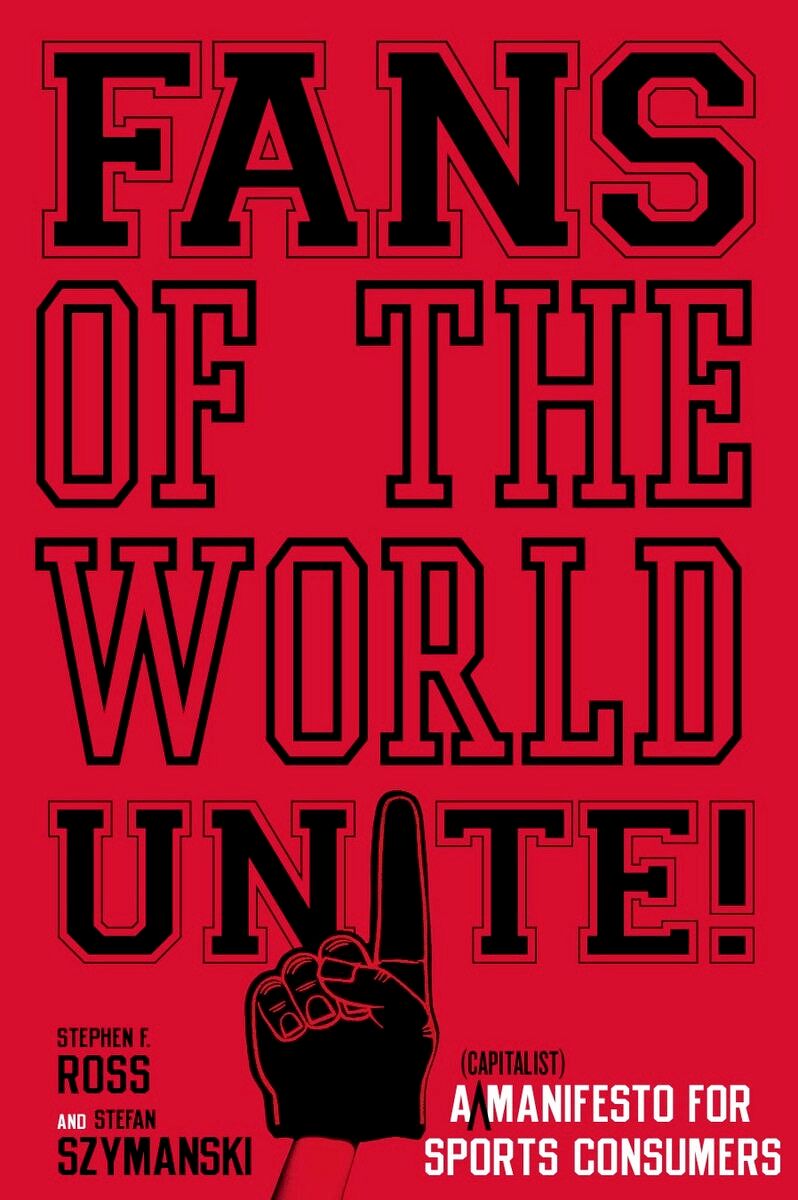
Fans of the World, Unite
Fans of baseball, football, basketball, and hockey have long been exploited and oppressed by the monopolistic practices of team owners. The time has come for a revolution in the organization of major U.S. sports!
Fans of the World, Unite! is a clarion call to sports fans. Appealing to anyone who is in despair due to the greed and incompetence of team owners, this book proposes a significant restructuring of sports leagues. It sets out a rational program for a revolution that will serve the best interests of the fans and of the sport itself. But Stephen F. Ross and Stefan Szymanski are no Marxists: they show how a revolution in the organization of sports might even benefit the owners. By harnessing the power of markets, sports leagues can be made both more responsive to the needs of the fans, and more efficient.
Ross and Szymanski have spent many years evaluating the ways in which leagues work across the globe. Drawing on their extensive study of leagues, the authors boil down their plan to two major reforms. Borrowing from NASCAR, they propose that team owners should not own sports leagues as well. Rather, league ownership should be separate. Their second proposal is drawn from soccer: introduce competition through a promotion and relegation system. In this type of system, the worst teams in the league are kicked out at the end of the season and replaced by the best performing teams in the next division down. This gives poor performing teams incentive to step up their game, and allows fresh blood to enter the leagues if the poor performers fail to do so.
The main goal of these reforms is to align the financial interest of those who own the league with the best interests of the fans and the sport. Having laid out the problem and the solution, the authors skillfully address practical implications of introducing their scheme, suggesting how leagues might at least make some changes, if not all of those suggested.
The time for change has come! Armed with this book, and with fairness on their side, fans can set forth to begin a revolution.
eBook

Baseball on Trial
The controversial 1922 Federal Baseball Supreme Court ruling held that the \"business of base ball\" was not subject to the Sherman Antitrust Act because it did not constitute interstate commerce. In Baseball on Trial, legal scholar Nathaniel Grow defies conventional wisdom to explain why the unanimous Supreme Court opinion authored by Justice Oliver Wendell Holmes, which gave rise to Major League Baseball's exemption from antitrust law, was correct given the circumstances of the time. Currently a billion dollar enterprise, professional baseball teams crisscross the country while the games are broadcast via radio, television, and internet coast to coast. The sheer scope of this activity would seem to embody the phrase \"interstate commerce.\" Yet baseball is the only professional sport--indeed the sole industry--in the United States that currently benefits from a judicially constructed antitrust immunity. How could this be? Drawing upon recently released documents from the National Baseball Hall of Fame, Grow analyzes how the Supreme Court reached this seemingly peculiar result by tracing the Federal Baseball litigation from its roots in 1914 to its resolution in 1922, in the process uncovering significant new details about the proceedings. Grow observes that while interstate commerce was measured at the time by the exchange of tangible goods, baseball teams in the 1910s merely provided live entertainment to their fans, while radio was a fledgling technology that had little impact on the sport. The book ultimately concludes that, despite the frequent criticism of the opinion, the Supreme Court's decision was consistent with the conditions and legal climate of the early twentieth century.
eBook

How to Play the Game
There is a distinction between a sports lawyer and all other types of practitioners.It requires a deep understanding of the nuances that largely affect athletes, their representatives, and companies providing products and services in the space.
eBook

The Economics of Professional Team Sports
This book is unique in that it offers the first truly rigorous application of economic principles to its subject. The authors analyse: * the economic literature on sporting leagues * the demand for professional team sports * the players' labour market. Amongst the topics discussed are the US system of franchising and draft picks and the chances of their being adopted elsewhere, the implications of player strikes, the onset of pay-per-view and digital television, and the relatively new notion that sport is a business like any other.
eBook