
Catalogue Search | MBRL


Are you sure you want to remove the book from the shelf?

{{itemTitle}}
8,902
result(s) for
"Professional-Patient Relations"
Sort by:

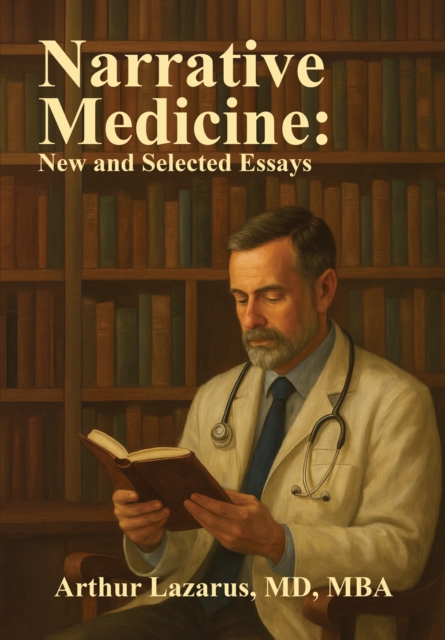
Narrative Medicine
Narrative Medicine: New and Selected Essays, by Arthur Lazarus, MD, MBA, contains the thoughtful curation of the author's best work alongside new contributions. The book is divided into two sections: Section 1: New Essays In this section, 10 vibrant essays serve as a bridge between reflection and the future of the medical profession. They focus on themes that have emerged since the COVID-19 pandemic and have taken on a new urgency in light of our evolving healthcare landscape. Section 2: Selected Essays Here, 50 essays were chosen for their significance and quality, representing the author's finest additions to the discourse on contemporary medical practice. These essays explore a range of topics critical to the medical field: the arduous journey through medical training, the ethical dilemmas doctors face, the rise of artificial intelligence, the importance of mentorship and reflective writing, and the career challenges that can either make or break a physician's resolve. Within these pages you will find a comprehensive gathering of essays and viewpoints that reflect the complexities of modern medicine and explore the intricate relationship between practice and storytelling, offering insights into how narrative shapes our understanding of patient care.
eBook

Compassion: Conceptualisations, Research and Use in Psychotherapy
What is compassion, how does it affect the quality of our lives and how can we develop compassion for ourselves and others?Humans are capable of extreme cruelty but also considerable compassion. Often neglected in Western psychology, this book looks at how compassion may have evolved, and is linked to various capacities such as sympathy, empathy, forgiveness and warmth. Exploring the effects of early life experiences with families and peers, this book outlines how developing compassion for self and others can be key to helping people change, recover and develop ways of living that increase well-being.Focusing on the multi-dimensional nature of compassion, international contributors: explore integrative evolutionary, social constructivist, cognitive and Buddhist approaches to compassion consider how and why cruelty can flourish when our capacities for compassion are turned off, especially in particular environments focus on how therapists bring compassion into their therapeutic relationship, and examine its healing effects describe how to help patients develop inner warmth and compassion to help alleviate psychological problems. Compassion provides detailed outlines of interventions that are of particular value to psychotherapists and counsellors interested in developing compassion as a therapeutic focus in their work. It is also of value to social scientists interested in pro-social behaviour, and those seeking links between Buddhist and Western psychology.
eBook

Strategies for Collaborating With Children
Strategies for Collaborating With Children: Creating Partnerships in Occupational Therapy and Research
applies client-centered and strengths-based theories to pediatric practice. The text is organized using a research-based conceptual model of collaboration. Within this text, there are detailed descriptions of how to engage and work with children aged 3 to 12 years, from the beginning to the end of therapy.
Dr. Clare Curtin covers a variety of topics, such as how to interview children, involve them in defining the purpose of therapy, and develop self-advocacy. Similarly presented is the therapist's role as a guide in setting respectful limits, teaching self-regulation, avoiding power struggles, and co-creating educational experiences that are challenging and fun.
Strategies for Collaborating With Children: Creating Partnerships in Occupational Therapy and Research
advocates for children's rights and participation in therapy and research. The United Nations Convention on the Rights of the Child, the new sociology of childhood, and childhood studies are discussed. Also included are children's perspectives on what therapists should know and what children said they might be thinking at each stage of therapy. The last chapter focuses on methods to enhance children's participation in research, including adaptations for children with disabilities.
Unique features:
Describes a new research-based model of collaboration with children
Incorporates children's views and knowledge about therapy
Illustrates the use of client-centered and strengths-based theories as well as child-friendly approaches within pediatric practice
Provides over 1,600 practical strategies that are exemplified by stories with actual dialogue
Describes ways to involve children throughout the research process
Identifies verbal, visual, and activity-based participatory research methods for eliciting children's voices, including creative ways to involve children with different levels of abilities
Includes review questions at the end of each chapter
Instructors in educational settings can visit www.efacultylounge.com for additional material to be used for teaching in the classroom.
Strategies for Collaborating With Children: Creating Partnerships in Occupational Therapy and Research
delivers a comprehensive resource for collaborating with children for the occupational therapist, occupational therapy assistant, or any other practitioner working with children in a therapeutic setting.
eBook


The Object Relations Lens
Some psychoanalytic models focus on \"how\" and \"when\" particular events may have shaped an individual's emotional and behavioral trajectories in life. In a field as accelerated as psychiatry, it's tempting to use this information to rush to a diagnosis. The object relations model, as clearly outlined in this compelling volume from Dr. Christopher Miller, offers an attractive alternative: it emphasizes how a patient's early development has informed interpersonal relationship templates and how these play out in the here-and-now of the clinical encounter. As accessible to the trainee as it is relevant to the experienced clinician, this guide describes how leaning into the therapist-patient dyad (including transference-countertransference dynamics) provides a fertile ground for learning about the patient's past more vividly. Among the book's standout features are: • Clinical vignettes that richly illustrate object relations theory as applied within therapy sessions as well as in acute care settings• Experience-near guidance on assimilating the concepts in academic settings, best practices for utilizing supervision, and extensive literature recommendations• Discussions of other theoretical approaches (e.g., attachment theory), as well as a dedicated chapter on a neuroscientific model of object relations, demonstrating how this psychodynamic framework can be harmonized within psychiatric theory and practice• A chapter focused on termination, including advice for inviting the patient into the decision-making process With its mix of theory, practical advice, and illustrative clinical material, The Object Relations Lens is an indispensable resource for any clinician hoping to gain further knowledge of object relations thought and how this perspective can be eminently useful when conceptualizing and working with patients.
eBook

Just Doctoring
Just Doctoring draws the doctor-patient relationship out of the consulting room and into the middle of the legal and political arenas where it more and more frequently appears. Traditionally, medical ethics has focused on the isolated relationship of physician to patient in a setting that has left the physician virtually untouched by market constraints or government regulation. Arguing that changes in health care institutions and legal attention to patient rights have made conventional approaches obsolete, Troyen Brennan points the way to a new, more aware and engaged medical ethics. The medical profession is no longer isolated, even theoretically, from the liberal, market-dominated state. Old ideas of physician beneficence and altruism must make way for a justice-based medical ethics, assuming a relationship between equals more compatible with liberal political philosophy. Brennan offers clinical examples of many of today's most challenging medical problems--from informed consent to care rationing and the repercussions of the HIV epidemic--and gives his recommendation for a new ethical perspective. This lively and controversial plea for a rethinking of medical ethics goes right to the heart of medical care at the end of the twentieth century. This title is part of UC Press's Voices Revived program, which commemorates University of California Press's mission to seek out and cultivate the brightest minds and give them voice, reach, and impact. Drawing on a backlist dating to 1893, Voices Revived makes high-quality, peer-reviewed scholarship accessible once again using print-on-demand technology. This title was originally published in 1991. Many titles in the Voices Revived program are also newly available as ebooks, offered at a discounted price to support wider access to scholarly work.
eBook