
Catalogue Search | MBRL


Are you sure you want to remove the book from the shelf?

{{itemTitle}}
274
result(s) for
"Professionalism in sports"
Sort by:

The rise and fall of Olympic amateurism
\"No sporting event is more culturally significant and popular than the Olympic Games. An estimated 4 billion people watched the opening ceremonies for the 2012 London Games. The Olympic logo of five interlocked rings outpaces both Nike and McDonalds for positive global recognition. The Olympic Games have embraced values such as character, fair play, chivalry, internationalism, and peace. Historically, these values emerged as part of the International Olympic Committee's policy of amateurism. Although there have been several works exploring smaller facets of the Olympic Games, there has never been a definitive book, grounded in historical research, exploring Olympic amateurism, the Games' most enduring ideal. This book represents a comprehensive exploration of the historical development and eventual decline of amateurism within the modern Olympic Games. At its inception, the International Olympic Committee required that all Olympic athletes comply with amateur rules that prohibiting them from profiting in any capacity from their sporting participation. However, over the course of the twentieth century, these rules first grew more rigid before gradually relaxing and dissolving. By the close of the millennium, the vast majority of Olympic athletes were openly professionals, with salaries and private endorsements. An Enduring Ideal: The Rise and Fall of Olympic Amateurism presents the first major history that explores how changes to the culture of sport coupled with shifting political forces brought about the eventual end to the century's most enduring sporting ideal\"-- Provided by publisher.
Book

The Myth of the Amateur
In this in-depth look at the heated debates over paying college athletes, Ronald A. Smith starts at the beginning: the first intercollegiate athletics competition—a crew regatta between Harvard and Yale—in 1852, when both teams received an all-expenses-paid vacation from a railroad magnate. This striking opening sets Smith on the path of a story filled with paradoxes and hypocrisies that plays out on the field, in meeting rooms, and in courtrooms—and that ultimately reveals that any insistence on amateurism is invalid, because these athletes have always been paid, one way or another.From that first contest to athletes’ attempts to unionize and California’s 2019 Fair Pay to Play Act, Smith shows that, throughout the decades, undercover payments, hiring professional coaches, and breaking the NCAA’s rules on athletic scholarships have always been part of the game. He explores how the regulation of male and female student-athletes has shifted; how class, race, and gender played a role in these transitions; and how the case for amateurism evolved from a moral argument to one concerned with financially and legally protecting college sports and the NCAA. Timely and thought-provoking, The Myth of the Amateur is essential reading for college sports fans and scholars.
eBook

The NCAA and the Exploitation of College Profit-Athletes
A well-constructed and reasoned debunking of the
mythology of amateurism in for-profit NCAA athletics
For the last 60-plus-years, as the revenue-generating capacity
of Power Five football and men's basketball has dramatically
increased, NCAA Division I Power Five football and men's basketball
players (college profit-athletes) have been economically exploited,
their labor has been severely restricted. To mask this inequity,
the NCAA and its members created, disseminated, and embedded a
fictitious \"collegiate model of athletics\" established and
repeatedly modified for the benefit of member schools, designed to
ensure profit-athletes were denied employment status and just
compensation for their athletic labor.
The NCAA and the Exploitation of College Profit-Athletes: An
Amateurism That Never Was provides a comprehensive historical,
sociological, legal, financial, and managerial argument for the
reclassification of profit-athletes as employees. Such a
reclassification would permit profit-athletes to gain not only fair
financial compensation but also equal access to educational
benefits that have been promised but systematically denied.
The authors trace how Power Five college sports have morphed
into a hyper professionalized and commercialized sport-business
enterprise. They provide evidence that at least since 1956 the
NCAA's amateurism has been a collusive, exploitative, and
racialized \"pay for play\" scheme that disproportionately affects
Black profit-athletes. The authors cut through the institutional
doublespeak of approved benefits, cost-of-attendance stipends, or
name, image, likeness (NIL) collectives to lay bare the immorality
of Power Five college sports.
The NCAA and the Exploitation of College
Profit-Athletes makes the case that profit-athletes (and their
representatives) must have the right to unionize and freely
negotiate a collective bargaining agreement with management (e.g.,
NCAA, Power Five conferences and athletic departments). In
addition, this book offers a forward-thinking structure in which
individual labor contracts, or a potential collective bargaining
agreement, address profit-athlete compensation and working
conditions.
eBook
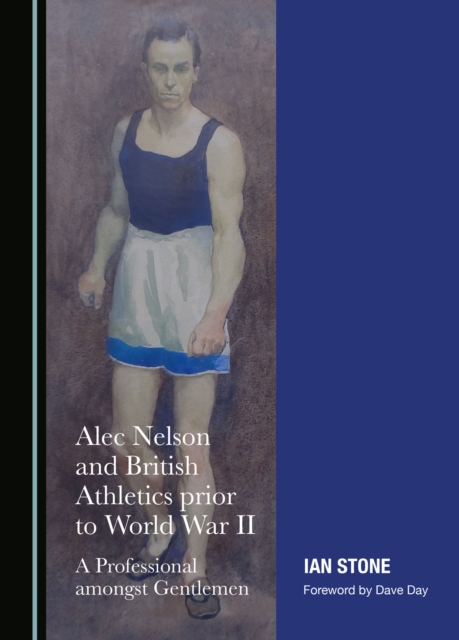
Alec Nelson and British Athletics Prior to World War II
British athletics in the era of Chariots of Fire is explored through the rediscovered life of amateur and professional runner and leading British coach, Alec Nelson. Though necessary for competitive success, professional coaches were kept firmly in their place by the socially elite athletes and administrators of the sport. The contradictions and hypocrisy within athletics, and the class-based antagonism between amateurism and professionalism, are central themes of this book.The relationship between professional trainers and amateur athletes and clubs is examined, and the resistance to change while British Olympic performances increasingly fell behind. The sporting world and its main personalities are brought to life through exploring the clubs Nelson coached (Cambridge University, the Army, the Achilles Club and various Olympic teams), the athletes he trained (Harold Abrahams, Douglas Lowe and Bob Tisdall among them) and the controversies over the methods and role of coaches. The book also brings to light a remarkable partnership which crossed the lines of social class, between Nelson and his mentor, Philip Noel-Baker, a prominent Olympian and politician who attempted to modernise British athletics.
eBook
The changing face of rugby : the union game and professionalism since 1995
In 1995 rugby union became the last significant international sport to sanction professionalism. To some this represented an undesirable challenge to the traditions of the game. To others the change was inevitable and overdue an acknowledgment of both the realty of modern sport and the extent to which money had already permeated the game. While there are some commonalities in the response to professional rugby, the contributions to this book, representing almost all of the significant rugby.
eBook

Professionalism versus amateurism in grass-roots sport: Associated funding needs
Considerations of professionalization within sport are typically limited to the commercialization processes that generate the funding regimes and impact the expenditure patterns of professional sports teams. By contrast, using historical data, this article analyses how professionalism and the professionalization of elite rugby has impacted the amateur game, in general, and challenged the core values of amateurism and the associated funding needed for the amateur/grass-roots game, in particular. It compares funding and expenditure patterns in amateur sports clubs for a particular sport - rugby football union, aka rugby. This article utilizes a case study analysis of amateur clubs in the Wellington Rugby Football Union, a provincial union of the New Zealand Rugby Union. It finds that professionalism is exhibited in the amateur game both as a top-down phenomenon and a bottom-up phenomenon as new actors have entered the institutional field. The study also notes that whilst such changes have been gradual, the costs of these changes are now outpacing clubs' ability to fund them.
Journal Article
Professionalism versus amateurism in grass-roots sport: Associated funding needs
Considerations of professionalization within sport are typically limited to the commercialization processes that generate the funding regimes and impact the expenditure patterns of professional sports teams. By contrast, using historical data, this article analyses how professionalism and the professionalization of elite rugby has impacted the amateur game, in general, and challenged the core values of amateurism and the associated funding needed for the amateur/grass-roots game, in particular. It compares funding and expenditure patterns in amateur sports clubs for a particular sport - rugby football union, aka rugby. This article utilizes a case study analysis of amateur clubs in the Wellington Rugby Football Union, a provincial union of the New Zealand Rugby Union. It finds that professionalism is exhibited in the amateur game both as a top-down phenomenon and a bottom-up phenomenon as new actors have entered the institutional field. The study also notes that whilst such changes have been gradual, the costs of these changes are now outpacing clubs' ability to fund them.
Journal Article
Power and performance: Fiji rugby's transition from amateurism to professionalism
This article shows how accounting and rugby have been used as tools of control. It compares the role of accounting in amateur and professional sport, initially analysing the Fiji Rugby Union's (FRU) internal documents from the period when Fiji was a British colony and rugby was an amateur sport. During this period, the FRU practised rudimentary accounting since it relied primarily on internally-generated funds and therefore had virtually no public accountability. The FRU board emphasized rugby's core values and downplayed the importance of money. However, in the professional period, donors require more sophisticated financial reporting and auditing to monitor usage of their grants and evaluate the impact of their investments. The FRU has encountered conflict with its donors due to repeated financial losses and alleged mismanagement. This article reveals that those losses originated in the amateur period through diseconomies of scale, inequitable arrangements for international matches and unsustainable funding models. Rather than helping the FRU to address these underlying problems, powerful stakeholders continue using financial resources and governance structures to control and exploit Fiji rugby.
Journal Article
Power and performance: Fiji rugby's transition from amateurism to professionalism
This article shows how accounting and rugby have been used as tools of control. It compares the role of accounting in amateur and professional sport, initially analysing the Fiji Rugby Union's (FRU) internal documents from the period when Fiji was a British colony and rugby was an amateur sport. During this period, the FRU practised rudimentary accounting since it relied primarily on internally-generated funds and therefore had virtually no public accountability. The FRU board emphasized rugby's core values and downplayed the importance of money. However, in the professional period, donors require more sophisticated financial reporting and auditing to monitor usage of their grants and evaluate the impact of their investments. The FRU has encountered conflict with its donors due to repeated financial losses and alleged mismanagement. This article reveals that those losses originated in the amateur period through diseconomies of scale, inequitable arrangements for international matches and unsustainable funding models. Rather than helping the FRU to address these underlying problems, powerful stakeholders continue using financial resources and governance structures to control and exploit Fiji rugby.
Journal Article

The Rise and Fall of Olympic Amateurism
For decades, amateurism defined the ideals undergirding the Olympic movement. No more. Today's Games present athletes who enjoy open corporate sponsorship and unabashedly compete for lucrative commercial endorsements.Matthew P. Llewellyn and John Gleaves analyze how this astonishing transformation took place. Drawing on Olympic archives and a wealth of research across media, the authors examine how an elite--white, wealthy, often Anglo-Saxon--controlled and shaped an enormously powerful myth of amateurism. The myth assumed an air of naturalness that made it seem unassailable and, not incidentally, served those in power. Llewellyn and Gleaves trace professionalism's inroads into the Olympics from tragic figures like Jim Thorpe through the shamateur era of under-the-table cash and state-supported athletes. As they show, the increasing acceptability of professionals went hand-in-hand with the Games becoming a for-profit international spectacle. Yet the myth of amateurism's purity remained a potent force, influencing how people around the globe imagined and understood sport.Timely and vivid with details,The Rise and Fall of Olympic Amateurismis the first book-length examination of the movement's foundational ideal.
eBook