
Catalogue Search | MBRL


Are you sure you want to remove the book from the shelf?

{{itemTitle}}
12,462
result(s) for
"Profit History."
Sort by:
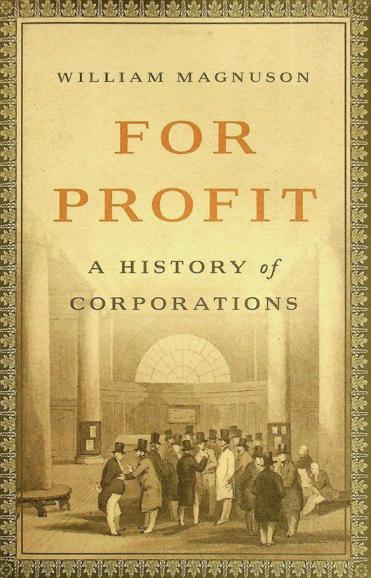
For profit : a history of corporations
\"A history of how corporate innovation has shaped society, from ancient Rome to Silicon Valley. Americans have long been skeptical of corporations, and that skepticism has only grown more intense in recent year. Meanwhile, corporations continue to amass wealth and power at a dizzying rate, recklessly pursuing profit while leaving society to sort out the costs. In For Profit, law professor William Magnuson argues that the story of the corporation didn't have to come to this. Throughout history, he finds, corporations have been purpose-built to benefit the societies that surrounded them. Corporations enabled everything from the construction of ancient Rome's roads and aqueducts to the artistic flourishing of the Renaissance to the rise of the middle class in the twentieth century. By recapturing this original spirit of civic virtue, Magnuson argues, corporations can help craft a society in which all of us--not just shareholders--benefit from the profits of enterprise\"--Provided by publisher
Book
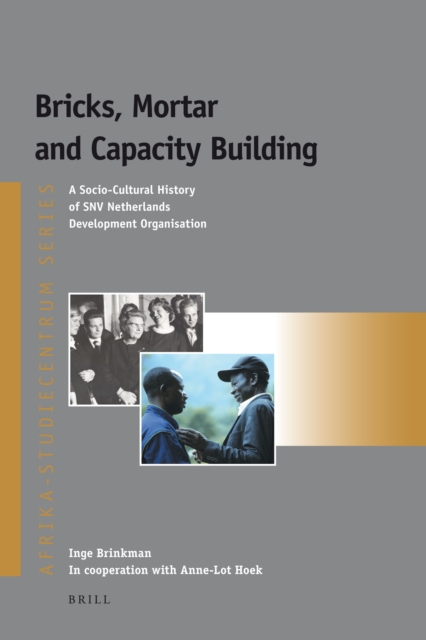
Bricks, Mortar and Capacity Building
The history of development cooperation has attracted very little research to date. This volume offers an innovative interpretation by considering the history of SNV Netherlands Development Organisation, which has been in existence for over forty years now.
eBook

For profit : a history of corporations
\"A history of how corporate innovation has shaped society, from ancient Rome to Silicon Valley Americans have long been skeptical of corporations, and that skepticism has only grown more intense in recent year Meanwhile, corporations continue to amass wealth and power at a dizzying rate, recklessly pursuing profit while leaving society to sort out the costs. In For Profit, law professor William Magnuson argues that the story of the corporation didn't have to come to this. Throughout history, he finds, corporations have been purpose-built to benefit the societies that surrounded them. Corporations enabled everything from the construction of ancient Rome's roads and aqueducts to the artistic flourishing of the Renaissance to the rise of the middle class in the twentieth century. By recapturing this original spirit of civic virtue, Magnuson argues, corporations can help craft a society in which all of us--not just shareholders--benefit from the profits of enterprise. \"-- Provided by publisher
Book

Policy Commercializing Nonprofits in Health: The History of a Paradox From the 19th Century to the ACA
Context: For more than a century, policy in the United States has incentivized both expansion in the number and size of tax-exempt nonprofit organizations in the health sector and their commercialization. The implementation of the Affordable Care Act of 2010 (ACA) began yet another chapter in the history of this policy paradox. Methods: This article explores the origin and persistence of the paradox using what many scholars call \"interpretive social science.\" This methodology prioritizes history and contingency over formal theory and methods in order to present coherent and plausible narratives of events and explanations for them. These narratives are grounded in documents generated by participants in particular events, as well as conversations with them, observing them in action, and analysis of pertinent secondary sources. The methodology achieves validity and reliability by gathering information from multiple sources and making disciplined judgments about its coherence and correspondence with reality. Findings: A paradox with deep historical roots persists as a result of consensus about its value for both population health and the revenue of individuals and organizations in the health sector. Participants in this consensus include leaders of governance who have disagreed about many other issues. The paradox persists because of assumptions about the burden of disease and how to address it, as well as about the effects of biomedical science that is translated into professional education, practice, and the organization of services for the prevention, diagnosis, treatment, and management of illness. Conclusions: The policy paradox that has incentivized the growth and commercialization of nonprofits in the health sector since the late 19th century remains influential in health policy, especially for the allocation of resources. However, aspects of the implementation of the ACA may constrain some of the effects of the paradox.
Journal Article

Partisan ruptures : self-management, market reform and the spectre of socialist Yugoslavia
\"Yugoslavia's twentieth-century bore witness to civil war, sharp ideological struggles and a series of 'partisan ruptures'; revolutionary events that changed the face of Yugoslavian society, politics and culture, which were felt on a global level. This book is a comprehensive historical and political analysis of the three major ruptures; the People's Liberation Struggle during World War Two, the self-management model and the Non-Aligned Movement. In order to understand what provoked and what came out of these revolutionary ruptures, Gal Kirn examines the implications of communism and socialism's productive relationship, the Yugoslavian 'experiment' of market socialism that marked the political and economic shift towards 'post-socialism' already in the 1960s, which crystallised new class coalitions that will later on - together with austerity politics - lead the way towards des-integration of Yugoslavia. Filling a much-needed gap in English language literature, this book's interrogation of the Yugoslav socialist experiment offers insights for left projects and democratic socialist discussions today, as well as historians of Yugoslavia and revolutionary movements\"--Page 4 of cover.
Book

The Grammar of Profit
This study uses the evolving meaning of \"profit\" in religious, political, economic, and social discourse to reveal the relationship between the prevailing concept of \"just profit\" and contemporary reactions to the Sixteenth-Century Price Revolution in Europe.
eBook

The National Mastitis Council: A Global Organization for Mastitis Control and Milk Quality, 50 Years and Beyond
The National Mastitis Council was founded in 1961 based on the desire of a forward-thinking group of individuals to bring together “all forces of organized agriculture in the United States to combat, through every practical device, the mastitis threat to the Nation’s health and food safety”. What started as a small organization focused on mastitis of dairy cattle in the United States has grown into a global organization for mastitis and milk quality. Over the last 50-plus years the concerted efforts of the membership have led to the synthesis and dissemination of a considerable body of knowledge regarding udder health, milk quality, and food safety which has improved dairy cattle health and well-being and farm productivity.
Journal Article

\Keeping our Mission, Changing our System\: Translation and Organizational Change in Natural Foods Co-ops
Institutional theory has played a central role in the study of organizations for over half a century, but it often overlooks the actions of the people who bring organizations to life. This article advances an inhabited approach to institutional analysis that foregrounds the creativity of organizational members. It argues that people use local cultures to translate and respond to institutional pressures. The article analyzes qualitative data from countercultural co-op stores that have been pushed to conform to mainstream forms of business organization by a competitive market and demonstrates that translation explains why outcomes that institutional theory would not predict have come to pass.
Journal Article

Surgeons Without Borders: A Brief History of Surgery at Médecins Sans Frontières
Médecins Sans Frontières (MSF) is a humanitarian organization that performs emergency and elective surgical services in both conflict and non-conflict settings in over 70 countries. In 2006 MSF surgeons departed on approximately 125 missions, and over 64,000 surgical interventions were carried out in some 20 countries worldwide. Historically, the majority of MSF surgical projects began in response to conflicts or natural disasters. During an emergency response, MSF has resources to set up major operating facilities within 48 h in remote areas. One of MSF strengths is its supply chain. Large pre-packaged surgical kits, veritable “operating theatres to go,” can be readied in enormous crates and quickly loaded onto planes. In more stable contexts, MSF has also strengthened the delivery of surgical services within a country’s public health system. The MSF surgeon is the generalist in the broadest sense and performs vascular, obstetrical, orthopaedic, and other specialized surgical procedures. The organization aims to provide surgical services only temporarily. When there is a decrease in acute needs a program will be closed, or more importantly, turned over to the Ministry of Health or another non-governmental organization. The long-term solution to alleviating the global burden of surgical disease lies in building up a domestic surgical workforce capable of responding to the major causes of surgery-related morbidity and mortality. However, given that even countries with the resources of the United States suffer from an insufficiency of surgeons, the need for international emergency organizations to provide surgical assistance during acute emergencies will remain for the foreseeable future.
Journal Article

One Hundred Years of Southwest Nonprofits
Nonprofit organizations have a major role in the history of Southwestern archaeology. We consider a continuum of nonprofit organizations, from those with endowments, sizable professional staffs, and annual budgets in the millions of dollars to volunteer run nonprofits with small budgets and tightly focused missions. A diversity of organizations populate this continuum, and they range from more than one hundred years old to barely a decade. The role of nonprofits in the history of Southwestern archaeology is reviewed, and the ways in which professional and avocational archaeologists collaborate in different kinds of nonprofits is considered. We note that there are even greater opportunities for collaboration, and we sketch some major themes for the future of nonprofits in Southwestern archaeology.
Journal Article