
Catalogue Search | MBRL


Are you sure you want to remove the book from the shelf?

{{itemTitle}}
360
result(s) for
"Program transformation (Computer programming)"
Sort by:


Supervised Machine Learning
The artificial intelligence (AI) framework is intended to solve a the problem of bias--variance tradeoff for supervised learning methodsin real-life applications. The AI framework It comprises of bootstrapping to create multiple training and testing datasetsdata sets with various characteristics, design, and analysis of statistical experiments to identify optimal feature subsets and optimal hyper-parameters for machine learning (ML) methods, and data contamination to test for the robustness of the classifiers.
Key Features:
Using ML methods by itself doesn't does notensure building classifiers that generalize well for new data.
Identifying optimal feature subsets and hyper-parameters of ML methods can be resolved using the design and analysis of statistical experiments.
Using a bootstrapping approach to massive sampling of training and tests datasets with various data characteristics (e.g.: contaminated training sets) allows dealing with bias.
Developing of anSAS-based table-driven environment allows managing the management of all meta-data related to the proposed AI framework and creating the creation of interoperability with R libraries to accomplish a variety of statistical and machine-learning tasks.
Computer programs in R and SAS that create AI frameworks are available on GitHub.
eBook

Application of creative learning principles within blended teacher professional development on integration of computer programming education into elementary and middle school classrooms
Purpose
While it is particularly important that professional programs help teachers become members of a community of practice, especially in crisis situations such as the COVID-19 pandemic, there is a lack of research about strategies to effectively encourage the development of a community of practice and to support teachers’ transformation of their way of teaching. Thus, this paper aims to report on lessons learned from a blended professional development (PD) program for elementary and middle school teachers in Japan focused on computer programming education. In particular, the authors explored how application of the creative learning principles in the blended teacher PD may have helped to nurture a community of practice among teachers in Japan, and how the creative learning principles may be a valuable framework for designing online or blended teacher PD to support teachers’ transition into emergency remote education.
Design/methodology/approach
This paper reports on the lessons learned from two iterations of blended teacher PD situated within a larger design-based research project on applying creative learning pedagogy in teacher PD. Creative learning is a learning approach focused on engagement in personally meaningful projects by tinkering with materials and learning from peers. A total of 26 teachers and coaches participated, all of whom work in elementary or middle schools across Nagano prefecture in Japan. Participant experiences were evaluated based on a pre-survey and a post-survey conducted before and after the in-person kick-off camp; observation notes taken; a final report submitted by each teacher; a debrief meeting at the end of the program; and semi-structured interviews with three selected participants after the program concluded. For this paper, the authors focus on two participants who fully and actively engaged in the program, and they introduce their stories to highlight the outcomes from the PD.
Findings
The results highlight how a blended PD designed to support creative learning of teachers provided teachers with opportunities to gain help from other teachers and cultivate their expertise. The results also illustrated that how a community of practice emerged from the PD program, providing teachers with moral support when they tried new lesson designs. This paper offers several recommendations for designing professional learning experiences for instructional designers and professional developers that incorporate remote learning technologies.
Originality/value
While an increased number of studies have shown the values of online and blended communities of practice for teacher PD, there are still limited insights on different strategies to support teachers in transforming their teaching practices. They generally do not provide teachers with opportunities to continue learning with and from one another beyond the program itself. This study examined the teachers’ experiences in a unique PD that implemented a creative learning approach into a blended learning environment for teachers.
Journal Article

On the solution of convex bilevel optimization problems
An algorithm is presented for solving bilevel optimization problems with fully convex lower level problems. Convergence to a local optimal solution is shown under certain weak assumptions. This algorithm uses the optimal value transformation of the problem. Transformation of the bilevel optimization problem using the Fritz-John necessary optimality conditions applied to the lower level problem is shown to exhibit almost the same difficulties for solving the problem as the use of the Karush–Kuhn–Tucker conditions.
Journal Article

CCFinder: a multilinguistic token-based code clone detection system for large scale source code
A code clone is a code portion in source files that is identical or similar to another. Since code clones are believed to reduce the maintainability of software, several code clone detection techniques and tools have been proposed. This paper proposes a new clone detection technique, which consists of the transformation of input source text and a token-by-token comparison. For its implementation with several useful optimization techniques, we have developed a tool, named CCFinder (Code Clone Finder), which extracts code clones in C, C++, Java, COBOL and other source files. In addition, metrics for the code clones have been developed. In order to evaluate the usefulness of CCFinder and metrics, we conducted several case studies where we applied the new tool to the source code of JDK, FreeBSD, NetBSD, Linux, and many other systems. As a result, CCFinder has effectively found clones and the metrics have been able to effectively identify the characteristics of the systems. In addition, we have compared the proposed technique with other clone detection techniques.
Journal Article
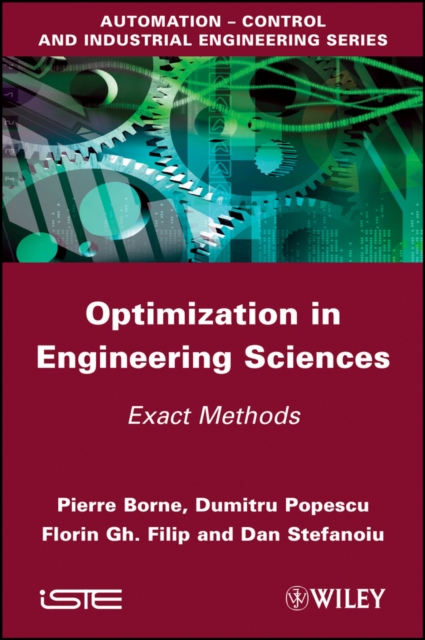
Optimization in engineering sciences : exact methods
The purpose of this book is to present the main methods of static and dynamic optimization.It has been written within the framework of the European Union project - ERRIC (Empowering Romanian Research on Intelligent Information Technologies), funded by the EU's FP7 Research Potential program and developed in cooperation between French and Romanian.
eBook

A Refactoring Approach to Parallelism
In the multicore era, a major programming task will be to make programs more parallel. This is tedious because it requires changing many lines of code; it's also error-prone and nontrivial because programmers need to ensure noninterference of parallel operations. Fortunately, interactive refactoring tools can help reduce the analysis and transformation burden. The author describes how refactoring tools can improve programmer productivity, program performance, and program portability. The article also describes a toolset that supports several refactorings for making programs thread-safe, threading sequential programs for throughput, and improving scalability of parallel programs.
Journal Article

Type-Driven Automated Program Transformations and Cost Modelling for Optimising Streaming Programs on FPGAs
In this paper we present a novel approach to program optimisation based on compiler-based type-driven program transformations and a fast and accurate cost/performance model for the target architecture. We target streaming programs for the problem domain of scientific computing, such as numerical weather prediction. We present our theoretical framework for type-driven program transformation, our target high-level language and intermediate representation languages and the cost model and demonstrate the effectiveness of our approach by comparison with a commercial toolchain.
Journal Article

Blockchain Technology and Applications
Blockchain is an emerging technology that can radically improve transactions security at banking, supply chain, and other transaction networks. It's estimated that Blockchain will generate $3.1 trillion in new business value by 2030. Essentially, it provides the basis for a dynamic distributed ledger that can be applied to save time when recording transactions between parties, remove costs associated with intermediaries, and reduce risks of fraud and tampering. This book explores the fundamentals and applications of Blockchain technology. Readers will learn about the decentralized peer-to-peer network, distributed ledger, and the trust model that defines Blockchain technology. They will also be introduced to the basic components of Blockchain (transaction, block, block header, and the chain), its operations (hashing, verification, validation, and consensus model), underlying algorithms, and essentials of trust (hard fork and soft fork). Private and public Blockchain networks similar to Bitcoin and Ethereum will be introduced, as will concepts of Smart Contracts, Proof of Work and Proof of Stack, and cryptocurrency including Facebook's Libra will be elucidated. Also, the book will address the relationship between Blockchain technology, Internet of Things (IoT), Artificial Intelligence (AI), Cybersecurity, Digital Transformation and Quantum Computing. Readers will understand the inner workings and applications of this disruptive technology and its potential impact on all aspects of the business world and society. A look at the future trends of Blockchain Technology will be presented in the book.
eBook
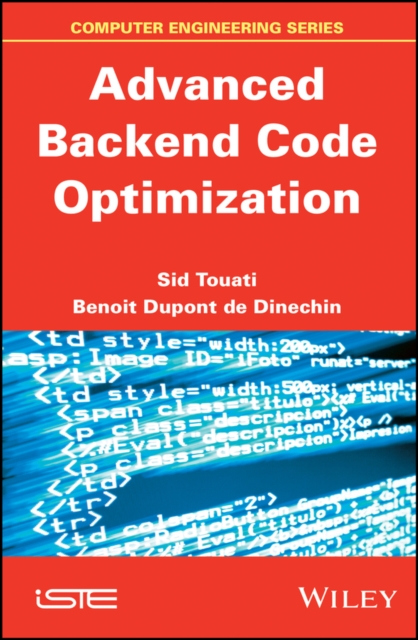
Advanced backend code optimization
This book is a summary of more than a decade of research in the area of backend optimization. It contains the latest fundamental research results in this field. While existing books are often more oriented toward Masters students, this book is aimed more towards professors and researchers as it contains more advanced subjects.
It is unique in the sense that it contains information that has not previously been covered by other books in the field, with chapters on phase ordering in optimizing compilation; register saturation in instruction level parallelism; code size reduction for software pipelining; memory hierarchy effects and instruction level parallelism.
Other chapters provide the latest research results in well-known topics such as register need, and software pipelining and periodic register allocation.
eBook