
Catalogue Search | MBRL


Are you sure you want to remove the book from the shelf?

{{itemTitle}}
12,334
result(s) for
"Programmable controllers"
Sort by:


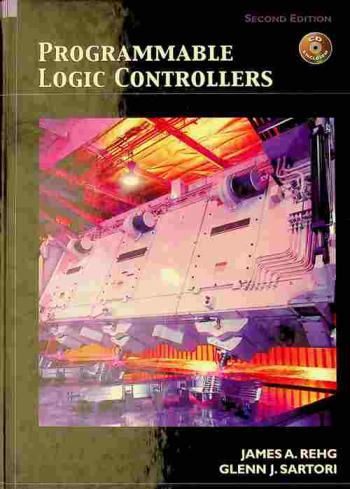
Programmable Logic Controllers (4th Edition)
This is the introduction to PLCs for which baffled students, technicians and managers have been waiting. In this straightforward, easy-to-read guide, Bill Bolton has kept the jargon to a minimum, considered all the programming methods in the standard IEC 1131-3 - in particular ladder programming, and presented the subject in a way that is not device specific to ensure maximum applicability to courses in electronics and control systems. Now in its fourth edition, this best-selling text has been expanded with increased coverage of industrial systems and PLCs and more consideration has been given to IEC 1131-3 and all the programming methods in the standard. The new edition brings the book fully up to date with the current developments in PLCs, describing new and important applications such as PLC use in communications (e.g. Ethernet - an extremely popular system), and safety - in particular proprietary emergency stop relays (now appearing in practically every PLC based system).
eBook


Advanced Control Systems: Theory and Applications
Advanced Control Systems: Theory and Applications provides an overview of advanced research lines in control systems as well as in design, development and implementation methodologies for perspective control systems and their components in different areas of industrial and special applications. It consists of extended versions of the selected papers presented at the XXV International Conference on Automatic Control “Automatics 2018” (September 18-19, 2018, Lviv, Ukraine) which is the main Ukrainian Control Conference organized by Ukrainian Association on Automatic Control (National member organization of IFAC) and Lviv National University “Lvivska Politechnica”. More than 100 papers were presented at the conference with topics including: mathematical problems of control, optimization and game theory; control and identification under uncertainty; automated control of technical, technological and biotechnical objects; controlling the aerospace craft, marine vessels and other moving objects; intelligent control and information processing; mechatronics and robotics; information measuring technologies in automation; automation and IT training of personnel; the Internet of things and the latest technologies. The book is divided into two main parts, the first concerning theory (7 chapters) and the second concerning applications (7 chapters) of advanced control systems. The first part “Advances in Theoretical Research on Automatic Control” consists of theoretical research results which deal with descriptor control impulsive delay systems, motion control in condition of conflict, inverse dynamic models, invariant relations in optimal control, robust adaptive control, bio-inspired algorithms, optimization of fuzzy control systems, and extremal routing problem with constraints and complicated cost functions,. The second part “Advances in Control Systems Applications” is based on the chapters which consider different aspects of practical implementation of advanced control systems, in particular, special cases in determining the spacecraft position and attitude using computer vision system, the spacecraft orientation by information from a system of stellar sensors, control synthesis of rotational and spatial spacecraft motion at approaching stage of docking, intelligent algorithms for the automation of complex biotechnical objects, an automatic control system for the slow pyrolysis of organic substances with variable composition, simulation complex of hierarchical systems based on the foresight and cognitive modelling, and advanced identification of impulse processes in cognitive maps. The chapters have been structured to provide an easy-to-follow introduction to the topics that are addressed, including the most relevant references, so that anyone interested in this field can get started in the area. This book may be useful for researchers and students who are interesting in advanced control systems.
eBook

Arduino sketches : tools and techniques for programming wizardry /
\"Communicate through Ethernet, Wi-Fi, USB, and Firmata; find, import, and update user libraries to get up and running faster; explore device-specific libraries created specifically for peripherals; build your own libraries and shields for a custom experience; enhance communication with Arduino Due, Esplora, Yun, and Robot boards; control a computer's keystrokes and cursor movement remotely; play audio files, control LED lights, and more\"--Page 4 of cover.
Book

Miniterm, a Novel Virtual Sensor for Predictive Maintenance for the Industry 4.0 Era
This article introduces a novel virtual sensor for predictive maintenance called mini-term. A mini-term can be defined as the time it takes for a part of the machine to do its job. Being a technical sub-cycle time, its function has been linked to production. However, when a machine or component gets deteriorated, the mini-term also suffers deterioration, allowing it to be a multifunctional indicator for the prediction of machine failures as well as measurement of production. Currently, in Industry 4.0, one of the handicaps is Big Data and Data Analysis. However, in the case of predictive maintenance, the need to install sensors in the machines means that when the proposed scientific solutions reach the industry, they cannot be carried out massively due to the high cost this entails. The advantage introduced by the mini-term is that it can be implemented in an easy and simple way in pre-installed systems since you only need to program a timer in the PLC or PC that controls the line/machine in the production line, allowing, according to the authors’ knowledge, to build industrial Big Data on predictive maintenance for the first time, which is called Miniterm 4.0. This article shows evidence of the important improvements generated by the use of Miniterm 4.0 in a factory. At the end of the paper we show the evolution of TAV (Technical availability), Mean Time To Repair (MTTR), EM (Number of Work order (Emergency Orders/line Stop)) and OM (Labour hours in EM) showing a very important improvement as the number of mini-terms was increased and the Miniterm 4.0 system became more reliable. In particular, TAV is increased by 15%, OM is reduced in 5000 orders, MTTR is reduced in 2 h and there are produced 3000 orders less than when mini-terms did not exist. At the end of the article we discuss the benefits and limitations of the mini-terms and we show the conclusions and future works.
Journal Article
Digital Twin-Based Active Learning for Industrial Process Control and Supervision in Industry 4.0
The integration of Digital Twin technology into active learning environments has been established as an innovative strategy to optimize engineering education. This study focuses on the development and evaluation of a learning tool based on Digital Twin technology, enabling interaction and communication between a physical teaching module and a virtualized environment representing the industrial cocoa production process. The system was operated by students using an S7-1200 PLC and an HMI interface developed in WinCC, facilitating real-time process monitoring and control via IoT. To assess its impact, an experimental design was implemented, comparing a pre-test using conventional teaching modules with a post-test incorporating Digital Twin technology. The results indicate a significant improvement in students’ accuracy and efficiency, with a 38% reduction in task execution time. This improvement is attributed to the system’s immersive and interactive capabilities, which allow for the simulation of actuator and sensor behavior under real-world conditions. These findings highlight the potential of Digital Twins not only as educational tools but also as valuable assets for industrial process optimization in the cocoa sector, aligning with Industry 4.0 principles.
Journal Article


Design and Robust Performance Analysis of Low-Order Approximation of Fractional PID Controller Based on an IABC Algorithm for an Automatic Voltage Regulator System
In this paper, a low-order approximation (LOA) of fractional order PID (FOPID) for an automatic voltage regulator (AVR) based on the modified artificial bee colony (ABC) is proposed. The improved artificial bee colony (IABC) high-order approximation (HOA)-based fractional order PID (IABC/HOA-FOPID) controller, which is distinguished by a significant order approximation and by an integer order transfer function, requires the use of a large number of parameters. To improve the AVR system’s performance in terms of transient and frequency response analysis, the memory capacity of the IABC/HOA-FOPID controller was lowered so that it could fit better in the corrective loop. The new robust controller is named the improved artificial bee colony (IABC) low-order approximation (LOA)-based fractional order PID (IABC/LOA-FOPID). The performance of the proposed IABC/LOA-FOPID controller was compared not only to the original ABC algorithm-tuned PID controller, but also to other controllers tuned by state-of-the-art meta-heuristic algorithms such as the improved whale optimization algorithm (IWOA), particle swarm optimization (PSO), cuckoo search (CS), many optimizing liaisons (MOL), genetic algorithm (GA), local unimodal sampling (LUS), and the tree seed algorithm (TSA). Step response, root locus, frequency response, robustness test, and disturbance rejection abilities are all compared. The simulation results and comparisons with the proposed IABC/LOA-FOPID controller and other existing controllers clearly show that the proposed IABC/LOA-FOPID controller outperforms the optimal PID controllers found by other algorithms in all the aforementioned performance tests.
Journal Article